GRCTH, EA4497, CIC-IT 805, CHU Raymond Poincaré, Garches, France.
PLoS One. 2013 Jun 17;8(6):e66421. doi: 10.1371/journal.pone.0066421. Print 2013.
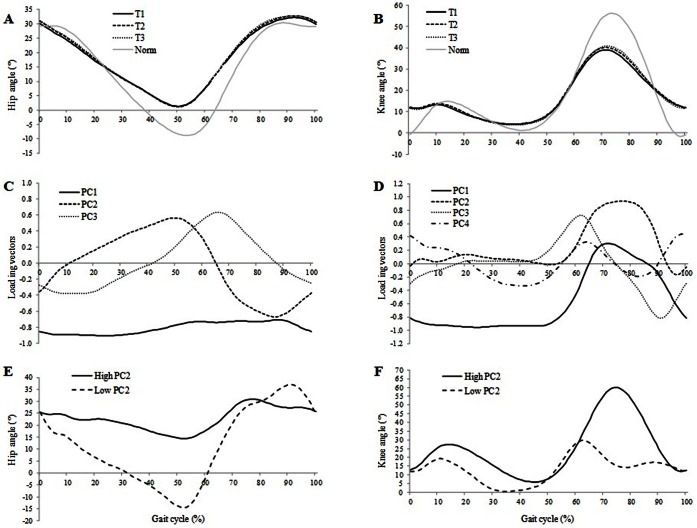
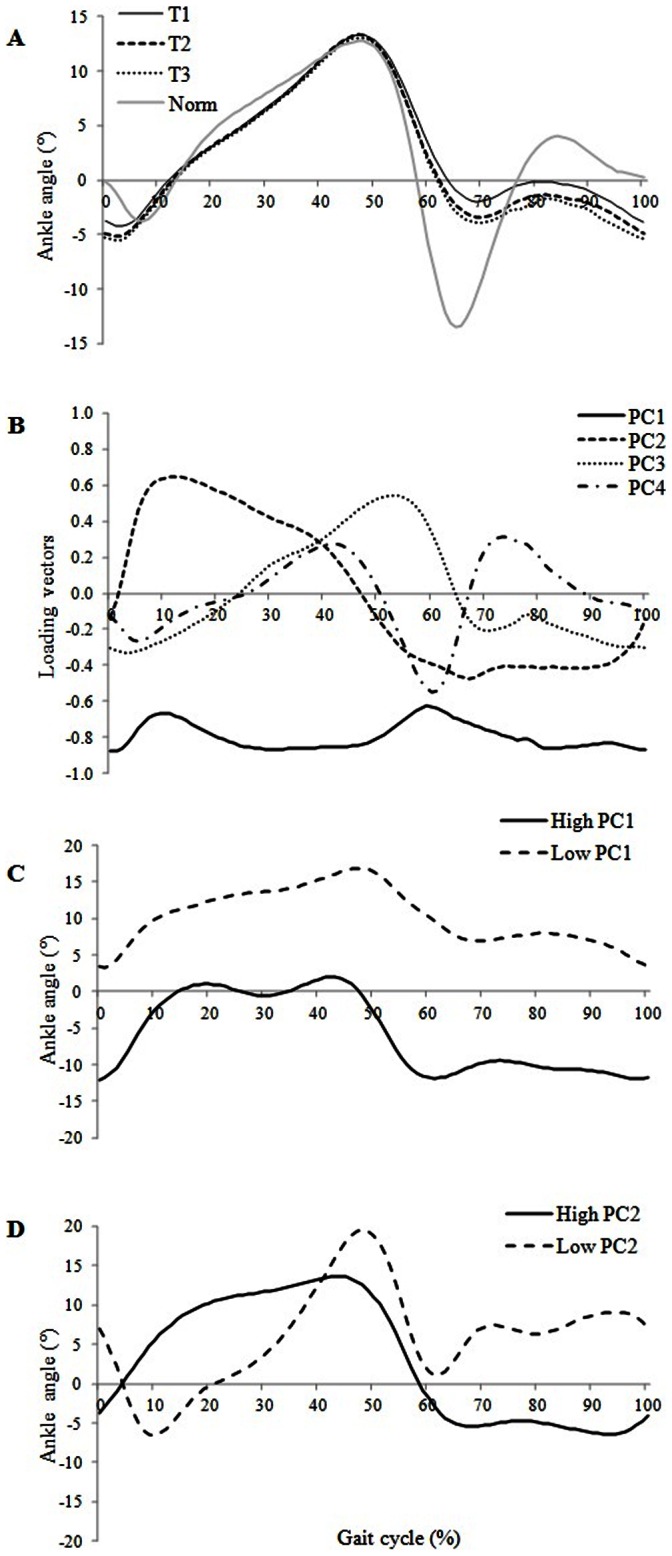
In addition to changes in spatio-temporal and kinematic parameters, patients with stroke exhibit fear of falling as well as fatigability during gait. These changes could compromise interpretation of data from gait analysis. The aim of this study was to determine if the gait of hemiplegic patients changes significantly over successive gait trials. Forty two stroke patients and twenty healthy subjects performed 9 gait trials during a gait analysis session. The mean and variability of spatio-temporal and kinematic joint parameters were analyzed during 3 groups of consecutive gait trials (1-3, 4-6 and 7-9). Principal component analysis was used to reduce the number of variables from the joint kinematic waveforms and to identify the parts of the gait cycle which changed during the gait analysis session. The results showed that i) spontaneous gait velocity and the other spatio-temporal parameters significantly increased, and ii) gait variability decreased, over the last 6 gait trials compared to the first 3, for hemiplegic patients but not healthy subjects. Principal component analysis revealed changes in the sagittal waveforms of the hip, knee and ankle for hemiplegic patients after the first 3 gait trials. These results suggest that at the beginning of the gait analysis session, stroke patients exhibited phase of adaptation,characterized by a "cautious gait" but no fatigue was observed.
除了时空和运动学参数的变化外,脑卒中患者在行走时还表现出对跌倒的恐惧和疲劳。这些变化可能会影响步态分析数据的解读。本研究旨在确定偏瘫患者在连续行走试验中的步态是否有明显变化。42 名脑卒中患者和 20 名健康受试者在步态分析过程中完成了 9 次行走试验。在 3 组连续行走试验(1-3、4-6 和 7-9)中分析了时空和运动学关节参数的平均值和变异性。主成分分析用于减少关节运动学波形中的变量数量,并确定步态分析过程中步态周期的变化部分。结果表明,i)与前 3 次相比,偏瘫患者在最后 6 次行走试验中,自发性行走速度和其他时空参数显著增加,ii)行走变异性降低。而健康受试者则没有这种变化。主成分分析显示,偏瘫患者在完成前 3 次行走试验后,髋关节、膝关节和踝关节的矢状面波形发生了变化。这些结果表明,在步态分析过程的开始阶段,脑卒中患者表现出适应阶段,其特点是“谨慎步态”,但没有观察到疲劳。