Unit on Human Copper Metabolism, Molecular Medicine Program, Eunice Kennedy Shriver National Institute of Child Health and Human Development, Bethesda, Maryland, USA.
Mol Ther Nucleic Acids. 2013 Jun 25;2(6):e101. doi: 10.1038/mtna.2013.27.
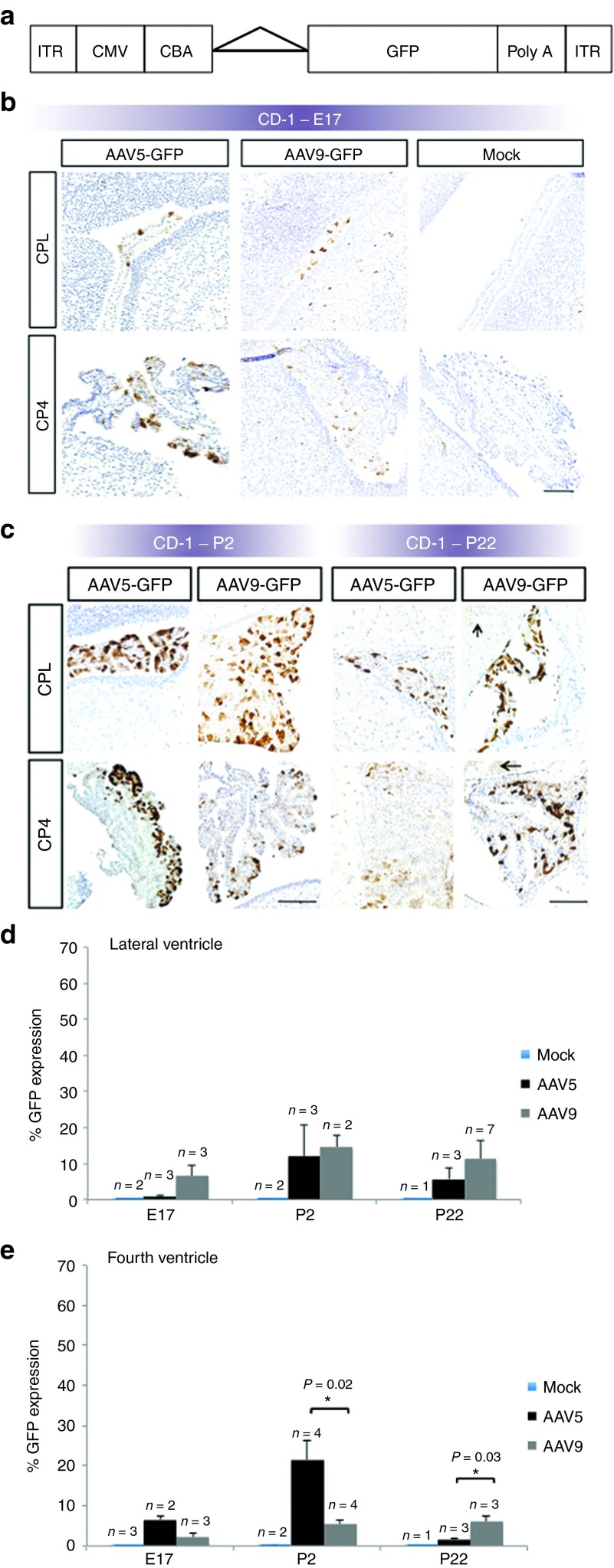
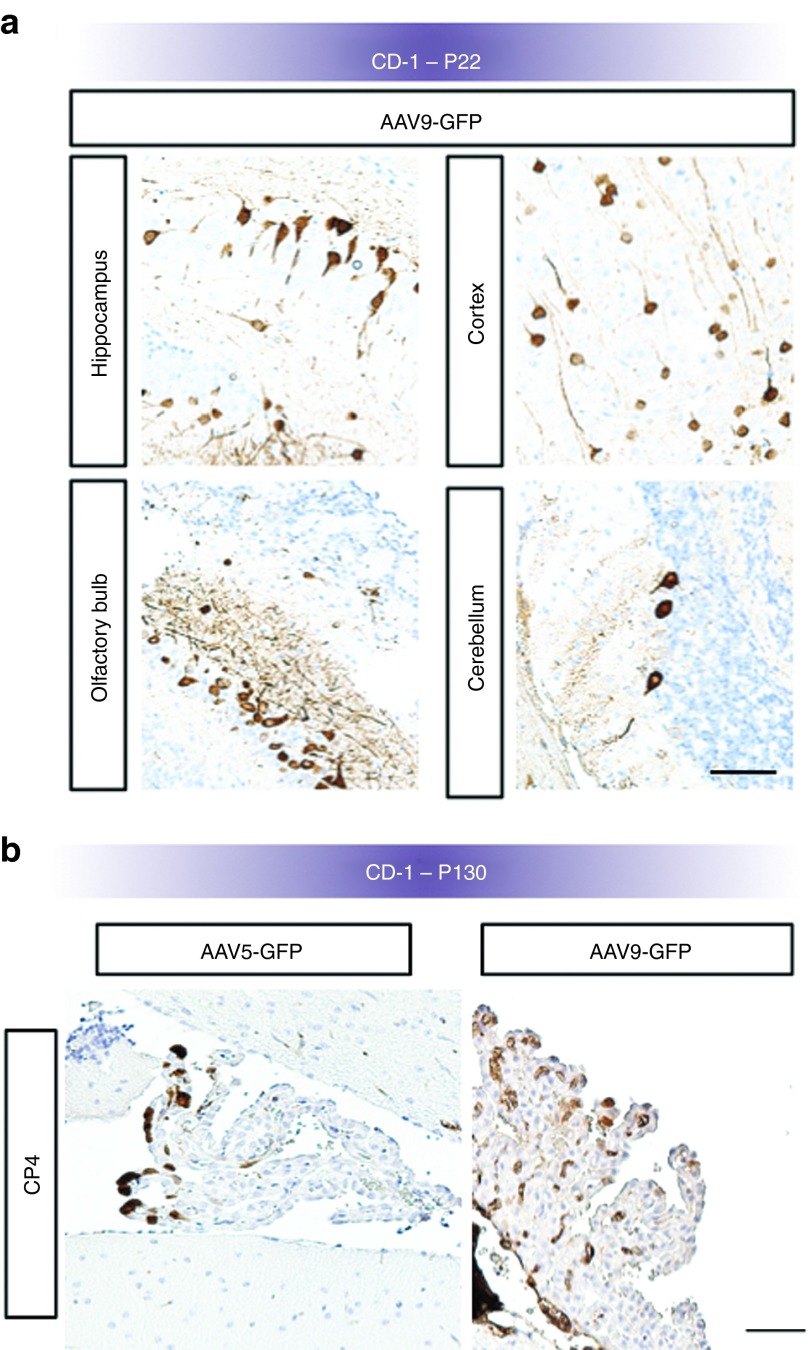
Fetal brain-directed gene addition represents an under-appreciated tool for investigating novel therapeutic approaches in animal models of central nervous system diseases with early prenatal onset. Choroid plexuses (CPs) are specialized neuroectoderm-derived structures that project into the brain's ventricles, produce cerebrospinal fluid (CSF), and regulate CSF biochemical composition. Targeting the CP may be advantageous for adeno-associated viral (AAV) gene therapy for central nervous system disorders due to its immunoprivileged location and slow rate of epithelial turnover. Yet the capacity of AAV vectors to transduce CP has not been delineated precisely. We performed intracerebroventricular injections of recombinant AAV serotype 5-green fluorescent protein (rAAV5-GFP) or rAAV9-GFP in embryonic day 15 (E15) embryos of CD-1 and C57BL/6 pregnant mice and quantified the percentages of GFP expression in CP epithelia (CPE) from lateral and fourth ventricles on E17, postnatal day 2 (P2), and P22. AAV5 was selective for CPE and showed significantly higher transduction efficiency in C57BL/6 mice (P = 0.0128). AAV9 transduced neurons and glial cells in both the mouse strains, in addition to CPE. We documented GFP expression in CPE on E17, within just 48 hours of rAAV administration to the fetal lateral ventricle, and expression by both the serotypes persisted at P130. Our results indicate that prenatal administration of rAAV5 and rAAV9 enables rapid, robust, and sustained transduction of mouse CPE and buttress the rationale for experimental therapeutics targeting the CP.Molecular Therapy-Nucleic Acids (2013) 2, e101; doi:10.1038/mtna.2013.27; published online 25 June 2013.
胎儿脑靶向基因添加代表了一种被低估的工具,可用于研究具有早期产前发病的中枢神经系统疾病的新型治疗方法的动物模型。脉络丛(CPs)是专门的神经外胚层衍生结构,向脑室内突出,产生脑脊液(CSF),并调节 CSF 生化成分。由于 CP 的免疫特权位置和上皮细胞更替率较慢,因此针对 CP 进行腺相关病毒(AAV)基因治疗可能具有优势。然而,AAV 载体转导 CP 的能力尚未得到精确描述。我们在 CD-1 和 C57BL/6 孕鼠的胚胎 15 天(E15)胚胎中进行了脑室内注射重组 AAV 血清型 5-绿色荧光蛋白(rAAV5-GFP)或 rAAV9-GFP,并在 E17、出生后第 2 天(P2)和 P22 时对来自侧脑室和第四脑室的 CP 上皮(CPE)中的 GFP 表达百分比进行了量化。AAV5 对 CPE 具有选择性,在 C57BL/6 小鼠中显示出更高的转导效率(P = 0.0128)。AAV9 除了 CPE 外,还转导了两种小鼠品系中的神经元和神经胶质细胞。我们在 rAAV 给药后仅 48 小时就在胎儿侧脑室中记录到了 CPE 中的 GFP 表达,并在 P130 时仍保持两种血清型的表达。我们的结果表明,产前给予 rAAV5 和 rAAV9 可快速、强烈且持续地转导小鼠 CPE,并支持针对 CP 的实验性治疗的原理。
分子治疗-核酸(2013 年)2,e101;doi:10.1038/mtna.2013.27;在线发表 2013 年 6 月 25 日。