Department of Cell Biology, Southern Medical University, Guangzhou, Gungdong, People's Republic of China.
Br J Cancer. 2013 Jul 9;109(1):164-71. doi: 10.1038/bjc.2013.306. Epub 2013 Jun 25.
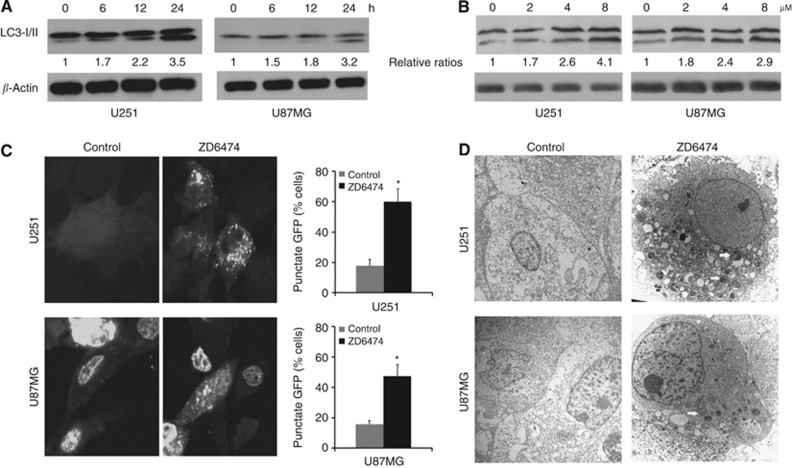
Autophagy is a lysosomal degradation pathway that can provide energy through its recycling mechanism to act as a cytoprotective adaptive response mediating treatment resistance in cancer cells. We investigated the autophagy-inducing effects of ZD6474, a small-molecule inhibitor that blocks activities of vascular endothelial growth factor receptor (VEGFR), epidermal growth factor receptor (EGFR), and RET tyrosine kinases.
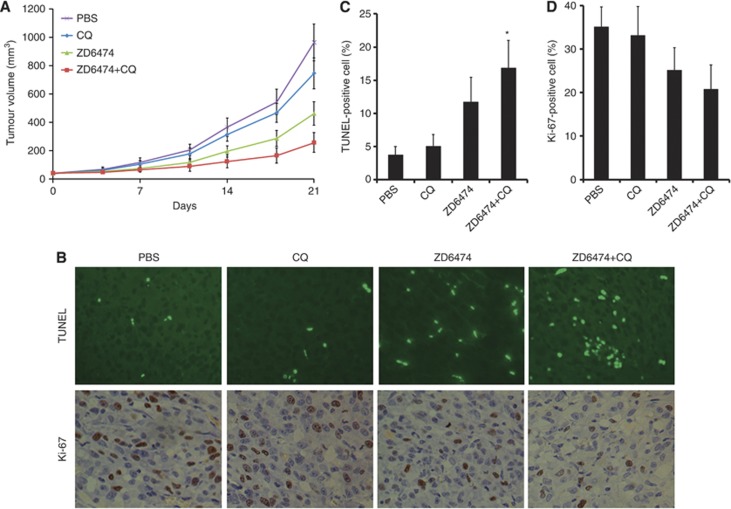
We investigated the effects of ZD6474 on autophagy in glioblastomas cells. The ZD6474 mechanism of action was determined by western blot. We then examined the impacts of the inhibition of autophagy in combination with ZD6474 on cell apoptosis in vitro. Furthermore, we evaluated the synergistic anticancer activity of combination treatment with an autophagy inhibitor (chloroquine) and ZD6474 in U251 glioblastoma cells xenograft model.
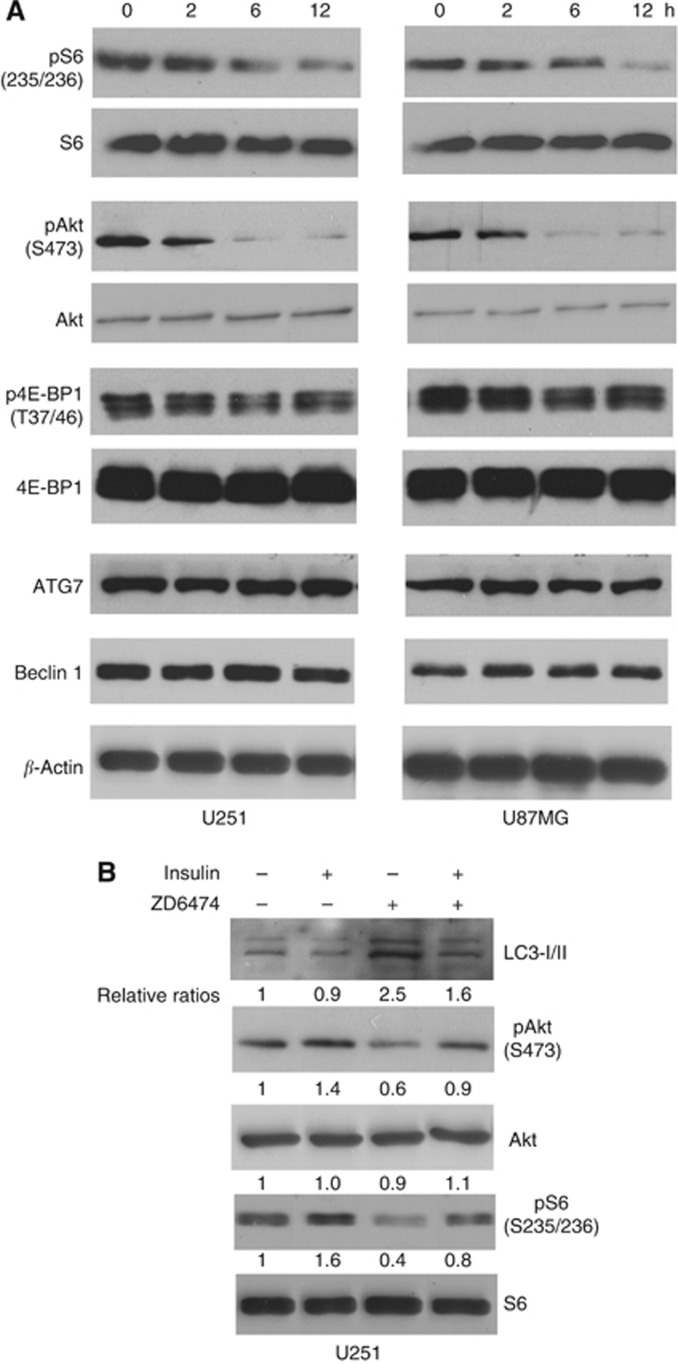
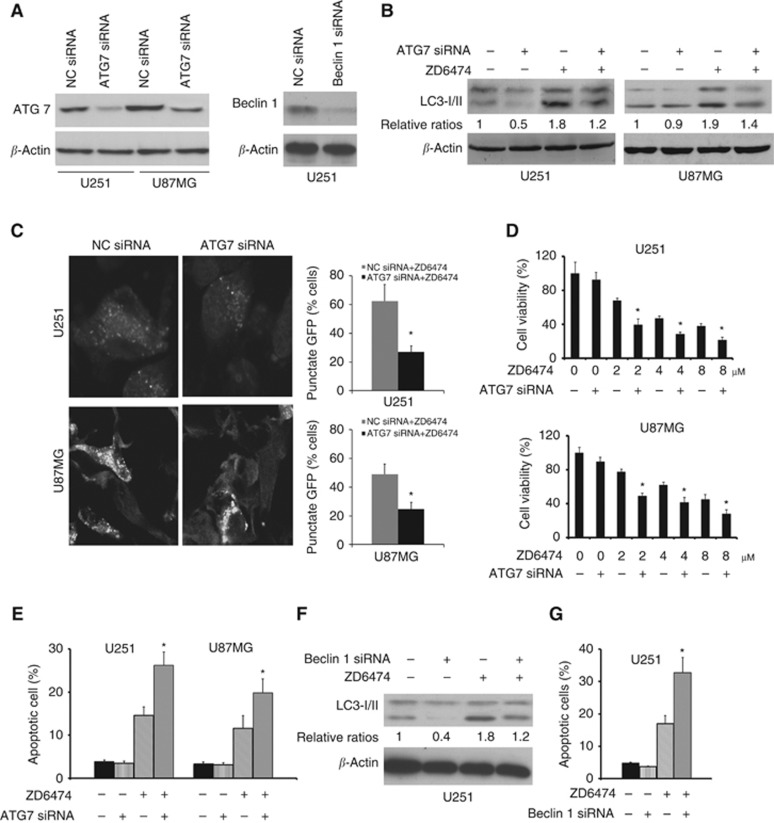
ZD6474-induced autophagy was dependent on signalling through the phosphoinositide 3-kinase/Akt/mammalian target of rapamycin (PI3K/Akt/mTOR) pathway. ZD6474-induced autophagy was inhibited by both knockdown of the ATG7 and Beclin 1 gene, essential autophagy genes, and pharmacologic agents (chloroquine and 3-methyalanine) treatment. Both treatments also dramatically sensitised glioblastoma cells to ZD6474-induced apoptosis, decreasing cell viability in vitro. Furthermore, in a xenograft mouse model, combined treatment with ZD6474 and chloroquine significantly inhibited U251 tumour growth, and increased the numbers of apoptotic cells compared with treatment with either agent alone.
Autophagy protects glioblastoma cells from the proapoptotic effects of ZD6474, which might contribute to tumour resistance against ZD6474 treatment.
自噬是一种溶酶体降解途径,通过其回收机制提供能量,作为一种细胞保护适应性反应,介导癌细胞对治疗的耐药性。我们研究了 ZD6474(一种小分子抑制剂,可阻断血管内皮生长因子受体 (VEGFR)、表皮生长因子受体 (EGFR) 和 RET 酪氨酸激酶的活性)诱导自噬的作用。
我们研究了 ZD6474 对神经胶质瘤细胞自噬的影响。通过 Western blot 确定 ZD6474 的作用机制。然后,我们研究了抑制自噬与 ZD6474 联合应用对体外细胞凋亡的影响。此外,我们评估了自噬抑制剂(氯喹)与 ZD6474 联合治疗在 U251 神经胶质瘤细胞异种移植模型中的协同抗癌活性。
ZD6474 诱导的自噬依赖于磷酸肌醇 3-激酶/Akt/雷帕霉素靶蛋白 (PI3K/Akt/mTOR) 通路的信号转导。ATG7 和 Beclin 1 基因(必需的自噬基因)的敲低以及药物(氯喹和 3-甲基丙氨酸)处理均抑制 ZD6474 诱导的自噬。这两种处理方法还显著增强了神经胶质瘤细胞对 ZD6474 诱导的凋亡的敏感性,降低了体外细胞活力。此外,在异种移植小鼠模型中,ZD6474 与氯喹联合治疗显著抑制 U251 肿瘤生长,并增加了与单独使用任一药物相比凋亡细胞的数量。
自噬保护神经胶质瘤细胞免受 ZD6474 的促凋亡作用,这可能有助于肿瘤对 ZD6474 治疗的耐药性。