BMC Microbiol. 2013 Jun 24;13:146. doi: 10.1186/1471-2180-13-146.
The diverse microbial populations that inhabit pristine aquifers are known to catalyze critical in situ biogeochemical reactions, yet little is known about how the structure and diversity of this subsurface community correlates with and impacts upon groundwater chemistry. Herein we examine 8,786 bacterial and 8,166 archaeal 16S rRNA gene sequences from an array of monitoring wells in the Mahomet aquifer of east-central Illinois. Using multivariate statistical analyses we provide a comparative analysis of the relationship between groundwater chemistry and the microbial communities attached to aquifer sediment along with those suspended in groundwater.
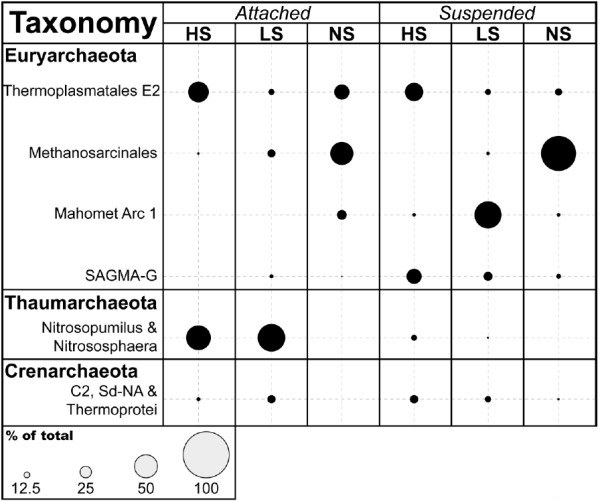
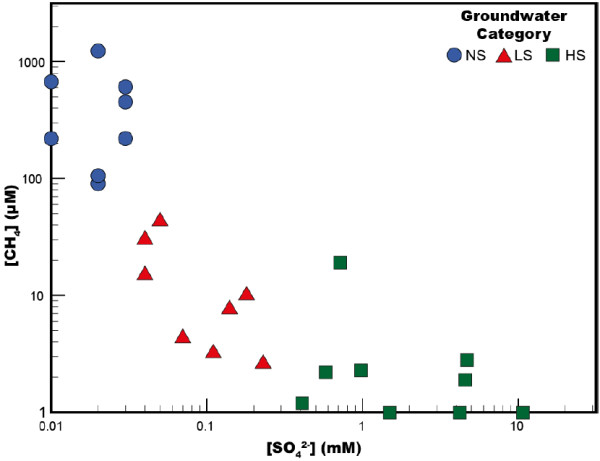
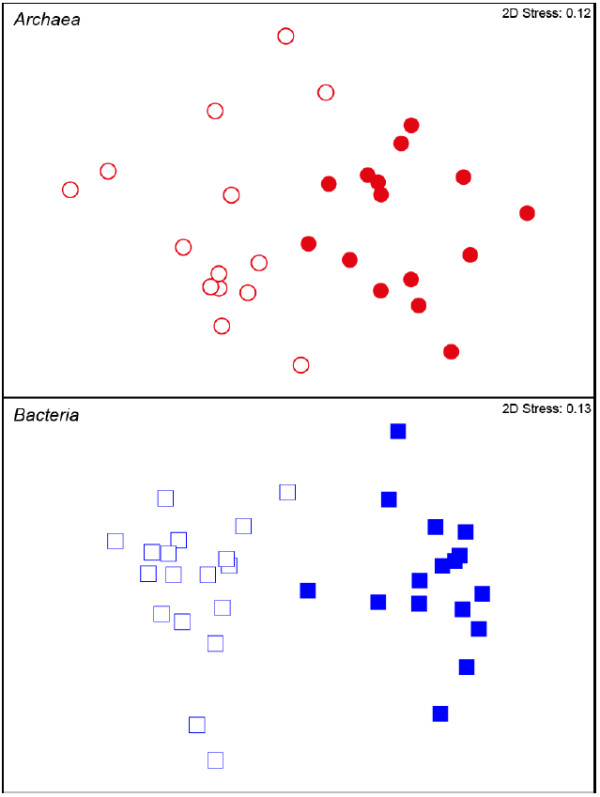
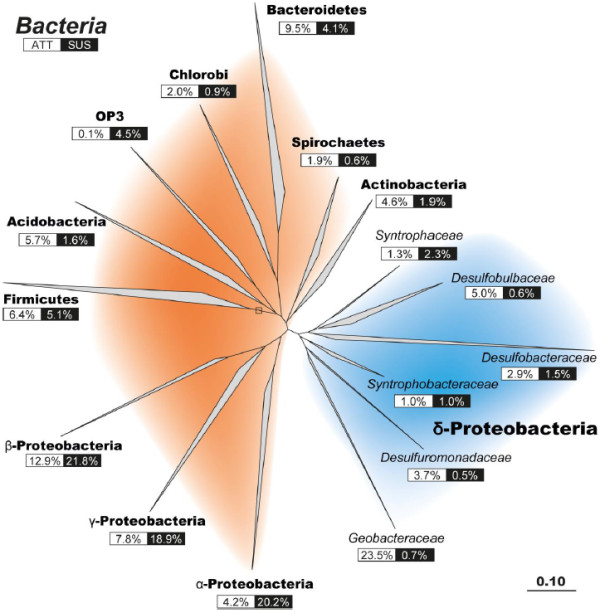
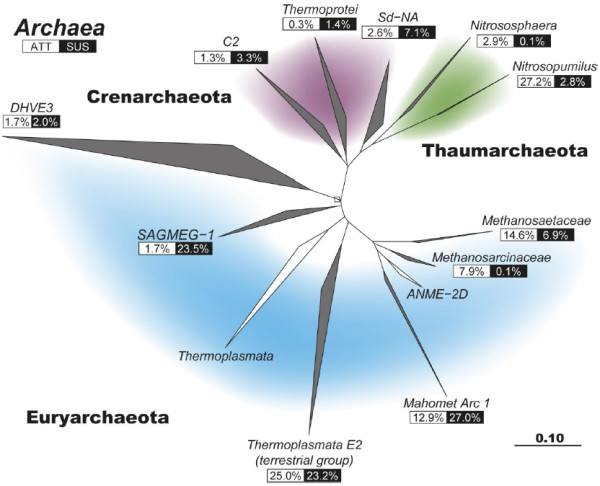
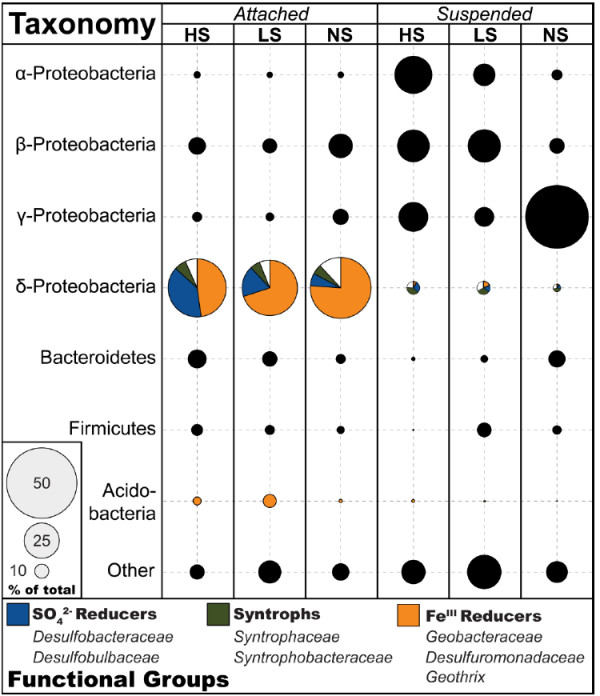
Statistical analyses of 16S rRNA gene sequences showed a clear distinction between attached and suspended communities; with iron-reducing bacteria far more abundant in attached samples than suspended, while archaeal clones related to groups associated with anaerobic methane oxidation and deep subsurface gold mines (ANME-2D and SAGMEG-1, respectively) distinguished the suspended community from the attached. Within the attached bacterial community, cloned sequences most closely related to the sulfate-reducing Desulfobacter and Desulfobulbus genera represented 20% of the bacterial community in wells where the concentration of sulfate in groundwater was high (> 0.2 mM), compared to only 3% in wells with less sulfate. Sequences related to the genus Geobacter, a genus containing ferric-iron reducers, were of nearly equal abundance (15%) to the sulfate reducers under high sulfate conditions, however their relative abundance increased to 34% when sulfate concentrations were < 0.03 mM. Also, in areas where sulfate concentrations were <0.03 mM, archaeal 16S rRNA gene sequences similar to those found in methanogens such as Methanosarcina and Methanosaeta comprised 73-80% of the community, and dissolved CH4 ranged between 220 and 1240 μM in these groundwaters. In contrast, methanogens (and their product, CH4) were nearly absent in samples collected from groundwater samples with > 0.2 mM sulfate. In the suspended fraction of wells where the concentration of sulfate was between 0.03 and 0.2 mM, the archaeal community was dominated by sequences most closely related to the ANME-2D, a group of archaea known for anaerobically oxidizing methane. Based on available energy (∆GA) estimations, results varied little for both sulfate reduction and methanogenesis throughout all wells studied, but could favor anaerobic oxidation of methane (AOM) in wells containing minimal sulfate and dihydrogen, suggesting AOM coupled with H2-oxidizing organisms such as sulfate or iron reducers could be an important pathway occurring in the Mahomet aquifer.
Overall, the results show several distinct factors control the composition of microbial communities in the Mahomet aquifer. Bacteria that respire insoluble substrates such as iron oxides, i.e. Geobacter, comprise a greater abundance of the attached community than the suspended regardless of groundwater chemistry. Differences in community structure driven by the concentration of sulfate point to a clear link between the availability of substrate and the abundance of certain functional groups, particularly iron reducers, sulfate reducers, methanogens, and methanotrophs. Integrating both geochemical and microbiological observations suggest that the relationships between these functional groups could be driven in part by mutualism, especially between ferric-iron and sulfate reducers.
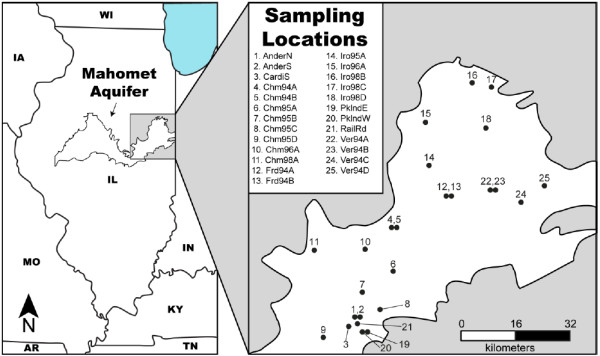
栖息在原始含水层中的多样微生物种群被认为能催化关键的原位生物地球化学反应,但人们对地下社区的结构和多样性如何与地下水化学相互作用和影响知之甚少。在此,我们检查了伊利诺伊州中东部马霍梅特含水层中一系列监测井的 8786 个细菌和 8166 个古菌 16S rRNA 基因序列。我们使用多元统计分析提供了地下水化学与附着在含水层沉积物上的微生物群落以及悬浮在地下水中的微生物群落之间关系的比较分析。
16S rRNA 基因序列的统计分析显示附着和悬浮群落之间存在明显区别;附着样本中的铁还原菌远远多于悬浮样本,而与厌氧甲烷氧化和深部地下金矿(分别为 ANME-2D 和 SAGMEG-1)相关的古菌克隆则将悬浮群落与附着群落区分开来。在附着细菌群落中,与硫酸盐还原菌 Desulfobacter 和 Desulfobulbus 属密切相关的克隆序列代表了高硫酸盐(>0.2 mM)地下水中细菌群落的 20%,而在硫酸盐含量较低的井中仅占 3%。与含铁还原菌有关的类杆菌属(Geobacter)的序列丰度几乎相等(15%),在高硫酸盐条件下与硫酸盐还原菌相当,但当硫酸盐浓度<0.03 mM 时,其相对丰度增加到 34%。此外,在硫酸盐浓度<0.03 mM 的地区,与产甲烷菌(如 Methanosarcina 和 Methanosaeta)中发现的 16S rRNA 基因序列相似的古菌序列占群落的 73-80%,并且这些地下水中的溶解 CH4 范围在 220 到 1240 μM 之间。相比之下,在硫酸盐浓度>0.2 mM 的地下水样本中,产甲烷菌(及其产物 CH4)几乎不存在。在硫酸盐浓度在 0.03 和 0.2 mM 之间的井的悬浮部分中,古菌群落主要由与 ANME-2D 最密切相关的序列主导,ANME-2D 是一组已知能够厌氧氧化甲烷的古菌。基于可用能量(∆GA)估计,整个研究井中硫酸盐还原和产甲烷作用的结果变化不大,但在硫酸盐和二氢含量最小的井中可能有利于厌氧甲烷氧化(AOM),这表明 AOM 与 H2-氧化生物(如硫酸盐或铁还原菌)的耦合可能是马霍梅特含水层中一种重要的发生途径。
总体而言,结果表明有几个不同的因素控制着马霍梅特含水层中微生物群落的组成。无论地下水化学如何,呼吸不溶性底物(如氧化铁)的细菌,即 Geobacter,在附着群落中的丰度高于悬浮群落。受硫酸盐浓度驱动的群落结构差异表明,基质的可利用性与某些功能群(特别是铁还原菌、硫酸盐还原菌、产甲烷菌和甲烷氧化菌)的丰度之间存在明显联系。综合地球化学和微生物学观察结果表明,这些功能群之间的关系可能部分受共生作用的驱动,特别是铁还原菌和硫酸盐还原菌之间的共生作用。