School of Environmental and Life Sciences, The University of Newcastle Callaghan, NSW, Australia.
Front Plant Sci. 2013 Jun 19;4:184. doi: 10.3389/fpls.2013.00184. eCollection 2013.
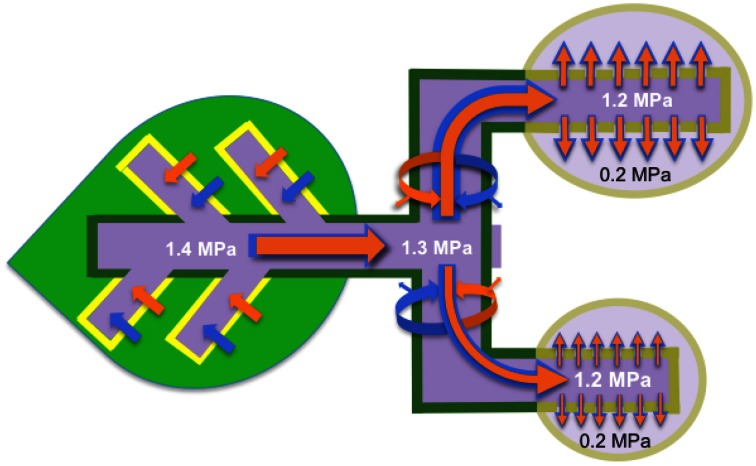
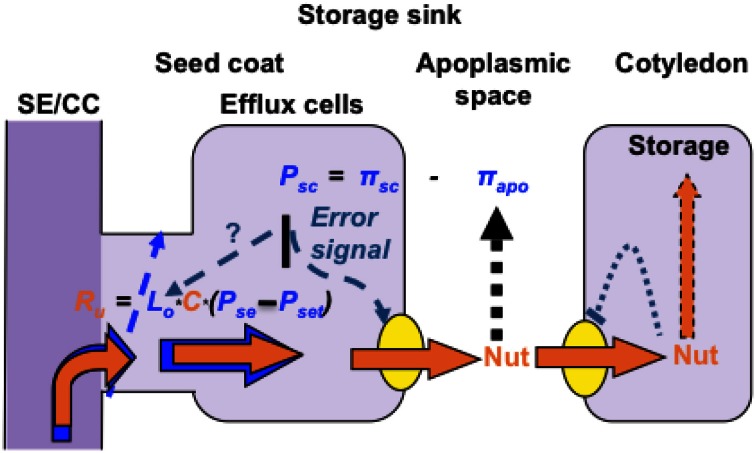
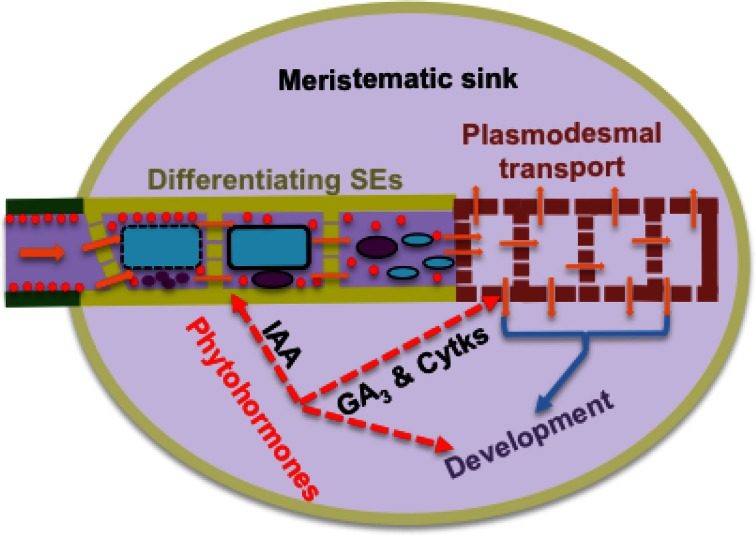
The pressure flow model of phloem transport envisaged by Münch (1930) has gained wide acceptance. Recently, however, the model has been questioned on structural and physiological grounds. For instance, sub-structures of sieve elements may reduce their hydraulic conductances to levels that impede flow rates of phloem sap and observed magnitudes of pressure gradients to drive flow along sieve tubes could be inadequate in tall trees. A variant of the Münch pressure flow model, the high-pressure manifold model of phloem transport introduced by Donald Fisher may serve to reconcile at least some of these questions. To this end, key predicted features of the high-pressure manifold model of phloem transport are evaluated against current knowledge of the physiology of phloem transport. These features include: (1) An absence of significant gradients in axial hydrostatic pressure in sieve elements from collection to release phloem accompanied by transport properties of sieve elements that underpin this outcome; (2) Symplasmic pathways of phloem unloading into sink organs impose a major constraint over bulk flow rates of resources translocated through the source-path-sink system; (3) Hydraulic conductances of plasmodesmata, linking sieve elements with surrounding phloem parenchyma cells, are sufficient to support and also regulate bulk flow rates exiting from sieve elements of release phloem. The review identifies strong circumstantial evidence that resource transport through the source-path-sink system is consistent with the high-pressure manifold model of phloem transport. The analysis then moves to exploring mechanisms that may link demand for resources, by cells of meristematic and expansion/storage sinks, with plasmodesmal conductances of release phloem. The review concludes with a brief discussion of how these mechanisms may offer novel opportunities to enhance crop biomass yields.
韧皮部运输的压力流模型是 Münch(1930 年)提出的,该模型已得到广泛认可。然而,最近该模型在结构和生理学方面受到了质疑。例如,筛分子的亚结构可能会降低它们的水力传导率,从而阻碍韧皮部汁液的流动速度,并且观察到的驱动沿筛管流动的压力梯度可能不足以适应高大树木中的情况。Donald Fisher 提出的韧皮部运输高压歧管模型是 Münch 压力流模型的一个变体,可能有助于解决其中的一些问题。为此,针对当前对韧皮部运输生理学的了解,评估了韧皮部运输高压歧管模型的关键预测特征。这些特征包括:(1)从收集到释放韧皮部的筛分子中轴向静水压力没有明显梯度,伴随着支撑这一结果的筛分子的运输特性;(2)韧皮部卸载到汇器官的胞质流途径对通过源-路径-汇系统转运的资源的总体流动速率施加了主要限制;(3)连接筛分子和周围韧皮部薄壁细胞的胞质体途径的水力传导率足以支持和调节从释放韧皮部的筛分子中流出的总体流动速率。该综述确定了强有力的间接证据,表明资源通过源-路径-汇系统的运输与韧皮部高压歧管模型一致。然后,分析转向探索可能将分生组织和扩展/储存汇细胞对资源的需求与释放韧皮部的胞质体途径的传导率联系起来的机制。该综述最后简要讨论了这些机制如何为提高作物生物量产量提供新的机会。