Department of Neurosciences and Behavior, Ribeirao Preto Medical School, University of Sao Paulo, Brazil; Department of Neurology and Neurosurgery, Montreal Neurological Institute, McGill University, Montreal, Canada.
Hippocampus. 2013 Dec;23(12):1212-30. doi: 10.1002/hipo.22160. Epub 2013 Jul 23.
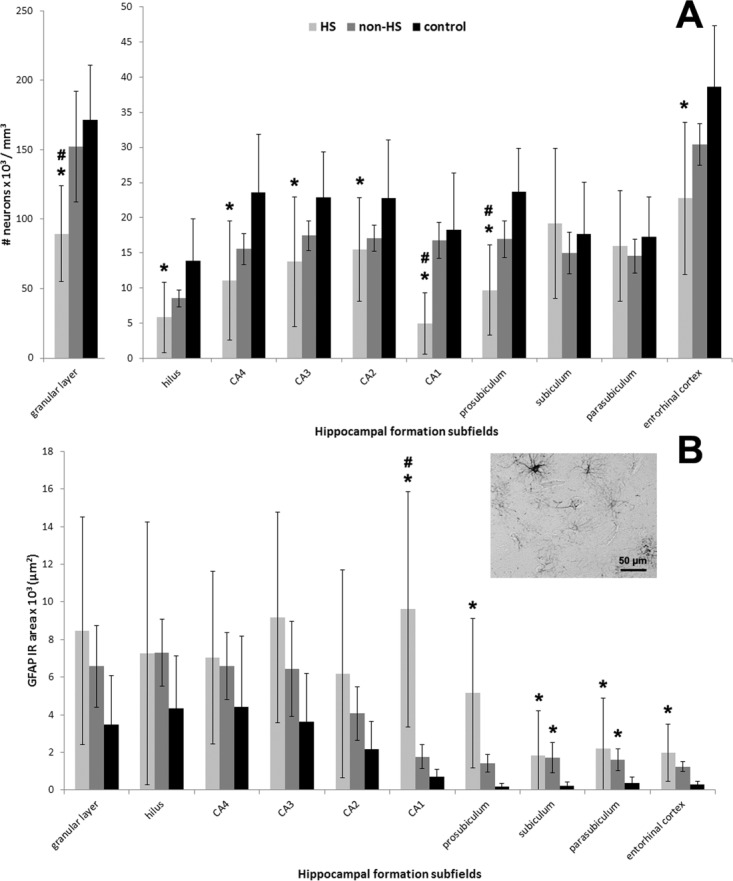
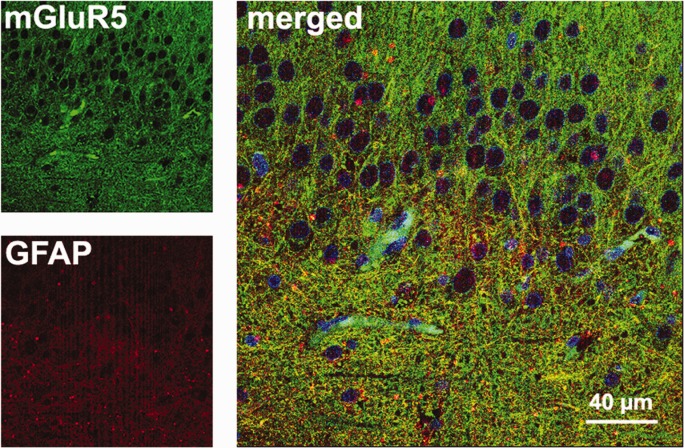
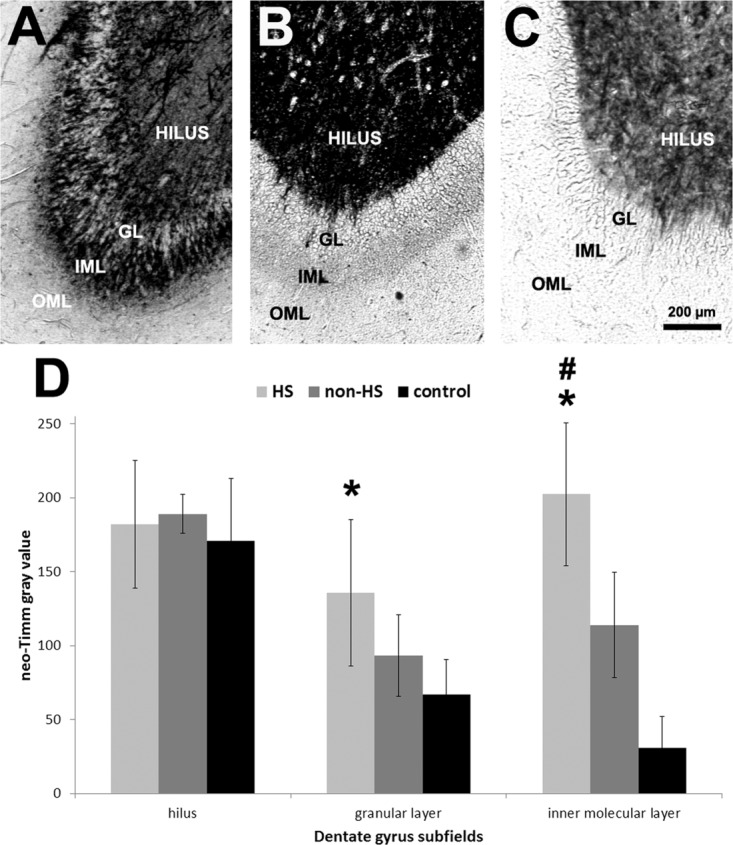
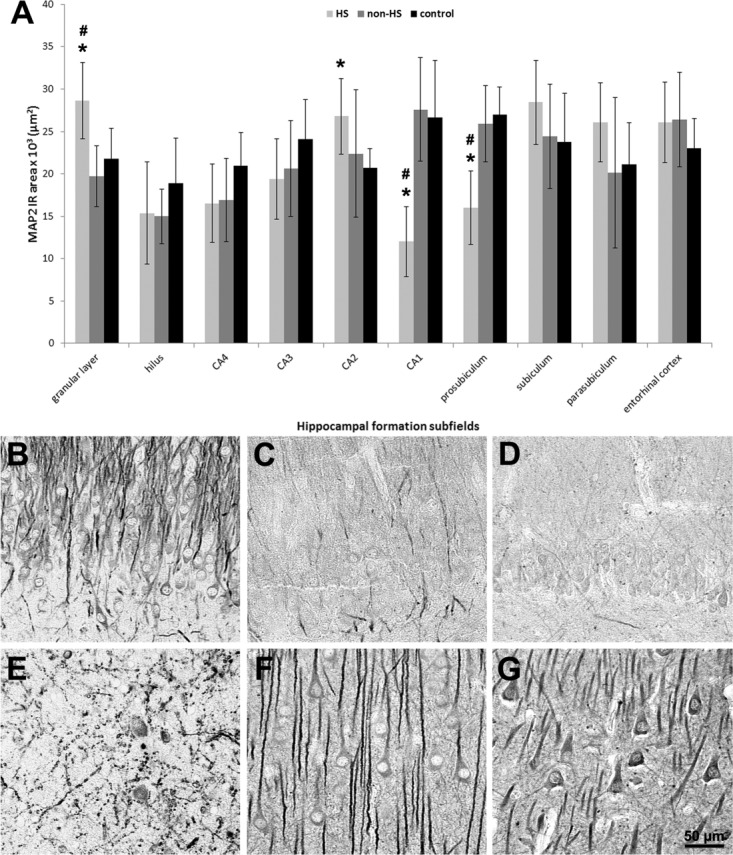
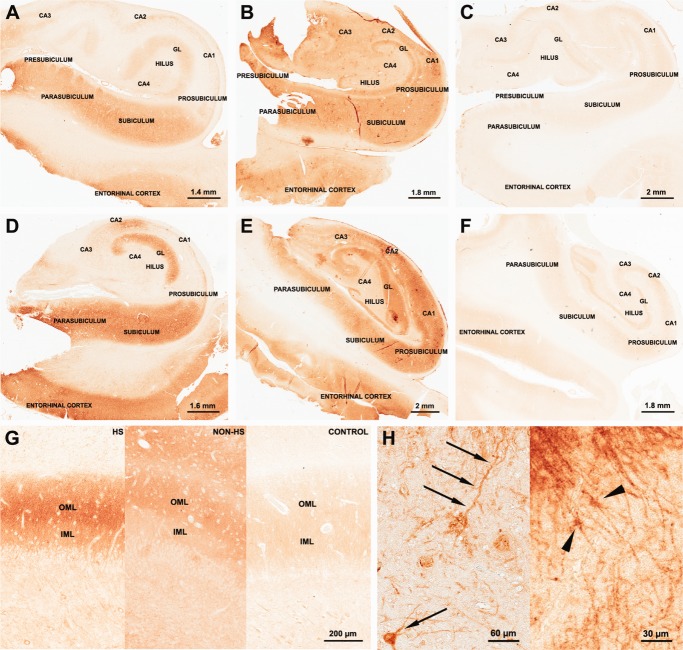
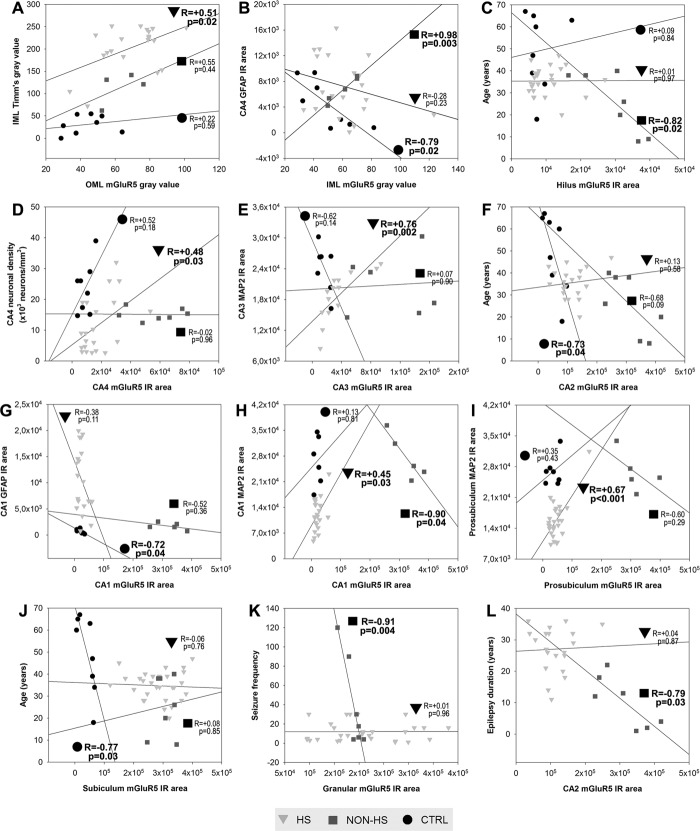
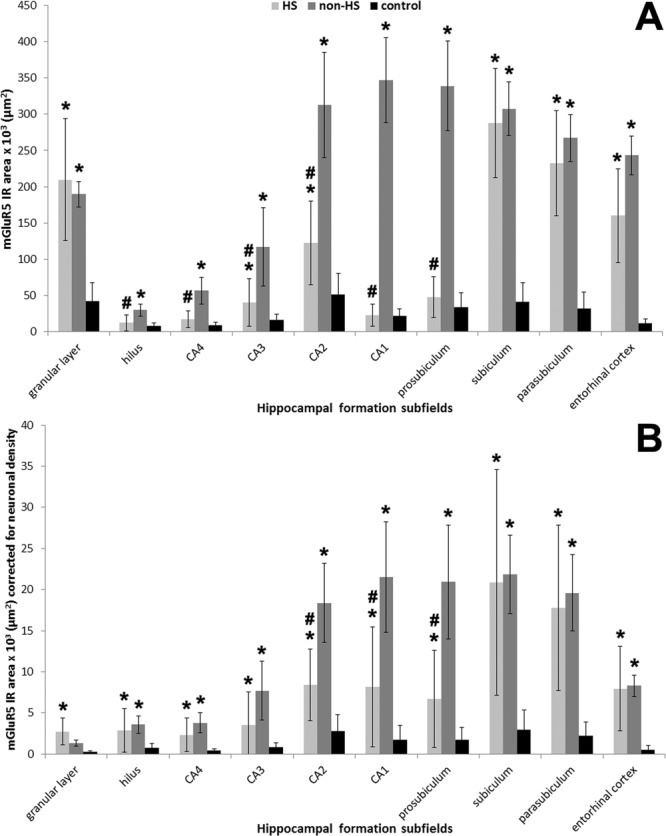
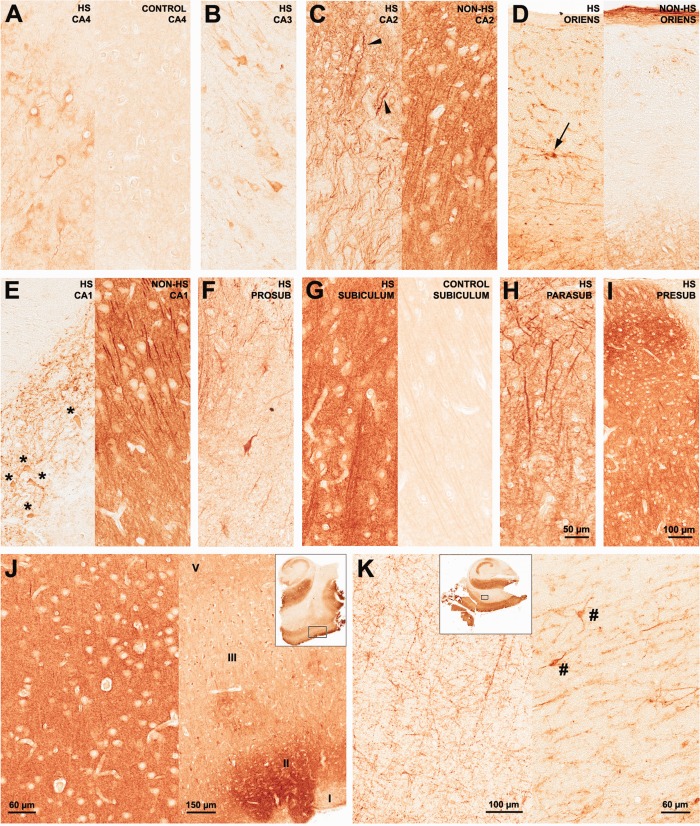
Metabotropic glutamate receptor type 5 (mGluR5) upregulation in temporal lobe epilepsy (TLE) and the correlation of its expression with features of hippocampal sclerosis (HS) remains unclear. Here we characterized mGluR5 immunoreactivity in hippocampus, entorhinal cortex (EC), and subiculum of TLE specimens with confirmed HS, with neocortical TLE (non-HS) and necropsy controls. We correlated mGluR5 immunoreactivity with neuronal density, mossy fiber sprouting, astrogliosis (GFAP), and dendritic alterations (MAP2). TLE specimens showed increased mGluR5 expression, which was most pronounced in the EC, subiculum, CA2, and dentate gyrus outer molecular layer. Increased mGluR5 expression was seen in hippocampal head and body segments and was independent of neuronal density, astrogliosis, or dendritic alterations. Positive correlation between mGluR5 expression with mossy fiber sprouting and with MAP2 in CA3 and CA1 was found only in HS specimens. Negative correlation between mGluR5 expression with seizure frequency and epilepsy duration was found only in non-HS cases. Specimens from HS patients without previous history of febrile seizure (FS) showed higher mGluR5 and MAP2 expression in CA2. Our study suggests that mGluR5 upregulation is part of a repertoire of post-synaptic adaptations that might control overexcitation and excessive glutamate release rather than a dysfunction that leads to seizure facilitation. That would explain why non-HS cases, on which seizures are likely to originate outside the hippocampal formation, also exhibit upregulated mGluR5. On the other hand, lower mGluR5 expression was related to increased seizure frequency. In addition to its role in hyperexcitability, mGluR5 upregulation could play a role in counterbalance mechanisms along the hyperexcitable circuitry uniquely altered in sclerotic hippocampal formation. Inefficient post-synaptic compensatory morphological (dendritic branching) and glutamatergic (mGluR5 expression) mechanisms in CA2 subfield could potentially underlie the association of FS with HS and TLE.
代谢型谷氨酸受体 5(mGluR5)在颞叶癫痫(TLE)中的上调及其表达与海马硬化(HS)特征的相关性尚不清楚。在这里,我们描述了 mGluR5 在 TLE 标本中伴有 HS、伴有新皮质 TLE(非 HS)和尸检对照的海马、内嗅皮层(EC)和下托中的免疫反应性。我们将 mGluR5 免疫反应性与神经元密度、苔藓纤维发芽、星形胶质增生(GFAP)和树突改变(MAP2)相关联。TLE 标本显示 mGluR5 表达增加,在 EC、下托、CA2 和齿状回外分子层最为明显。海马头部和体部的 mGluR5 表达增加,与神经元密度、星形胶质增生或树突改变无关。仅在 HS 标本中发现 mGluR5 表达与苔藓纤维发芽和 CA3 和 CA1 中的 MAP2 之间存在正相关。仅在非 HS 病例中发现 mGluR5 表达与发作频率和癫痫持续时间之间存在负相关。无热性惊厥(FS)既往史的 HS 患者标本中 CA2 的 mGluR5 和 MAP2 表达更高。我们的研究表明,mGluR5 的上调是突触后适应的一部分,可能控制过度兴奋和过度谷氨酸释放,而不是导致癫痫发作促进的功能障碍。这可以解释为什么可能起源于海马结构之外的非 HS 病例也表现出上调的 mGluR5。另一方面,mGluR5 表达降低与发作频率增加有关。除了在过度兴奋中的作用外,mGluR5 的上调可能在沿着独特改变的硬化海马结构的过度兴奋电路中发挥代偿性形态学(树突分支)和谷氨酸能(mGluR5 表达)机制的作用。CA2 亚区中突触后补偿性形态学(树突分支)和谷氨酸能(mGluR5 表达)机制效率低下可能是 FS 与 HS 和 TLE 相关的基础。