Departamento de Biología Celular y Molecular, Centro de Envejecimiento y Regeneración, Facultad de Ciencias Biológicas, Pontificia Universidad Católica de Chile Santiago, Chile.
Front Cell Neurosci. 2013 Jun 25;7:97. doi: 10.3389/fncel.2013.00097. eCollection 2013.
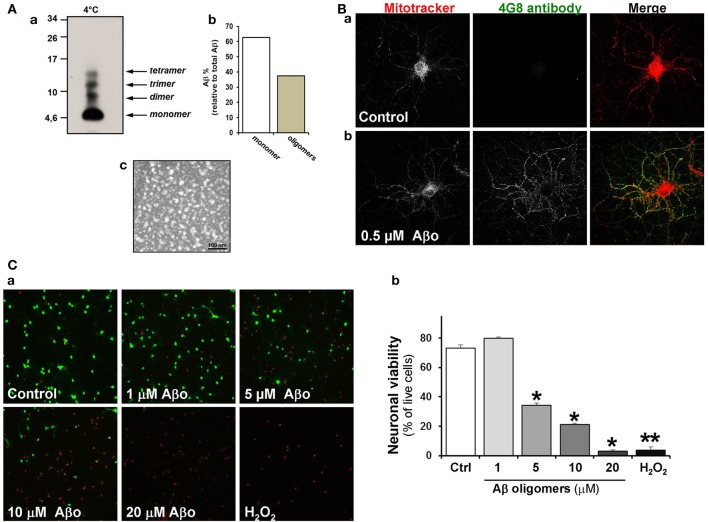
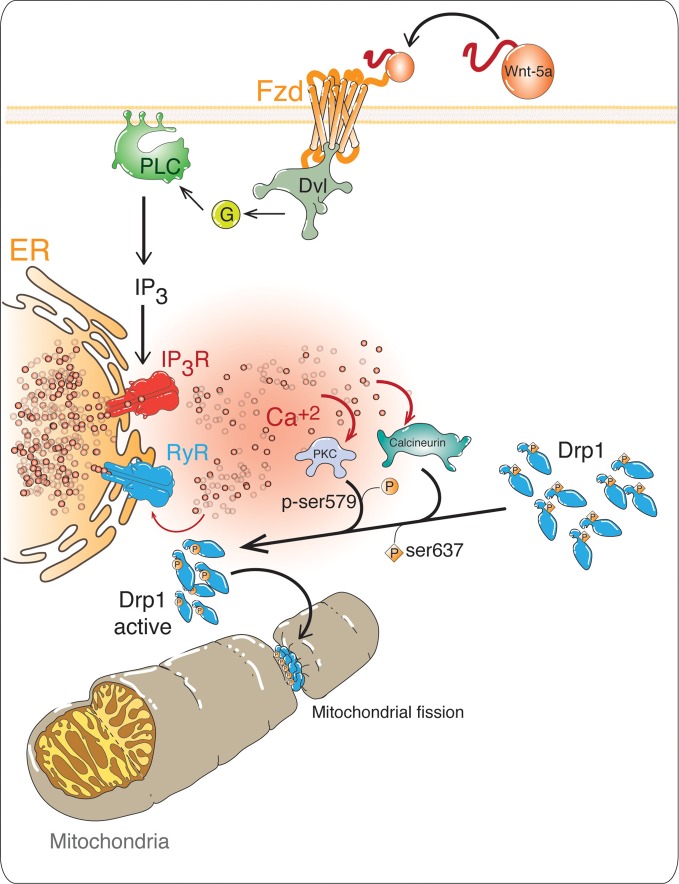
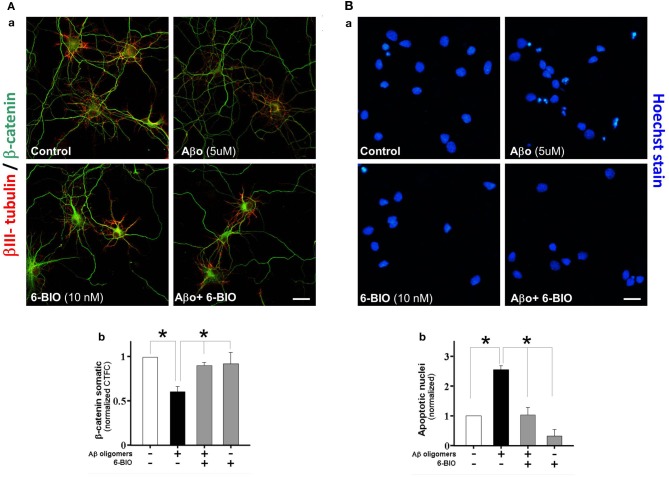
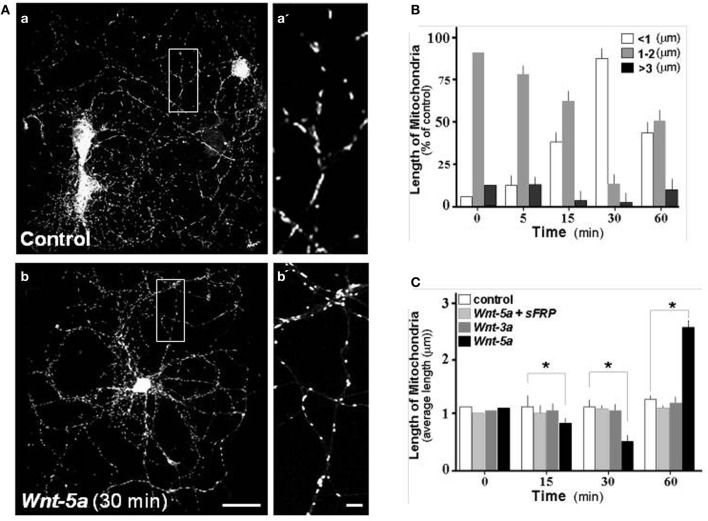
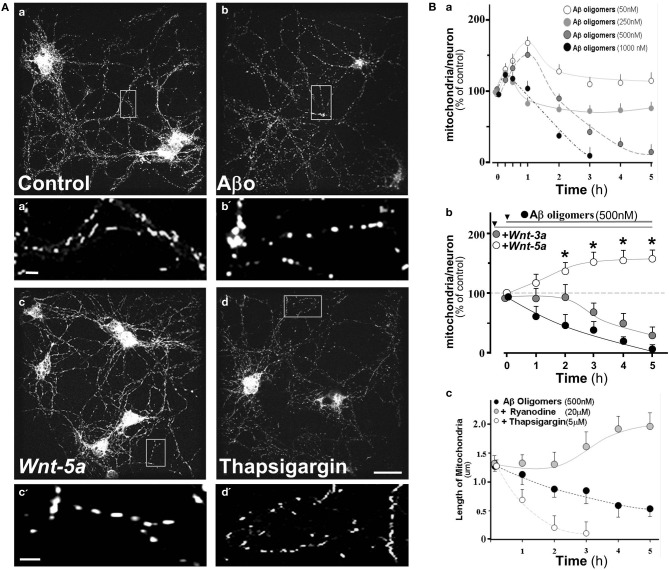
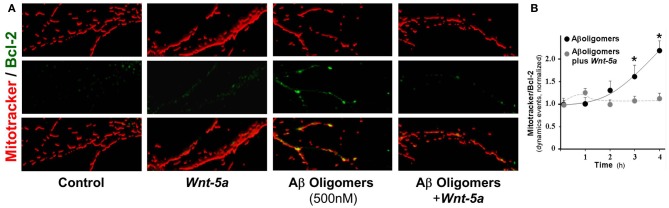
Alzheimer's disease (AD) is the most common type of age-related dementia. The disease is characterized by a progressive loss of cognitive abilities, severe neurodegeneration, synaptic loss and mitochondrial dysfunction. The Wnt signaling pathway participates in the development of the central nervous system and growing evidence indicates that Wnts also regulate the function of the adult nervous system. We report here, that indirect activation of canonical Wnt/β-catenin signaling using Bromoindirubin-30-Oxime (6-BIO), an inhibitor of glycogen synthase kinase-3β, protects hippocampal neurons from amyloid-β (Aβ) oligomers with the concomitant blockade of neuronal apoptosis. More importantly, activation with Wnt-5a, a non-canonical Wnt ligand, results in the modulation of mitochondrial dynamics, preventing the changes induced by Aβ oligomers (Aβo) in mitochondrial fission-fusion dynamics and modulates Bcl-2 increases induced by oligomers. The canonical Wnt-3a ligand neither the secreted Frizzled-Related Protein (sFRP), a Wnt scavenger, did not prevent these effects. In contrast, some of the Aβ oligomer effects were blocked by Ryanodine. We conclude that canonical Wnt/β-catenin signaling controls neuronal survival, and that non-canonical Wnt/Ca(2+)signaling modulates mitochondrial dysfunction. Since mitochondrial dysfunction is present in neurodegenerative diseases, the therapeutic possibilities of the activation of Wnt signaling are evident.
阿尔茨海默病(AD)是最常见的与年龄相关的痴呆症。该疾病的特征是认知能力进行性丧失、严重的神经退行性变、突触丧失和线粒体功能障碍。Wnt 信号通路参与中枢神经系统的发育,越来越多的证据表明 Wnts 也调节成年神经系统的功能。我们在这里报告,使用糖原合酶激酶-3β抑制剂 Bromoindirubin-30-Oxime(6-BIO)间接激活经典 Wnt/β-连环蛋白信号通路可保护海马神经元免受淀粉样β(Aβ)低聚物的影响,同时阻止神经元凋亡。更重要的是,Wnt-5a 的激活(一种非经典的 Wnt 配体)导致线粒体动力学的调节,防止 Aβ 低聚物(Aβo)诱导的线粒体裂变-融合动力学变化,并调节由低聚物诱导的 Bcl-2 增加。经典的 Wnt-3a 配体和分泌型卷曲相关蛋白(sFRP),一种 Wnt 清除剂,都不能防止这些影响。相比之下,Ryanodine 阻断了一些 Aβ 低聚物的作用。我们得出结论,经典的 Wnt/β-连环蛋白信号通路控制神经元存活,而非经典的 Wnt/Ca(2+)信号通路调节线粒体功能障碍。由于线粒体功能障碍存在于神经退行性疾病中,因此激活 Wnt 信号的治疗可能性是显而易见的。