Arrázola Macarena S, Ramos-Fernández Eva, Cisternas Pedro, Ordenes Daniela, Inestrosa Nibaldo C
Centro de Envejecimiento y Regeneración (CARE), Departamento de Biología Celular y Molecular, Facultad de Ciencias Biológicas, Pontificia Universidad Católica de Chile, Santiago, Chile.
Universidad de Atacama, Facultad de Ciencias Naturales, Departamento de Química y Biología, Copiapó, Chile.
PLoS One. 2017 Jan 6;12(1):e0168840. doi: 10.1371/journal.pone.0168840. eCollection 2017.
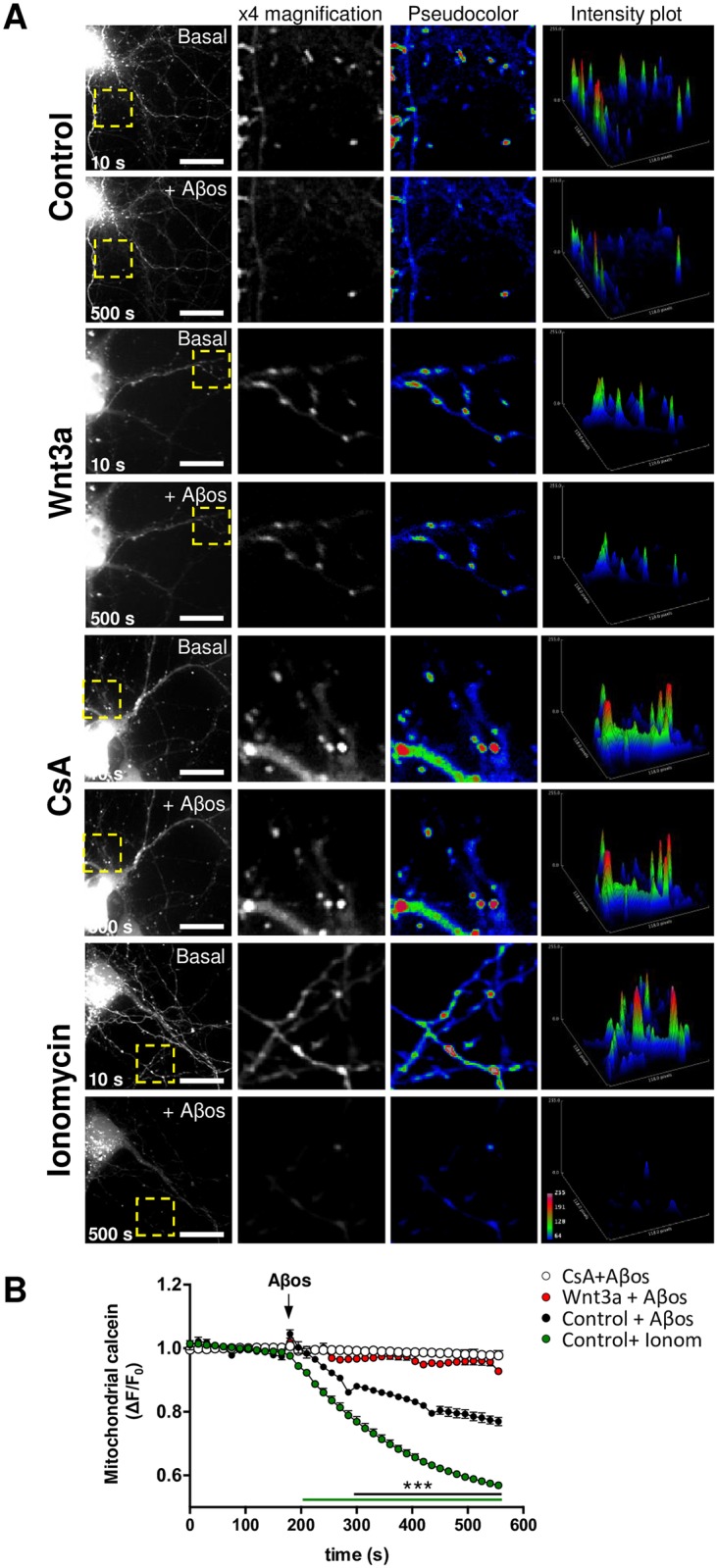
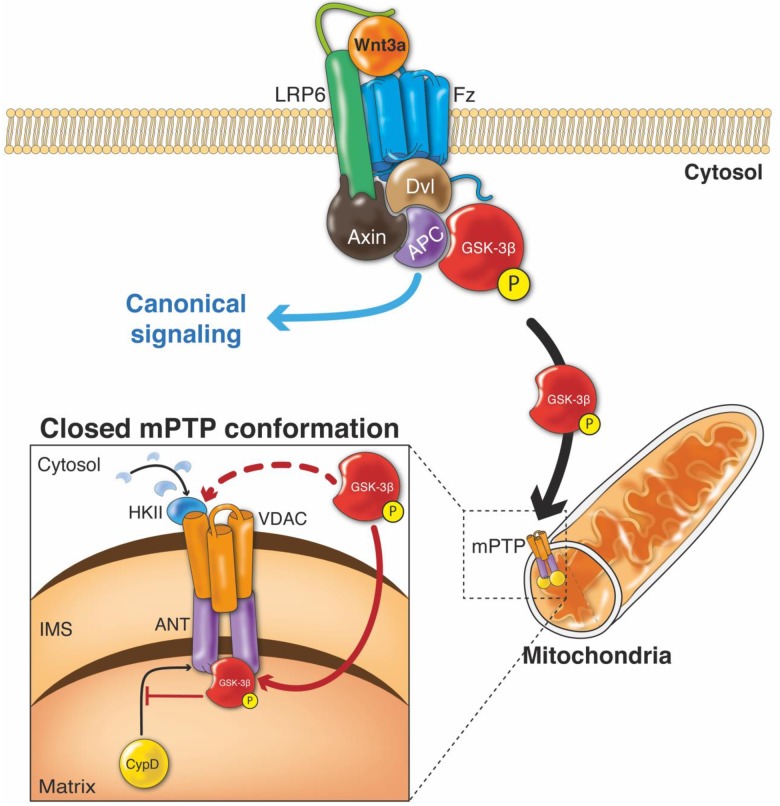
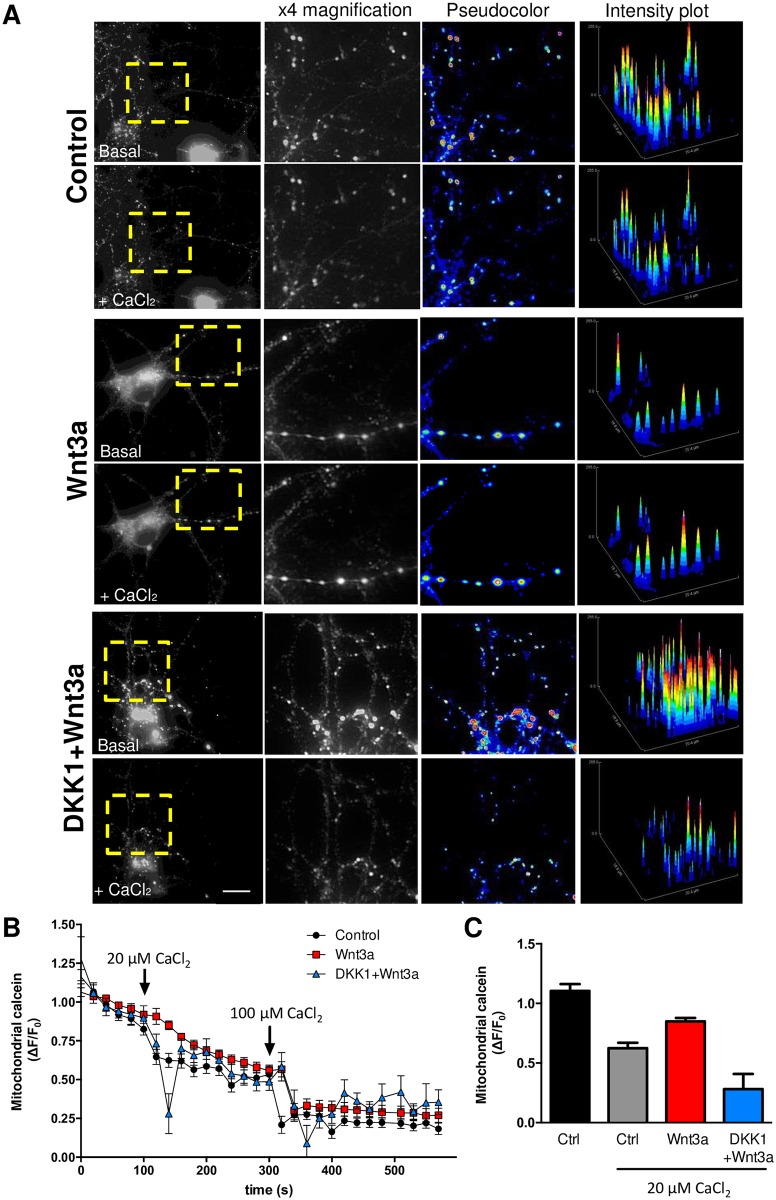
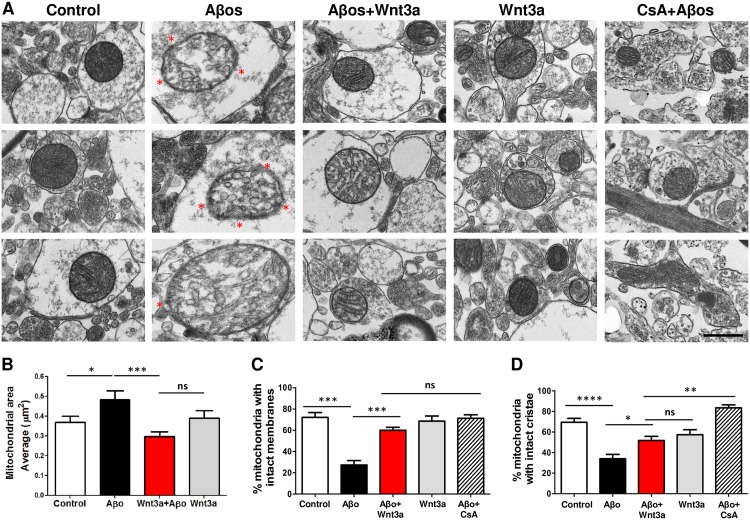
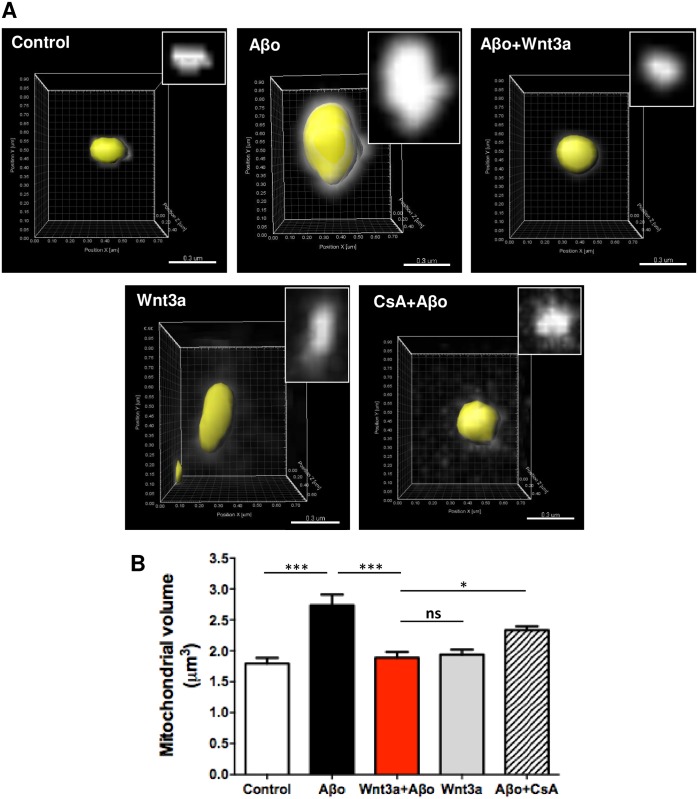
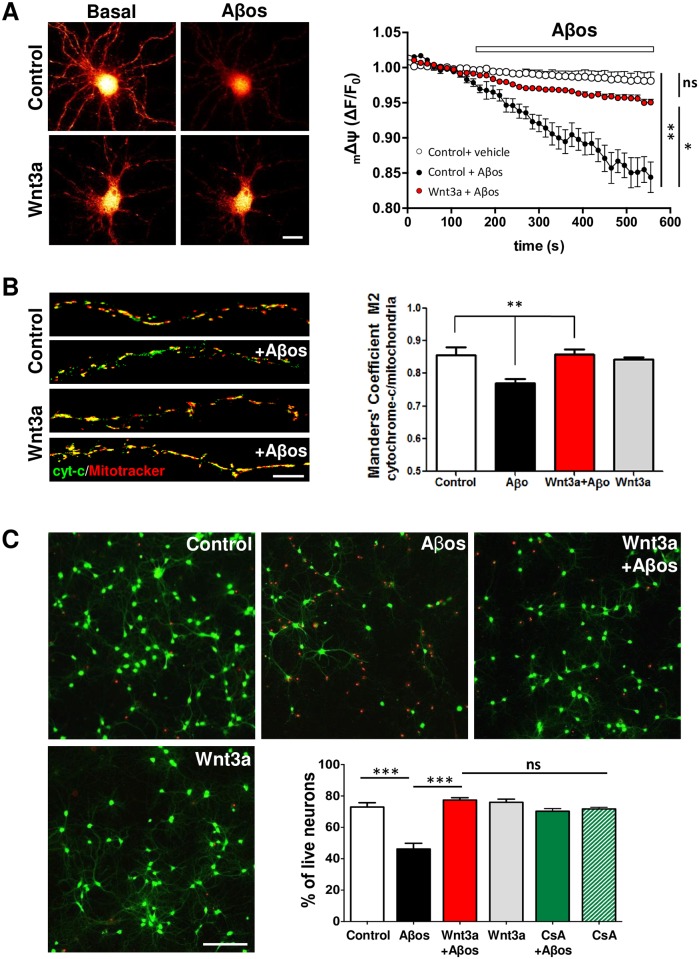
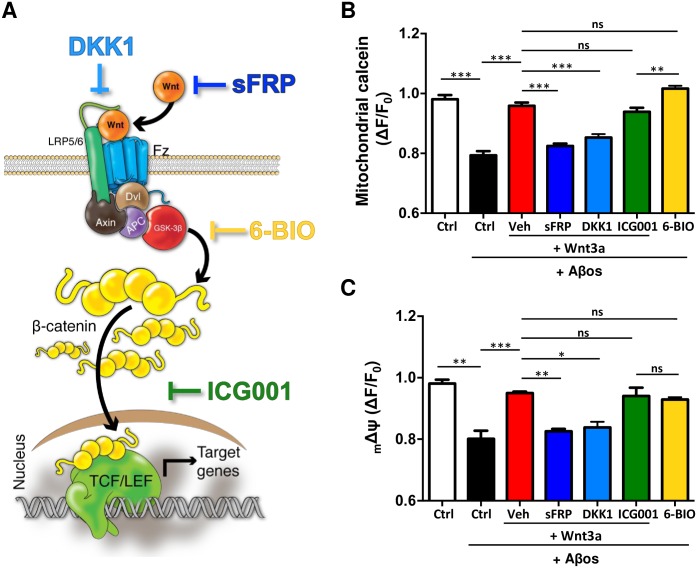
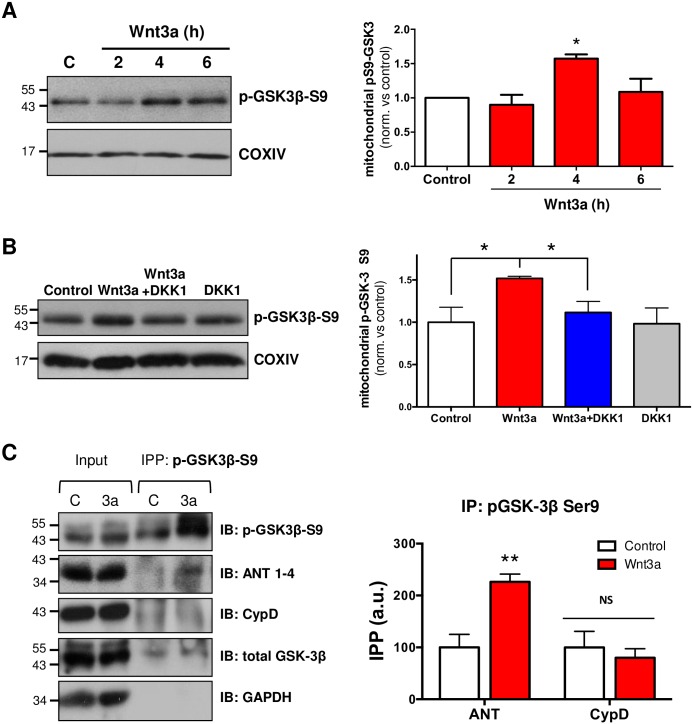
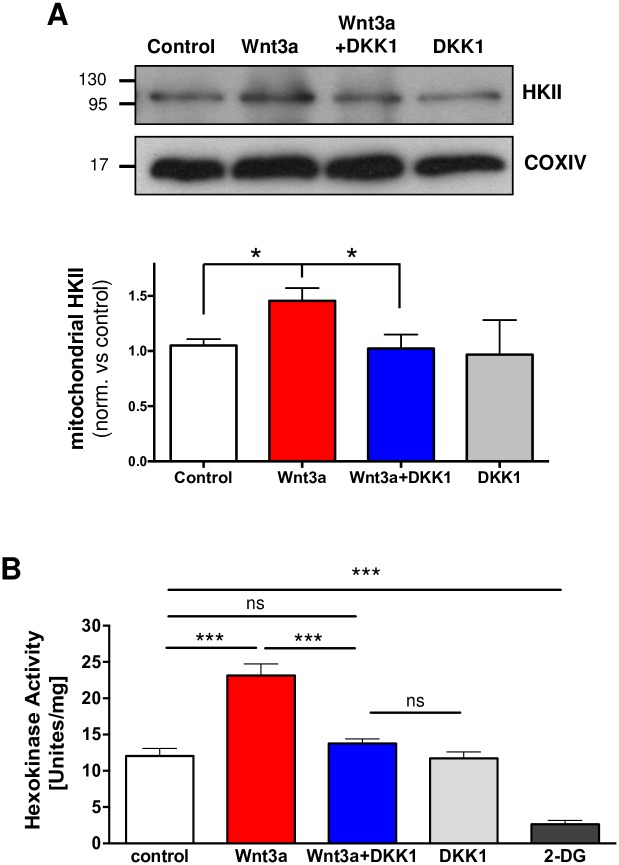
Alzheimer's disease (AD) is a neurodegenerative disorder mainly known for synaptic impairment and neuronal cell loss, affecting memory processes. Beside these damages, mitochondria have been implicated in the pathogenesis of AD through the induction of the mitochondrial permeability transition pore (mPTP). The mPTP is a non-selective pore that is formed under apoptotic conditions, disturbing mitochondrial structure and thus, neuronal viability. In AD, Aβ oligomers (Aβos) favor the opening of the pore, activating mitochondria-dependent neuronal cell death cascades. The Wnt signaling activated through the ligand Wnt3a has been described as a neuroprotective signaling pathway against amyloid-β (Aβ) peptide toxicity in AD. However, the mechanisms by which Wnt signaling prevents Aβos-induced neuronal cell death are unclear. We proposed here to study whether Wnt signaling protects neurons earlier than the late damages in the progression of the disease, through the preservation of the mitochondrial structure by the mPTP inhibition. To study specific events related to mitochondrial permeabilization we performed live-cell imaging from primary rat hippocampal neurons, and electron microscopy to analyze the mitochondrial morphology and structure. We report here that Wnt3a prevents an Aβos-induced cascade of mitochondrial events that leads to neuronal cell death. This cascade involves (a) mPTP opening, (b) mitochondrial swelling, (c) mitochondrial membrane potential loss and (d) cytochrome c release, thus leading to neuronal cell death. Furthermore, our results suggest that the activation of the Wnt signaling prevents mPTP opening by two possible mechanisms, which involve the inhibition of mitochondrial GSK-3β and/or the modulation of mitochondrial hexokinase II levels and activity. This study suggests a possible new approach for the treatment of AD from a mitochondrial perspective, and will also open new lines of study in the field of Wnt signaling in neuroprotection.
阿尔茨海默病(AD)是一种神经退行性疾病,主要以突触损伤和神经元细胞丢失为特征,影响记忆过程。除了这些损伤外,线粒体通过诱导线粒体通透性转换孔(mPTP)参与了AD的发病机制。mPTP是一种在凋亡条件下形成的非选择性孔,会扰乱线粒体结构,进而影响神经元的生存能力。在AD中,β淀粉样蛋白寡聚体(Aβos)有利于该孔的开放,激活依赖线粒体的神经元细胞死亡级联反应。通过配体Wnt3a激活的Wnt信号通路已被描述为一种针对AD中淀粉样β(Aβ)肽毒性的神经保护信号通路。然而,Wnt信号通路预防Aβos诱导的神经元细胞死亡的机制尚不清楚。我们在此提出研究Wnt信号通路是否通过抑制mPTP来保护线粒体结构,从而比疾病进展后期的损伤更早地保护神经元。为了研究与线粒体通透性相关的特定事件,我们对原代大鼠海马神经元进行了活细胞成像,并通过电子显微镜分析了线粒体的形态和结构。我们在此报告,Wnt3a可预防Aβos诱导的一系列导致神经元细胞死亡的线粒体事件。这一系列事件包括:(a)mPTP开放;(b)线粒体肿胀;(c)线粒体膜电位丧失;(d)细胞色素c释放,从而导致神经元细胞死亡。此外,我们的结果表明,Wnt信号通路的激活通过两种可能的机制阻止mPTP开放,这两种机制涉及抑制线粒体糖原合成酶激酶-3β(GSK-3β)和/或调节线粒体己糖激酶II的水平及活性。这项研究从线粒体角度为AD的治疗提出了一种可能的新方法,也将为神经保护领域中Wnt信号通路的研究开辟新的方向。