Nuclear Chemistry and Environmental Research Centre, National Nuclear Research Institute, Ghana Atomic Energy Commission, Legon, Accra, Ghana.
Malar J. 2013 Jun 28;12:220. doi: 10.1186/1475-2875-12-220.
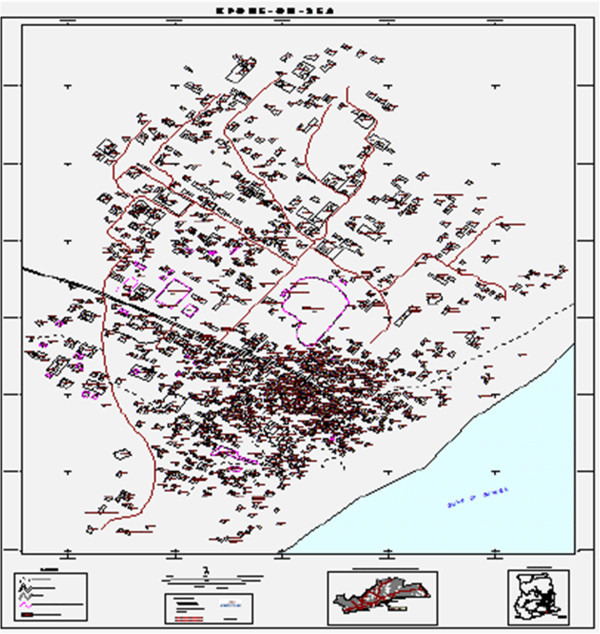
The ineffectiveness of artesunate and amodiaquine tablets in malaria treatment remains a health burden to WHO and governments of malaria-endemic countries, including Ghana. The proliferation of illegitimate anti-malarial drugs and its use by patients is of primary concern to international and local drug regulatory agencies because such drugs are known to contribute to the development of the malaria-resistant parasites in humans. No data exist on quality of these drugs in the fishing village communities in Ghana although the villagers are likely users of such drugs. A pilot study on the quality of anti-malarial tablets in circulation during the major fishing season at a malarious fishing village located along the coast of Tema in southern Ghana was determined.
Blisterpacks of anti-malarial tablets were randomly sampled. The International Pharmacopoeia and Global Pharma Health Fund Minilab protocols were used to assess the quality of anti-malarial tablets per blisterpacks allegedly manufactured by Guilin Pharmaceutical Co Ltd, China (GPCL) and Letap Pharmaceuticals Ltd, Ghana (LPL) and sold in chemical sales outlets at Kpone-on-Sea. Ferric chloride and cobaltous thiocyanate tests confirmed the presence of active ingredients in the tablets. A confirmatory test for the active ingredient was achieved with artesunate (ICRS1409) and amodiaquine (ICRS0209) reference standards. A high performance liquid chromatography analysis confirmed the amount of artesunate found in tablets.
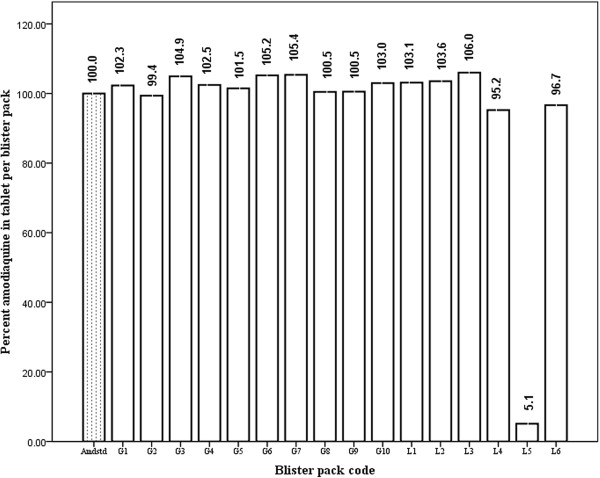
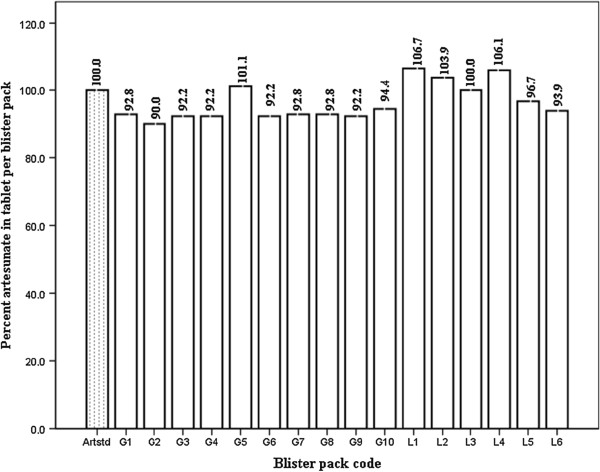
Based on the International Pharmacopoeia acceptable range of 96/98 to 102% for genuine artesunate per tablet, 10% [relative standard deviation (RSD): 3.2%] of field-selected artesunate blisterpack per tablets manufactured by GPCL, and 50% (RSD: 5.1%) of a similar package per tablet by LPL, passed the titrimetric test. However, 100% (RSD: 2.2%) of amodiaquine blisterpack per tablet by GPCL were found to be within the International Pharmacopeia acceptable range of 90 to 110% for genuine amodiaquine in tablet, whilst 17% of a similar package per tablet by LPL failed spectrophotometric testing.
Inadequate amounts of artesunate and amodiaquine detected in the tablets suggest that both pharmaceutical companies may not be following recommended drug formulation procedures, or the active pharmaceutical ingredients might have been degraded by improper storage conditions. Thus, drugs being sold at Kpone-on-Sea, Ghana may likely be classified as substandard drugs and not suitable for malaria treatment.
青蒿琥酯和阿莫地喹片在疟疾治疗中的无效仍然是世界卫生组织和包括加纳在内的疟疾流行国家的一个健康负担。非法抗疟药物的泛滥及其在患者中的使用引起了国际和地方药品监管机构的主要关注,因为已知这些药物会导致人类疟原虫产生抗药性。尽管渔村村民可能是这些药物的使用者,但加纳渔村社区的这些药物质量尚无数据。在加纳南部特马沿海的一个疟疾流行渔村,在主要捕鱼季节期间,对流通中的抗疟片进行了质量试点研究。
随机抽取了安瓿包装的抗疟片。使用《国际药典》和全球制药健康基金 MiniLab 方案评估了据称由中国桂林制药有限公司(GPCL)和加纳 Letap 制药有限公司(LPL)生产并在科蓬-昂-塞拉的化学销售点销售的每片安瓿包装的抗疟片的质量。三氯化铁和硫酸钴硫氰酸盐测试证实了片剂中活性成分的存在。使用青蒿琥酯(ICRS1409)和阿莫地喹(ICRS0209)参比标准进行了活性成分的确认测试。高效液相色谱分析证实了片剂中发现的青蒿琥酯的含量。
根据《国际药典》规定的每片青蒿琥酯 96/98%至 102%的可接受范围,10%(相对标准偏差(RSD):3.2%)的桂林制药生产的青蒿琥酯现场选择的安瓿包装每片和 LPL 生产的类似包装每片 50%(RSD:5.1%)通过滴定测试。然而,桂林制药生产的每片阿莫地喹安瓿包装的 100%(RSD:2.2%)均在《国际药典》规定的每片 90%至 110%的可接受范围内,而 LPL 生产的类似包装的 17%未能通过分光光度法测试。
检测到的青蒿琥酯和阿莫地喹片含量不足表明,两家制药公司可能没有遵循推荐的药物配方程序,或者活性药物成分可能因储存条件不当而降解。因此,在加纳科蓬-昂-塞拉销售的药物可能被归类为劣药,不适合治疗疟疾。