Department of Biochemistry and Molecular Biology, Debrecen, Egyetemtér, 4028, Hungary.
Department of Biochemistry and Molecular Biology, Debrecen, Egyetemtér, 4028, Hungary ; Center for Clinical Genomics and Personalized Medicine, Medical and Health Science Center, University of Debrecen, Debrecen, Egyetemtér, 4028, Hungary ; UD-GenoMed, Ltd., Debrecen, Egyetemtér, 4012, Pf 52, Hungary.
Genome Med. 2013 Jun 28;5(6):59. doi: 10.1186/gm463. eCollection 2013.
Biological therapies have been introduced for the treatment of chronic inflammatory diseases including rheumatoid arthritis (RA) and Crohn's disease (CD). The efficacy of biologics differs from patient to patient. Moreover these therapies are rather expensive, therefore treatment of primary non-responders should be avoided.
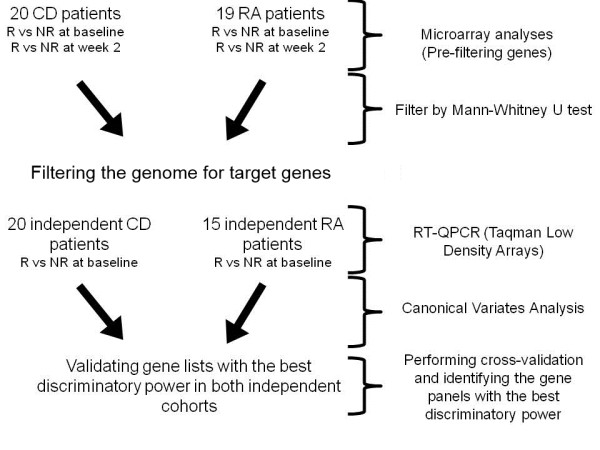
We addressed this issue by combining gene expression profiling and biostatistical approaches. We performed peripheral blood global gene expression profiling in order to filter the genome for target genes in cohorts of 20 CD and 19 RA patients. Then RT-quantitative PCR validation was performed, followed by multivariate analyses of genes in independent cohorts of 20 CD and 15 RA patients, in order to identify sets ofinterrelated genes that can separate responders from non-responders to the humanized chimeric anti-TNFalpha antibody infliximab at baseline.
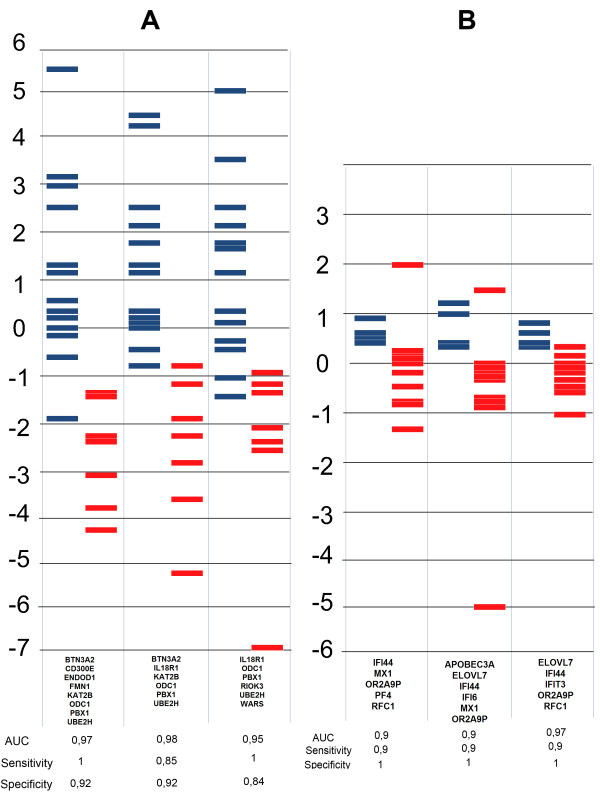
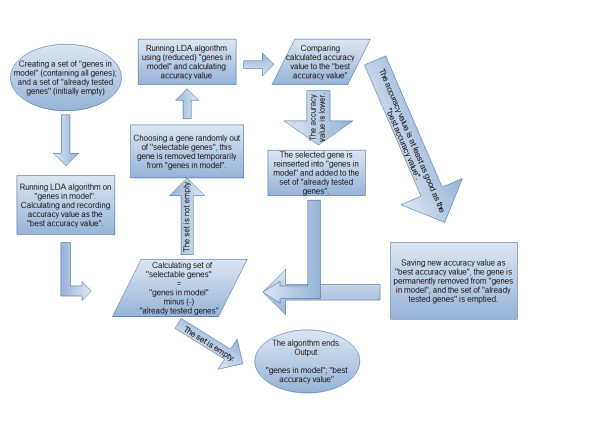
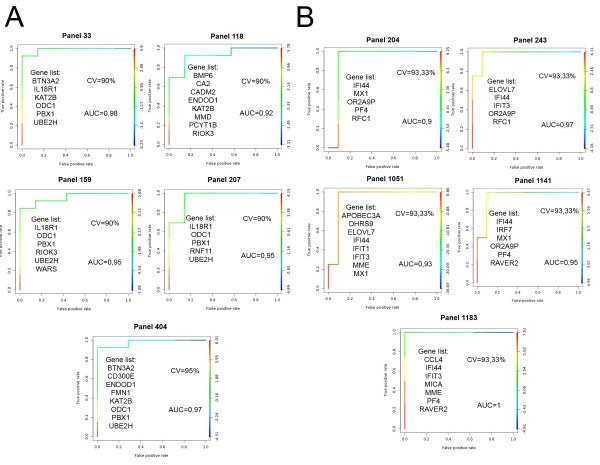
Gene panels separating responders from non-responders were identified using leave-one-out cross-validation test, and a pool of genes that should be tested on larger cohorts was created in both conditions.
Our data show that peripheral blood gene expression profiles are suitable for determining gene panels with high discriminatory power to differentiate responders from non-responders in infliximab therapy at baseline in CD and RA, which could be cross-validated successfully. Biostatistical analysis of peripheral blood gene expression data leads to the identification of gene panels that can help predict responsiveness of therapy and support the clinical decision-making process.
生物疗法已被引入治疗慢性炎症性疾病,包括类风湿关节炎(RA)和克罗恩病(CD)。生物制剂的疗效因人而异。此外,这些治疗方法相当昂贵,因此应避免治疗原发性无应答者。
我们通过结合基因表达谱和生物统计学方法来解决这个问题。我们对 20 名 CD 和 19 名 RA 患者进行了外周血全基因组表达谱分析,以筛选出针对目标基因的基因组。然后进行 RT-qPCR 验证,随后对 20 名 CD 和 15 名 RA 患者的独立队列进行多变量基因分析,以确定可将应答者与基线时对人源化嵌合抗 TNF-α抗体英夫利昔单抗无应答者区分开的相关基因集。
使用留一法交叉验证试验确定了将应答者与无应答者区分开的基因谱,并且在两种情况下都创建了一个应在更大队列中进行测试的基因池。
我们的数据表明,外周血基因表达谱适用于确定具有高判别力的基因谱,以区分 CD 和 RA 中基线时英夫利昔单抗治疗的应答者和无应答者,可以成功地进行交叉验证。外周血基因表达数据的生物统计学分析可确定有助于预测治疗反应的基因谱,并支持临床决策过程。