Medical College, Nanchang University, No. 461 Bayi Road, Nanchang, Jiangxi Province 330006, China.
Biochem J. 2013 Sep 15;454(3):447-57. doi: 10.1042/BJ20130306.
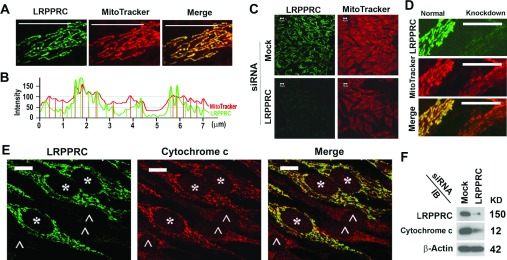
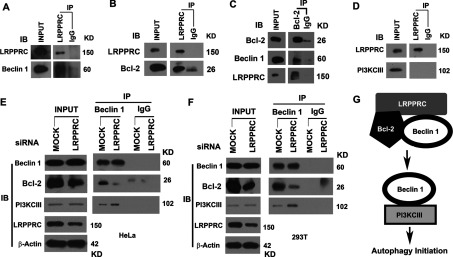
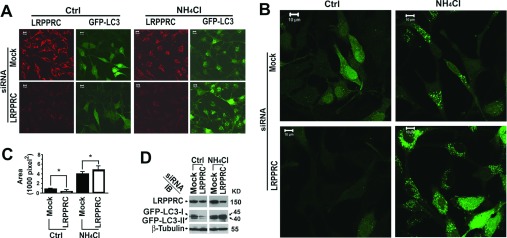
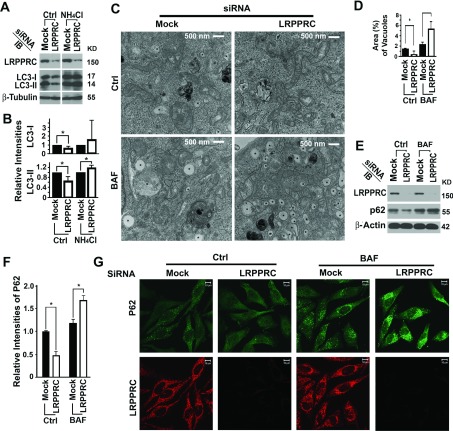
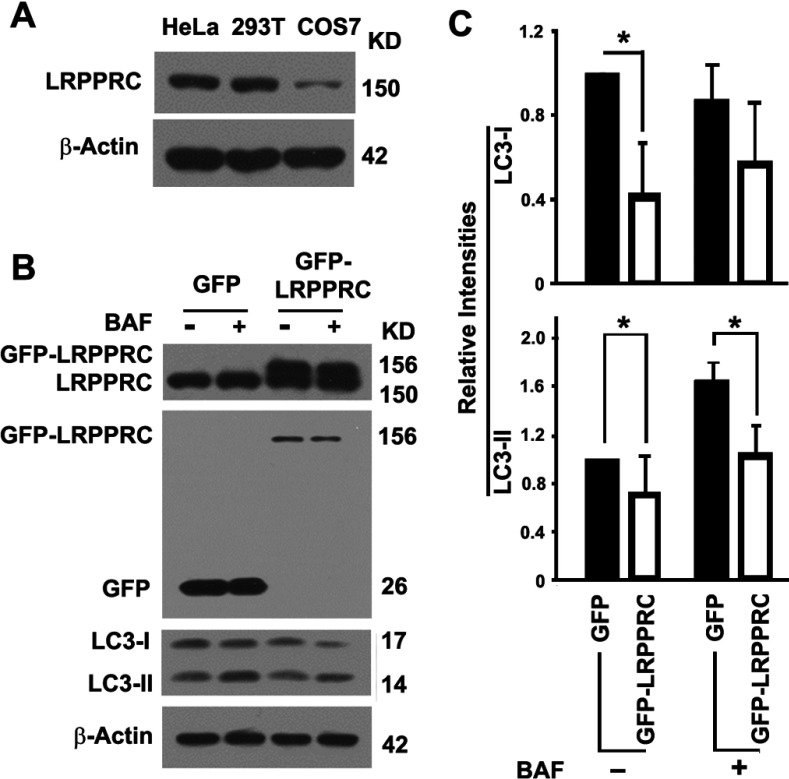
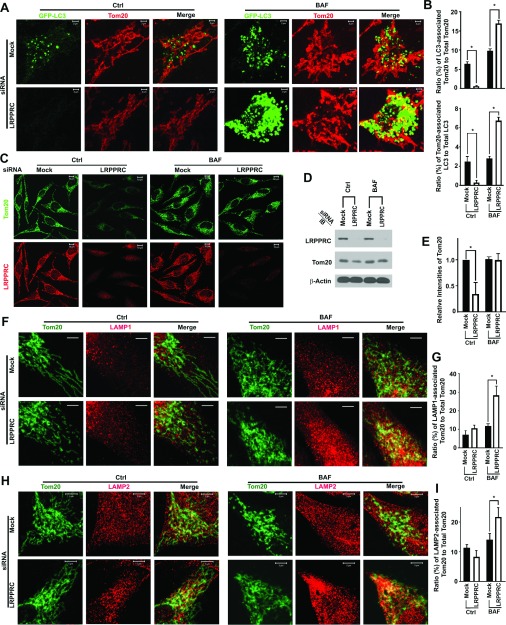
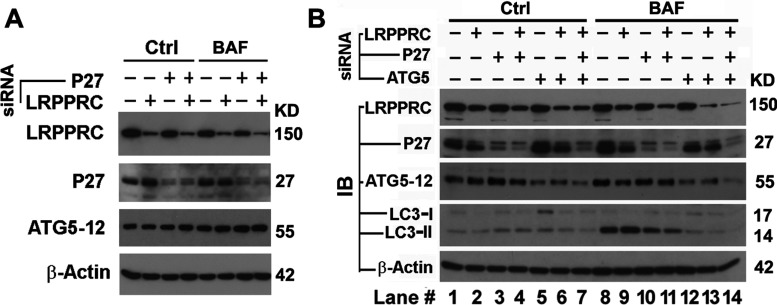
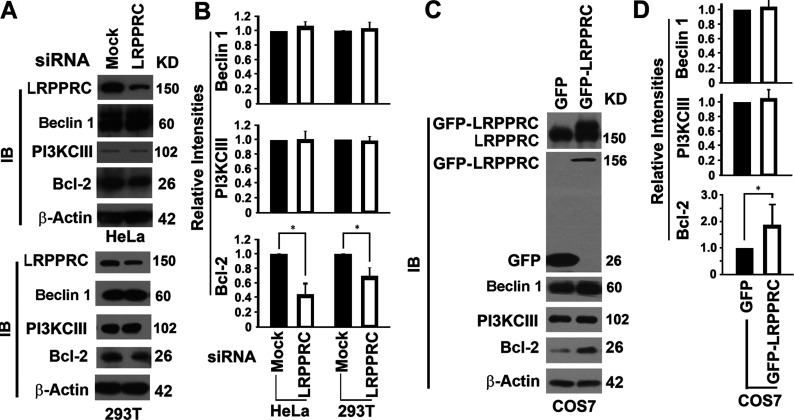
The mitochondrion-associated protein LRPPRC (leucine-rich pentatricopeptide repeat-containing) interacts with one of the microtubule-associated protein family members MAP1S (microtubule-associated protein 1 small form), originally named C19ORF5 (chromosome 19 open reading frame 5), to form a complex. MAP1S interacts with LC3 (light chain 3), the mammalian homologue of yeast autophagy marker ATG8 and one of the most important autophagy markers in mammalian cells, and helps the attachment of autophagosomes with microtubules for trafficking and recruitment of substrate mitochondria into autophagosomes for degradation. MAP1S activates autophagosomal biogenesis and degradation to remove misfolded/aggregated proteins and dysfunctional organelles such as mitochondria and suppress oxidative stress-induced genomic instability and tumorigenesis. Previously, various studies have attributed LRPPRC nucleic acid-associated functions. Instead, in the present study, we show that LRPPRC associates with mitochondria, interacts with Beclin 1 and Bcl-2 and forms a ternary complex to maintain the stability of Bcl-2. Suppression of LRPPRC leads to reduction in mitochondrial potential and reduction in Bcl-2. Lower levels of Bcl-2 lead to release of more Beclin 1 to form the Beclin 1-PI3KCIII (class III phosphoinositide 3-kinase) complex to activate autophagy and accelerate the turnover of dysfunctional mitochondria through the PI3K (phosphoinositide 3-kinase)/Akt/mTOR (mammalian target of rapamycin) pathway. The activation of autophagy induced by LRPPRC suppression occurs upstream of the ATG5-ATG12 conjugate-mediated conversion of LC3-I into LC3-II and has been confirmed in multiple mammalian cell lines with multiple autophagy markers including the size of GFP-LC3 punctate foci, the intensity of LC3-II and p62 protein and the size of the vacuolar structure. The activated autophagy enhances the removal of mitochondria through lysosomes. LRPPRC therefore acts to suppress the initiation of basal levels of autophagy to clean up dysfunctional mitochondria and other cellular debris during the normal cell cycle.
在线粒体相关蛋白 LRPPRC(富含亮氨酸的五肽重复蛋白)与微管相关蛋白家族成员之一 MAP1S(微管相关蛋白 1 小形式)相互作用,MAP1S 最初被命名为 C19ORF5(染色体 19 开放阅读框 5),形成复合物。MAP1S 与 LC3(轻链 3)相互作用,LC3 是酵母自噬标志物 ATG8 的哺乳动物同源物,也是哺乳动物细胞中最重要的自噬标志物之一,有助于将自噬体与微管连接,以便运输和招募底物线粒体进入自噬体进行降解。MAP1S 激活自噬体的生物发生和降解,以去除错误折叠/聚集的蛋白质和功能失调的细胞器,如线粒体,并抑制氧化应激诱导的基因组不稳定性和肿瘤发生。以前,各种研究都归因于 LRPPRC 的核酸相关功能。相反,在本研究中,我们表明 LRPPRC 与线粒体相关,与 Beclin 1 和 Bcl-2 相互作用并形成三元复合物以维持 Bcl-2 的稳定性。LRPPRC 的抑制导致线粒体电势降低和 Bcl-2 减少。Bcl-2 水平降低导致更多的 Beclin 1 释放,形成 Beclin 1-PI3KCIII(III 类磷酸肌醇 3-激酶)复合物,通过 PI3K(磷酸肌醇 3-激酶)/Akt/mTOR(雷帕霉素靶蛋白)途径激活自噬并加速功能失调线粒体的周转。LRPPRC 抑制诱导的自噬的激活发生在 ATG5-ATG12 缀合物介导的 LC3-I 转化为 LC3-II 之前,并已在多种具有多种自噬标志物的哺乳动物细胞系中得到证实,包括 GFP-LC3 点状焦点的大小、LC3-II 和 p62 蛋白的强度以及空泡结构的大小。激活的自噬通过溶酶体增强了线粒体的清除。因此,LRPPRC 作用是抑制基础水平自噬的启动,以在正常细胞周期中清除功能失调的线粒体和其他细胞碎片。