Okuyama Junichi, Nakajima Kana, Noda Takuji, Kimura Satoko, Kamihata Hiroko, Kobayashi Masato, Arai Nobuaki, Kagawa Shiro, Kawabata Yuuki, Yamada Hideaki
Graduate School of Informatics, Kyoto University, Sakyo, Kyoto, Japan ; Southwest Fisheries Science Center, National Marine Fisheries Service, National Oceanic and Atmospheric Administration, La Jolla, California, United States of America.
PLoS One. 2013 Jun 19;8(6):e65783. doi: 10.1371/journal.pone.0065783. Print 2013.
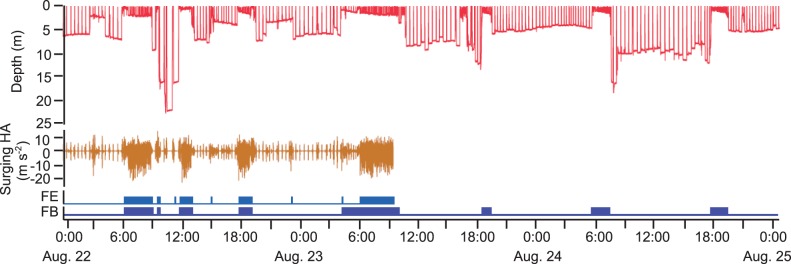
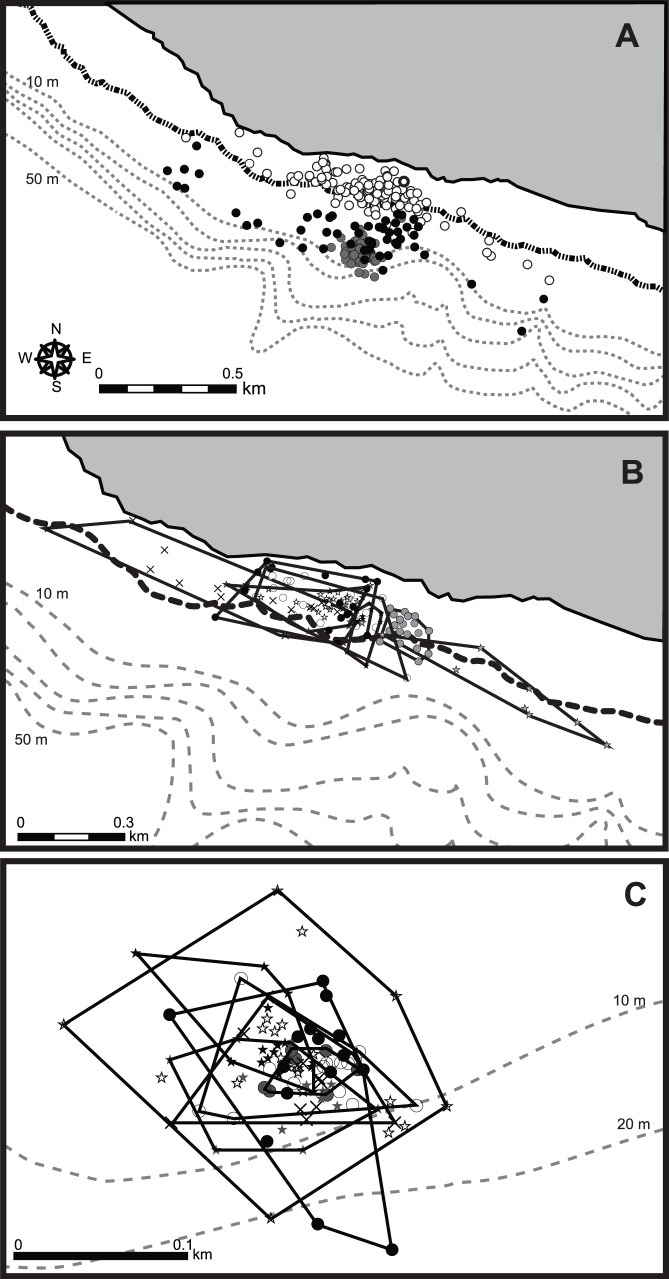
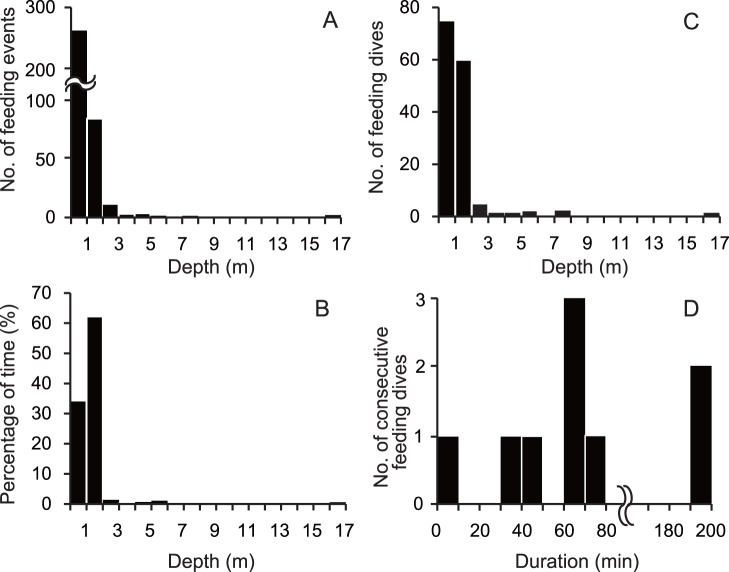
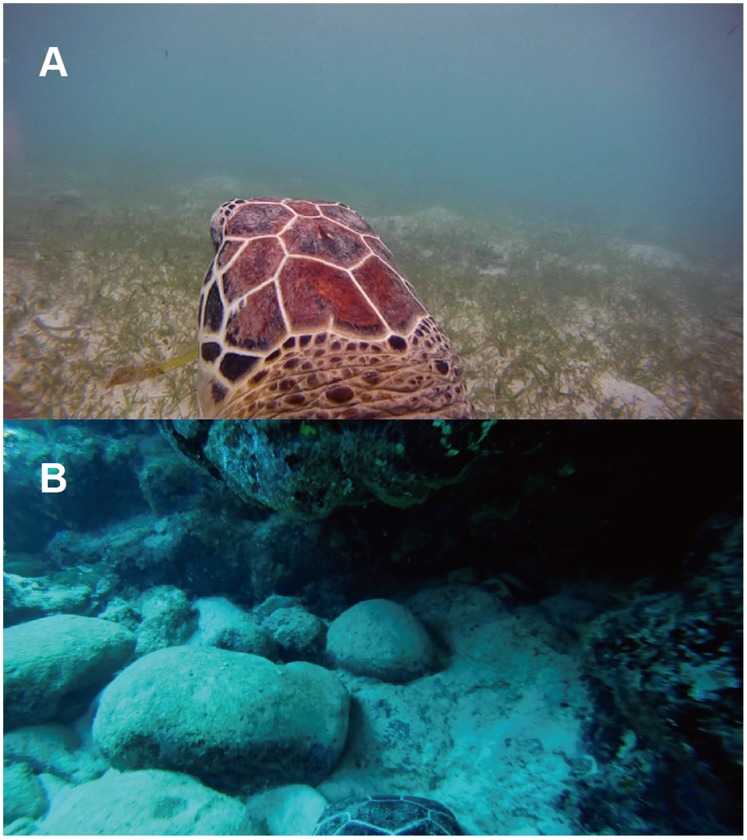
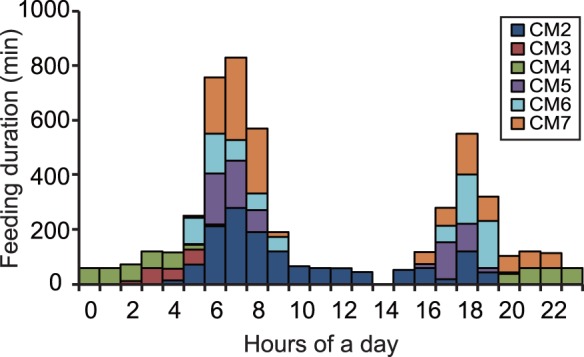
Animals are assumed to obtain/conserve energy effectively to maximise their fitness, which manifests itself in a variety of behavioral strategies. For marine animals, however, these behavioral strategies are generally unknown due to the lack of high-resolution monitoring techniques in marine habitats. As large marine herbivores, immature green turtles do not need to allocate energy to reproduction but are at risk of shark predation, although it is a rare occurrence. They are therefore assumed to select/use feeding and resting sites that maximise their fitness in terms of somatic growth, while avoiding predation. We investigated fine-scale behavioral patterns (feeding, resting and other behaviors), microhabitat use and time spent on each behavior for eight immature green turtles using data loggers including: depth, global positioning system, head acceleration, speed and video sensors. Immature green turtles at Iriomote Island, Japan, spent an average of 4.8 h feeding on seagrass each day, with two peaks, between 5∶00 and 9∶00, and between 17∶00 and 20∶00. This feeding pattern appeared to be restricted by gut capacity, and thus maximised energy acquisition. Meanwhile, most of the remaining time was spent resting at locations close to feeding grounds, which allowed turtles to conserve energy spent travelling and reduced the duration of periods exposed to predation. These behavioral patterns and time allocations allow immature green turtles to effectively obtain/conserve energy for growth, thus maximising their fitness.
动物被认为能有效地获取/保存能量,以实现其健康状况的最大化,这体现在各种行为策略中。然而,对于海洋动物来说,由于海洋栖息地缺乏高分辨率监测技术,这些行为策略通常尚不为人所知。作为大型海洋食草动物,未成年绿海龟无需将能量分配用于繁殖,但面临鲨鱼捕食的风险,尽管这种情况很少发生。因此,它们被认为会选择/利用觅食和休息地点,在实现躯体生长最大化的同时避免被捕食。我们使用数据记录器(包括深度、全球定位系统、头部加速度、速度和视频传感器),对八只未成年绿海龟的精细行为模式(觅食、休息和其他行为)、微生境利用情况以及在每种行为上花费的时间进行了调查。日本西表岛的未成年绿海龟平均每天花费4.8小时以海草为食,有两个高峰时段,分别在5∶00至9∶00以及17∶00至20∶00之间。这种觅食模式似乎受到肠道容量的限制,从而实现了能量获取的最大化。与此同时,其余大部分时间都在靠近觅食地的地方休息,这使得海龟能够保存用于游动的能量,并减少暴露于捕食风险的时长。这些行为模式和时间分配使未成年绿海龟能够有效地获取/保存能量用于生长,从而实现其健康状况的最大化。