Wang Qi, Cheng Xiao-Lan, Zhang Dong-Yan, Gao Xue-Jiao, Zhou Ling, Qin Xiao-Ying, Xie Guo-Yong, Liu Kang, Qin Yong, Liu Bao-Lin, Qin Min-Jian
Department of Resource Science of Traditional Chinese Medicines, State Key Laboratory of Natural Medicines, China Pharmaceutical University, Nanjing, China.
PLoS One. 2013 Jun 19;8(6):e66417. doi: 10.1371/journal.pone.0066417. Print 2013.
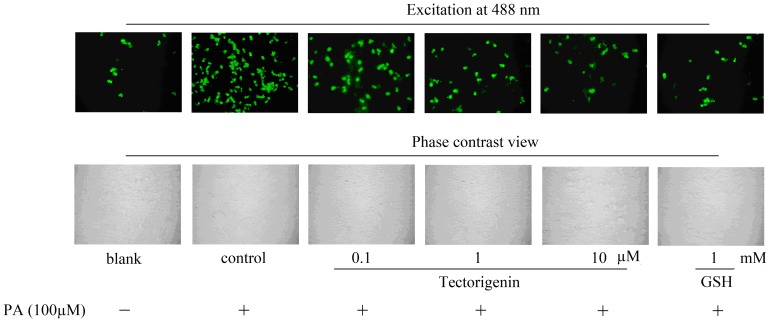
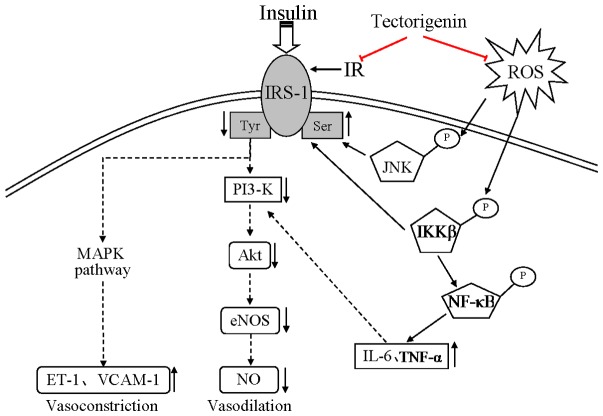
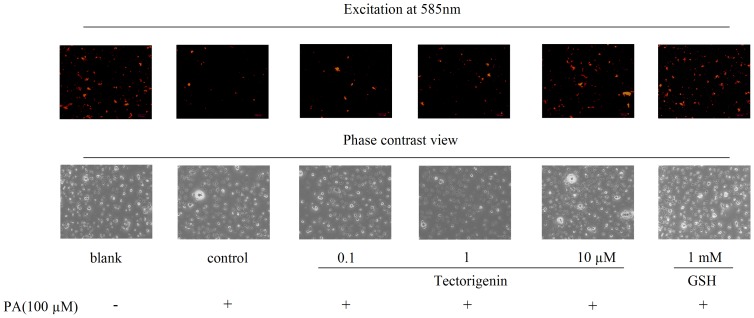
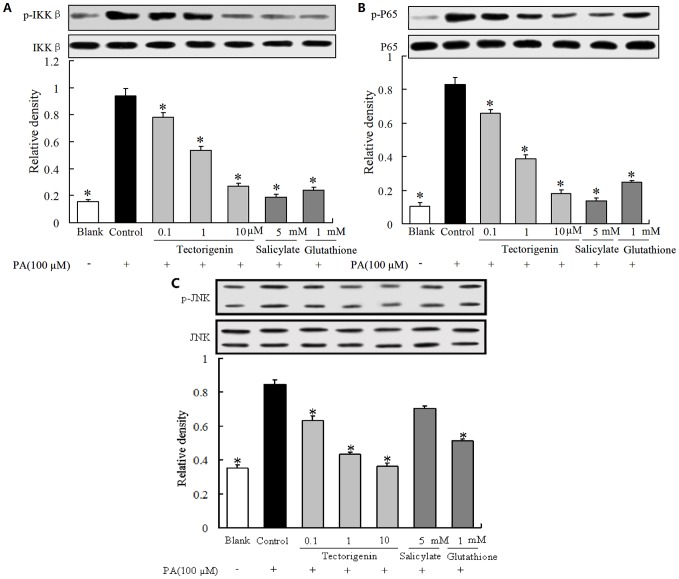
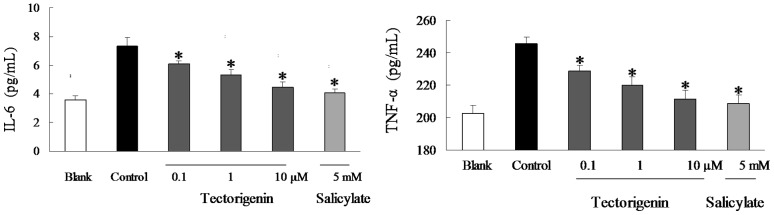
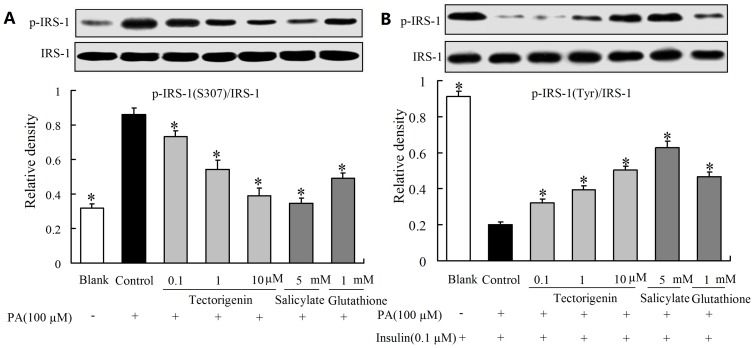
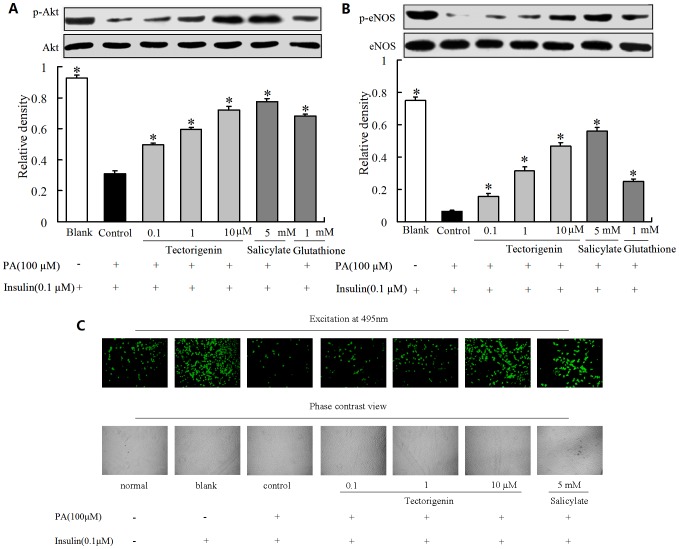
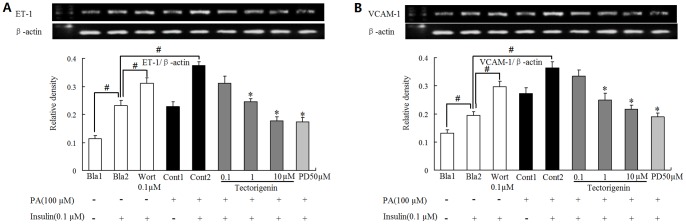
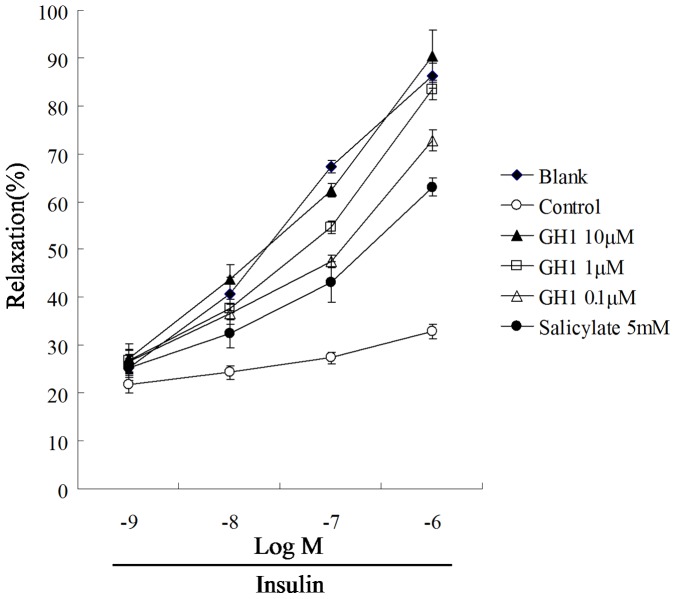
Tectorigenin is a plant isoflavonoid originally isolated from the dried flower of Pueraria thomsonii Benth. Although its anti-inflammatory and anti-hyperglycosemia effects have been well documented, the effect of tectorigenin on endothelial dysfunction insulin resistance involved has not yet been reported. Herein, this study aims to investigate the action of tectorigenin on amelioration of insulin resistance in the endothelium. Palmitic acid (PA) was chosen as a stimulant to induce ROS production in endothelial cells and successfully established insulin resistance evidenced by the specific impairment of insulin PI3K signaling. Tectorigenin effectively inhibited the ability of PA to induce the production of reactive oxygen species and collapse of mitochondrial membrane potential. Moreover, tectorigenin presented strong inhibition effect on ROS-associated inflammation, as TNF-α and IL-6 production in endothelial cells was greatly reduced with suppression of IKKβ/NF-κB phosphorylation and JNK activation. Tectorigenin also can inhibit inflammation-stimulated IRS-1 serine phosphorylation and restore the impaired insulin PI3K signaling, leading to a decreased NO production. These results demonstrated its positive regulation of insulin action in the endothelium. Meanwhile, tectorigenin down-regulated endothelin-1 and vascular cell adhesion molecule-1 overexpression, and restored the loss of insulin-mediated vasodilation in rat aorta. These findings suggested that tectorigenin could inhibit ROS-associated inflammation and ameliorated endothelial dysfunction implicated in insulin resistance through regulating IRS-1 function. Tectorigenin might have potential to be applied for the management of cardiovascular diseases involved in diabetes and insulin resistance.
鸢尾黄素是一种植物异黄酮,最初从粉葛的干燥花中分离得到。尽管其抗炎和抗高血糖作用已有充分记载,但鸢尾黄素对所涉及的内皮功能障碍胰岛素抵抗的影响尚未见报道。在此,本研究旨在探讨鸢尾黄素改善内皮胰岛素抵抗的作用。选择棕榈酸(PA)作为刺激物,在内皮细胞中诱导活性氧(ROS)生成,并通过胰岛素PI3K信号通路的特异性损伤成功建立胰岛素抵抗。鸢尾黄素有效抑制PA诱导ROS生成的能力以及线粒体膜电位的崩溃。此外,鸢尾黄素对ROS相关炎症具有强烈抑制作用,因为内皮细胞中肿瘤坏死因子-α(TNF-α)和白细胞介素-6(IL-6)的生成随着IKKβ/NF-κB磷酸化和JNK激活的抑制而大幅减少。鸢尾黄素还能抑制炎症刺激的胰岛素受体底物-1(IRS-1)丝氨酸磷酸化,并恢复受损的胰岛素PI3K信号通路,导致一氧化氮(NO)生成减少。这些结果证明了其在内皮中对胰岛素作用的正向调节。同时,鸢尾黄素下调内皮素-1和血管细胞黏附分子-1的过表达,并恢复大鼠主动脉中胰岛素介导的血管舒张功能丧失。这些发现表明,鸢尾黄素可以通过调节IRS-1功能抑制ROS相关炎症并改善与胰岛素抵抗相关的内皮功能障碍。鸢尾黄素可能具有应用于治疗与糖尿病和胰岛素抵抗相关的心血管疾病的潜力。