Mork Family Department of Chemical Engineering and Materials Science, University of Southern California, Los Angeles, California, United States of America.
PLoS One. 2013 Jun 28;8(6):e67400. doi: 10.1371/journal.pone.0067400. Print 2013.
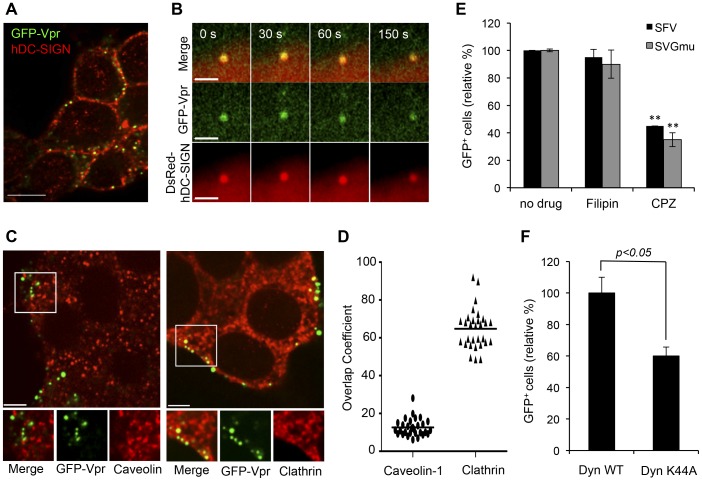
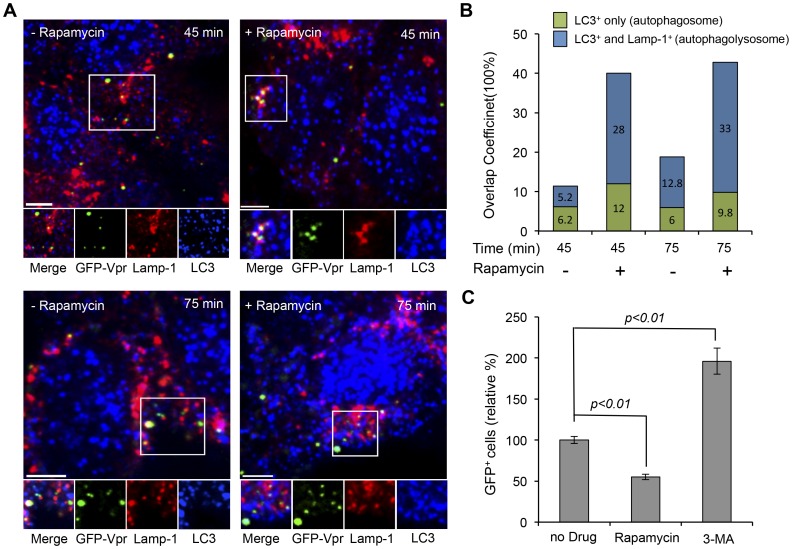
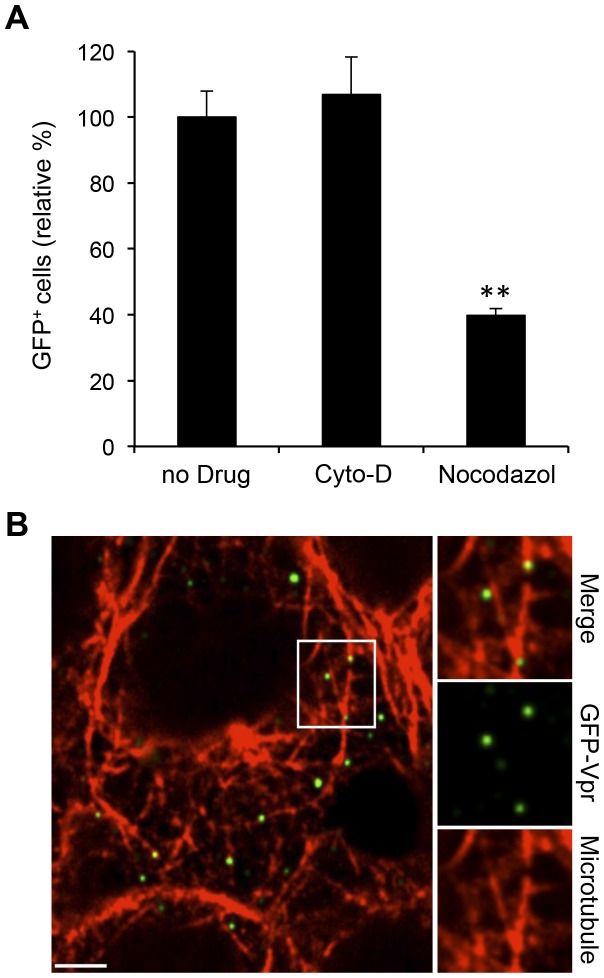
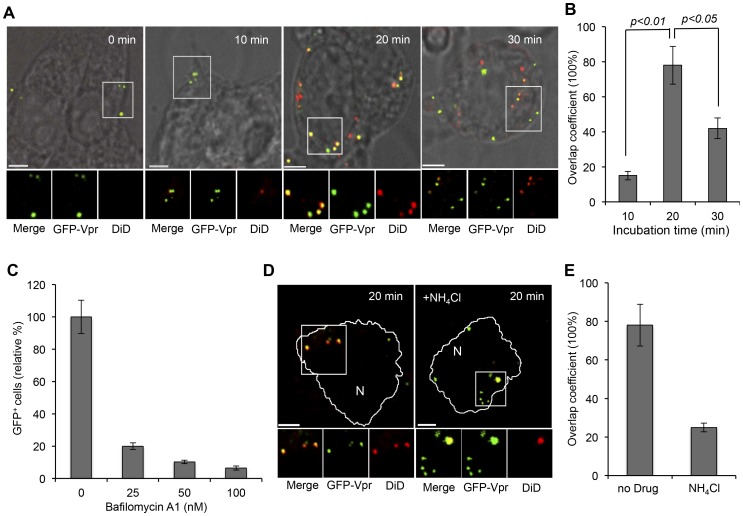
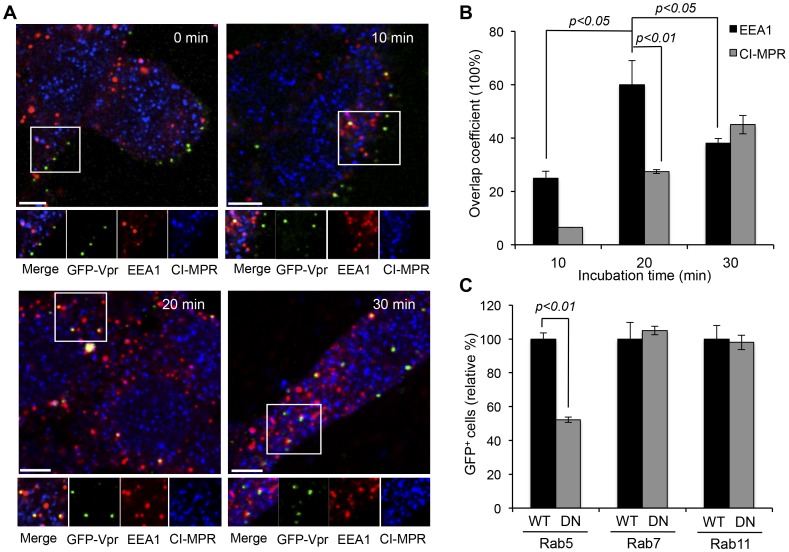
Dendritic cells (DCs) are potent antigen-presenting cells and therefore have enormous potential as vaccine targets. We have previously developed an engineered lentiviral vector (LV) that is pseudotyped with a mutated Sindbis virus glycoprotein (SVGmu), which is capable of targeting DCs through Dendritic Cell-specific ICAM3-grabbing Nonintegrin (DC-SIGN), a receptor that is predominantly expressed by DCs. In this study, we aimed to elucidate the internalization and trafficking mechanisms of this viral vector system through direct visualization of GFP-Vpr-tagged viral particles in target DCs, which was further corroborated by drug inhibition and dominant-negative mutants of cellular proteins that regulate the endocytic traffic. We demonstrated that our engineered LVs enter the cell via receptor-mediated clathrin- and dynamin-dependent endocytosis. Microtubule networks were also involved in a productive infection. Viral vector fusion was low-pH-dependent and occurred in the early endosomal stage of the intracellular transport. Autophagy was also examined for its effect on transduction efficiency, and we observed that enhanced autophage activity reduced vector infectivity, while suppressed autophagy boosted transduction efficiency. This study shed some light on the internalization and trafficking mechanisms of DC-directed LVs and offers some strategies to further improve the efficiency of LV-mediated gene therapy.
树突状细胞(DCs)是强有力的抗原呈递细胞,因此具有作为疫苗靶点的巨大潜力。我们之前开发了一种经过工程改造的慢病毒载体(LV),其被突变的辛德毕斯病毒糖蛋白(SVGmu)假型化,能够通过树突状细胞特异性细胞间黏附分子 3 抓取非整合素(DC-SIGN)靶向 DCs,DC-SIGN 是主要由 DCs 表达的受体。在这项研究中,我们旨在通过直接观察 GFP-Vpr 标记的病毒颗粒在靶 DC 中的内化和运输机制,进一步通过药物抑制和调节内吞运输的细胞蛋白的显性负突变体来证实该病毒载体系统。我们证明,我们设计的 LVs 通过受体介导的网格蛋白和动力蛋白依赖性内吞作用进入细胞。微管网络也参与了有效的感染。病毒载体融合依赖于低 pH 值,并且发生在细胞内运输的早期内体阶段。还检查了自噬对转导效率的影响,我们观察到增强的自噬活性降低了载体的感染性,而抑制自噬则提高了转导效率。这项研究阐明了 DC 靶向 LV 的内化和运输机制,并提供了一些策略来进一步提高 LV 介导的基因治疗的效率。