Department of Psychology, University of Maryland Baltimore County, Baltimore, Maryland, United States of America.
PLoS One. 2013 Jul 1;8(7):e67395. doi: 10.1371/journal.pone.0067395. Print 2013.
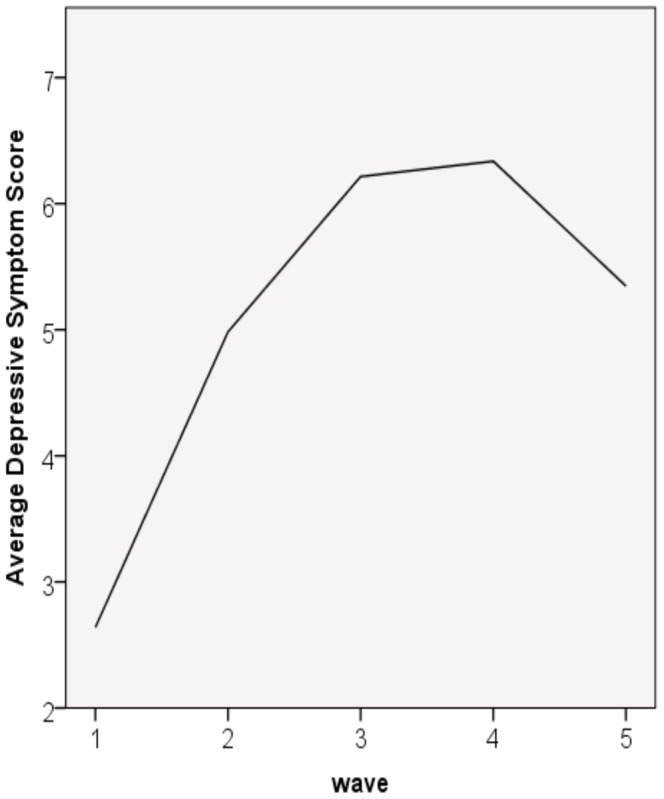
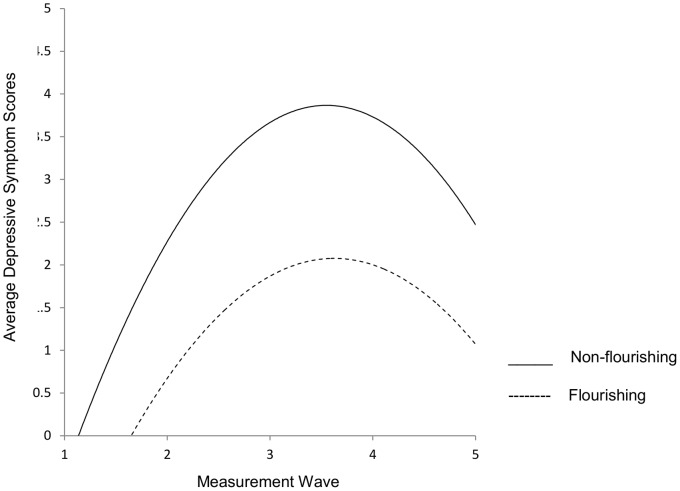
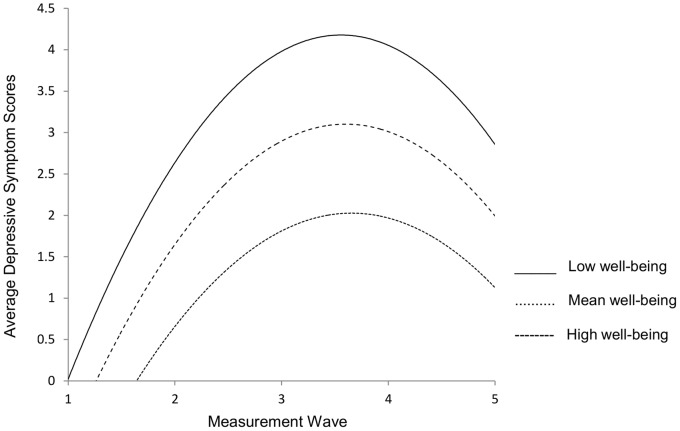
Improving our ability to accurately predict individual risk for depression would have profound public health benefits. While there has been growing interest in understanding the relation between measures of positive emotion, such as well-being, and depression, it is not clear whether low well-being is an independent predictor of short term depression risk. We assessed whether low well-being is a risk factor for depressive symptoms. Medical internship is a well-established period of stress when levels of depressive symptoms increase dramatically. 1621 individuals beginning medical internship were assessed for well-being, depressive symptoms, and a set of psychological and demographic traits prior to starting internship year and again for depressive symptoms at 3 month intervals during the year. Low subjective well-being significantly predicted increased depression symptom scores during the stress of medical internship and accounted for individual level inter-variability in depression symptom trends across time. Assessing well-being may have utility in predicting future depression risk.
提高我们准确预测个体抑郁风险的能力将具有深远的公共卫生效益。尽管人们越来越关注积极情绪(如幸福感)与抑郁之间的关系,但目前尚不清楚幸福感低是否是短期抑郁风险的独立预测因素。我们评估了幸福感是否是抑郁症状的一个风险因素。医学实习是一个压力很大的时期,此时抑郁症状会急剧增加。在开始实习前,我们对 1621 名开始医学实习的人进行了幸福感、抑郁症状以及一系列心理和人口统计学特征的评估,并在实习期间每隔 3 个月进行一次抑郁症状评估。在医学实习的压力下,低主观幸福感显著预测了抑郁症状评分的增加,并解释了个体在时间上抑郁症状趋势的个体间可变性。评估幸福感可能有助于预测未来的抑郁风险。