
卡维地洛可降低牙周炎大鼠模型中的 IL-1β 和 TNF-α,抑制 MMP-2、MMP-9、COX-2 和 RANKL 的表达,并上调 OPG。
Carvedilol decrease IL-1β and TNF-α, inhibits MMP-2, MMP-9, COX-2, and RANKL expression, and up-regulates OPG in a rat model of periodontitis.
机构信息
Post Graduation Program in Functional and Structural Biology/Post Graduation Program Health Science/Department of Morphology, UFRN, Natal, Rio Grande do Norte, Brazil.
出版信息
PLoS One. 2013 Jul 3;8(7):e66391. doi: 10.1371/journal.pone.0066391. Print 2013.
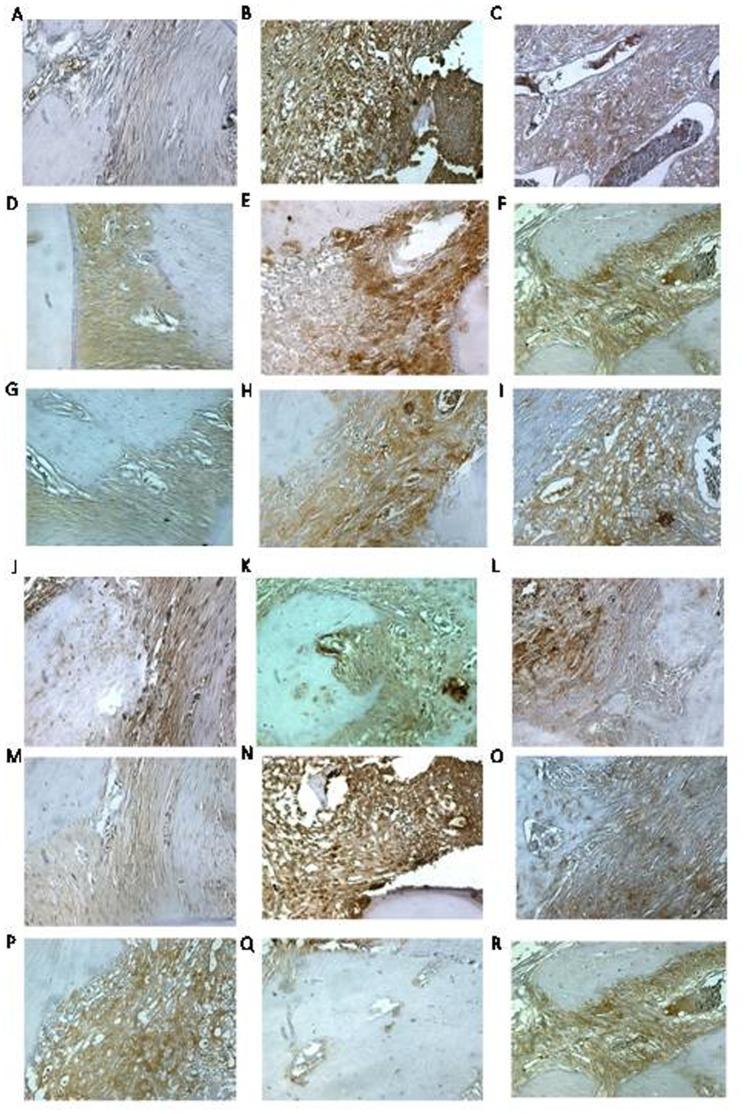
Periodontal diseases are initiated primarily by Gram-negative, tooth-associated microbial biofilms that elicit a host response that causes osseous and soft tissue destruction. Carvedilol is a β-blocker used as a multifunctional neurohormonal antagonist that has been shown to act not only as an anti-oxidant but also as an anti-inflammatory drug. This study evaluated whether Carvedilol exerted a protective role against ligature-induced periodontitis in a rat model and defined how Carvedilol affected metalloproteinases and RANKL/RANK/OPG expression in the context of bone remodeling. Rats were randomly divided into 5 groups (n = 10/group): (1) non-ligated (NL), (2) ligature-only (LO), and (3) ligature plus Carvedilol (1, 5 or 10 mg/kg daily for 10 days). Periodontal tissue was analyzed for histopathlogy and using immunohistochemical analysis characterized the expression profiles of MMP-2, MMP-9, COX-2, and RANKL/RANK/OPG and determined the presence of IL-1β, IL-10 and TNF-α, myeloperoxidase (MPO), malonaldehyde (MDA) and, glutathione (GSH). MPO activity in the group with periodontal disease was significantly increased compared to the control group (p<0.05). Rats treated with 10 mg/kg Carvedilol presented with significantly reduced MPO and MDA concentrations (p<0.05) in addition to presenting with reduced levels of the pro-inflammatory cytokines IL-1 β and TNF-α (p<0.05). IL-10 levels in Carvedilol-treated rats remained unaltered. Immunohistochemical analysis demonstrated reduced expression of MMP-2, MMP-9, RANK, RANKL, COX-2, and OPG in rats treated with 10 mg/kg Carvedilol. This study demonstrated that Carvedilol affected bone formation/destruction and anti-inflammatory activity in a rat model of periodontitis.
牙周病主要由革兰氏阴性、与牙齿相关的微生物生物膜引发,该生物膜引发宿主反应,导致骨质和软组织破坏。卡维地洛是一种β受体阻滞剂,用作多功能神经激素拮抗剂,已证明其不仅具有抗氧化作用,还具有抗炎作用。本研究评估了卡维地洛在大鼠模型中对结扎诱导的牙周炎是否具有保护作用,并确定了卡维地洛如何影响骨重塑过程中的金属蛋白酶和 RANKL/RANK/OPG 的表达。大鼠随机分为 5 组(n = 10/组):(1)非结扎(NL),(2)结扎(LO),和(3)结扎加卡维地洛(1、5 或 10mg/kg,每天 10 天)。分析牙周组织的组织病理学,并通过免疫组织化学分析描述 MMP-2、MMP-9、COX-2 和 RANKL/RANK/OPG 的表达谱,并确定 IL-1β、IL-10 和 TNF-α、髓过氧化物酶(MPO)、丙二醛(MDA)和谷胱甘肽(GSH)的存在。与对照组相比,牙周病组的 MPO 活性显著增加(p<0.05)。用 10mg/kg 卡维地洛治疗的大鼠的 MPO 和 MDA 浓度显著降低(p<0.05),此外,促炎细胞因子 IL-1β和 TNF-α的水平降低(p<0.05)。卡维地洛治疗大鼠的 IL-10 水平保持不变。免疫组织化学分析表明,用 10mg/kg 卡维地洛治疗的大鼠中 MMP-2、MMP-9、RANK、RANKL、COX-2 和 OPG 的表达减少。本研究表明,卡维地洛影响大鼠牙周炎模型中的骨形成/破坏和抗炎活性。



 Zotero 插件