Department of Medicine, Allergy, Pulmonary, and Critical Care Medicine Division, University of Wisconsin School of Medicine and Public Health, Madison, Wisconsin, USA.
PLoS One. 2013 Jul 2;8(7):e67560. doi: 10.1371/journal.pone.0067560. Print 2013.
The mechanism for the contribution of eosinophils (EOS) to asthma pathophysiology is not fully understood. Genome-wide expression analysis of airway EOS by microarrays has been limited by the ability to generate high quality RNA from sufficient numbers of airway EOS.
To identify, by genome-wide expression analyses, a compendium of expressed genes characteristic of airway EOS following an in vivo allergen challenge.
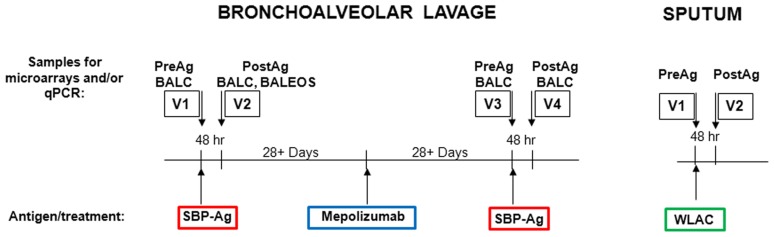
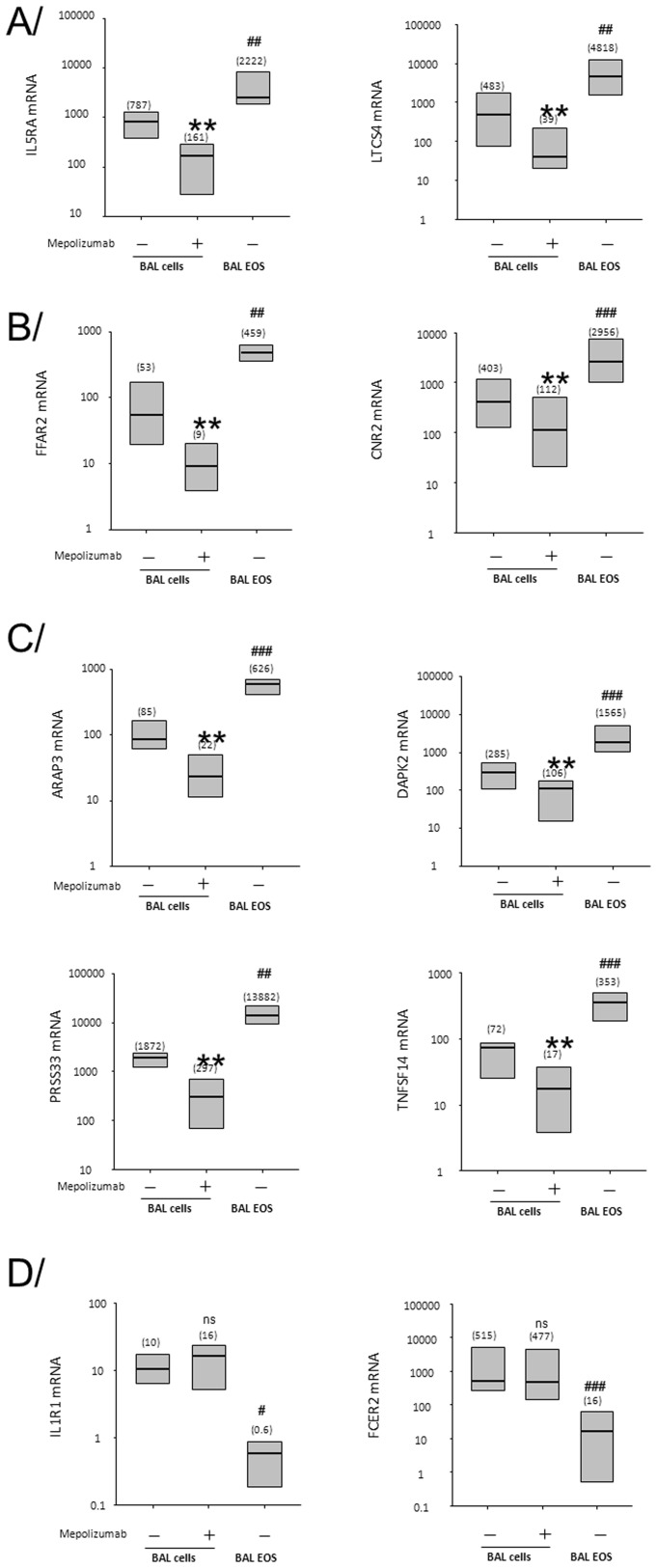
Atopic, mild asthmatic subjects were recruited for these studies. Induced sputum was obtained before and 48h after a whole lung allergen challenge (WLAC). Individuals also received a segmental bronchoprovocation with allergen (SBP-Ag) 1 month before and after administering a single dose of mepolizumab (anti-IL-5 monoclonal antibody) to reduce airway EOS. Bronchoalveolar lavage (BAL) was performed before and 48 h after SBP-Ag. Gene expression of sputum and BAL cells was analyzed by microarrays. The results were validated by qPCR in BAL cells and purified BAL EOS.
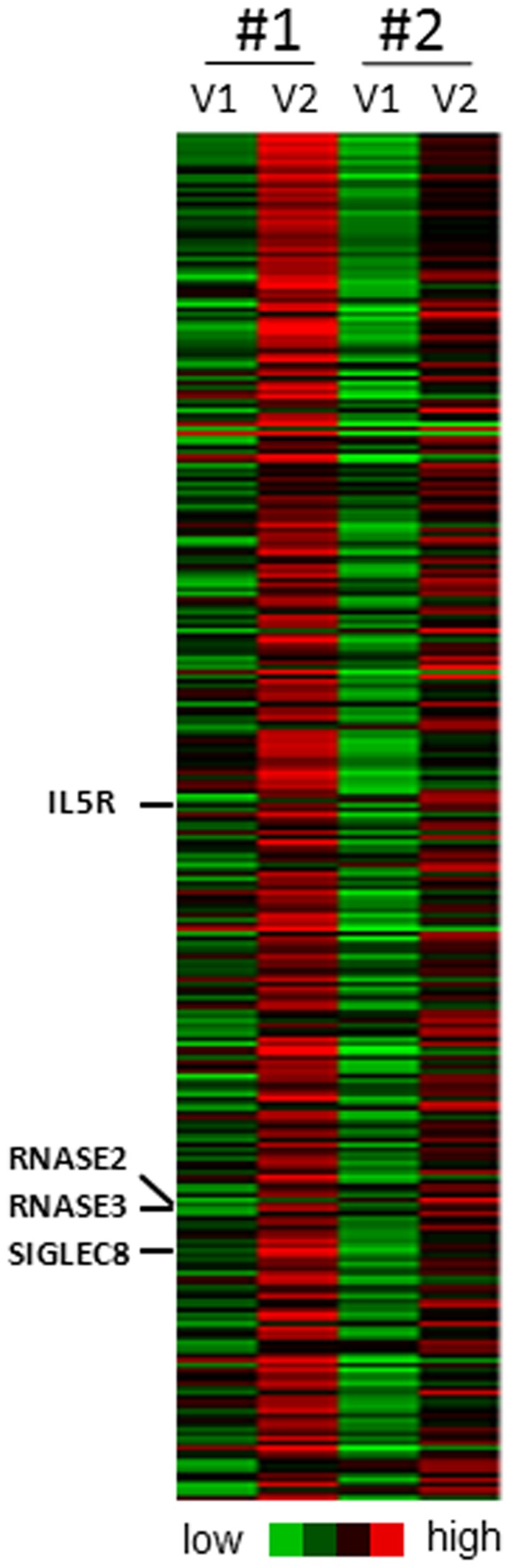
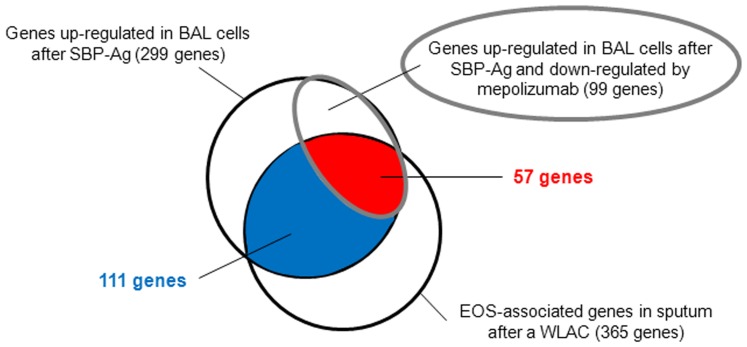
A total of 299 transcripts were up-regulated by more than 2-fold in total BAL cells following SBP-Ag. Mepolizumab treatment resulted in a reduction of airway EOS by 54.5% and decreased expression of 99 of the 299 transcripts. 3 of 6 post-WLAC sputum samples showed increased expression of EOS-specific genes, along with the expression of 361 other genes. Finally, the intersection of the 3 groups of transcripts (increased in BAL post SBP-Ag (299), decreased after mepolizumab (99), and increased in sputum after WLAC (365)) was composed of 57 genes characterizing airway EOS gene expression.
We identified 57 genes that were highly expressed by BAL EOS compared to unseparated BAL cells after in vivo allergen challenge. 41 of these genes had not been previously described in EOS and are thus potential new candidates to elucidate EOS contribution to airway biology.
嗜酸性粒细胞(EOS)对哮喘病理生理学的贡献机制尚不完全清楚。通过微阵列对气道 EOS 进行全基因组表达分析受到从足够数量的气道 EOS 中生成高质量 RNA 的能力的限制。
通过全基因组表达分析,确定在体内过敏原挑战后,气道 EOS 特有的一组表达基因。
招募特应性、轻度哮喘患者进行这些研究。在全肺过敏原挑战(WLAC)前后,通过诱导痰液获得诱导痰液。个体还在给予单剂量美泊利单抗(抗 IL-5 单克隆抗体)前后 1 个月接受过敏原节段支气管激发(SBP-Ag)。通过微阵列分析痰液和 BAL 细胞的基因表达。通过 qPCR 在 BAL 细胞和纯化的 BAL EOS 中验证结果。
在 SBP-Ag 后,总 BAL 细胞中共有 299 个转录物的表达上调了 2 倍以上。美泊利单抗治疗可使气道 EOS 减少 54.5%,并降低 299 个转录物中的 99 个表达。3 例 WLAC 后痰液样本显示 EOS 特异性基因表达增加,同时还表达了 361 个其他基因。最后,3 组转录物(SBP-Ag 后增加的(299)、美泊利单抗后减少的(99)和 WLAC 后痰液中增加的(365))的交集由 57 个基因组成,这些基因特征气道 EOS 基因表达。
我们确定了 57 个基因,这些基因在体内过敏原挑战后与未分离的 BAL 细胞相比,在 BAL EOS 中高度表达。其中 41 个基因以前在 EOS 中没有描述过,因此是阐明 EOS 对气道生物学贡献的潜在新候选基因。