Department of Veterinary Microbiology and Pathology, Washington State University, Pullman, Washington, United States of America.
PLoS One. 2013 Jul 3;8(7):e67765. doi: 10.1371/journal.pone.0067765. Print 2013.
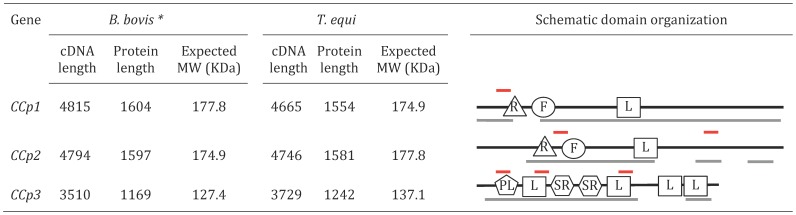
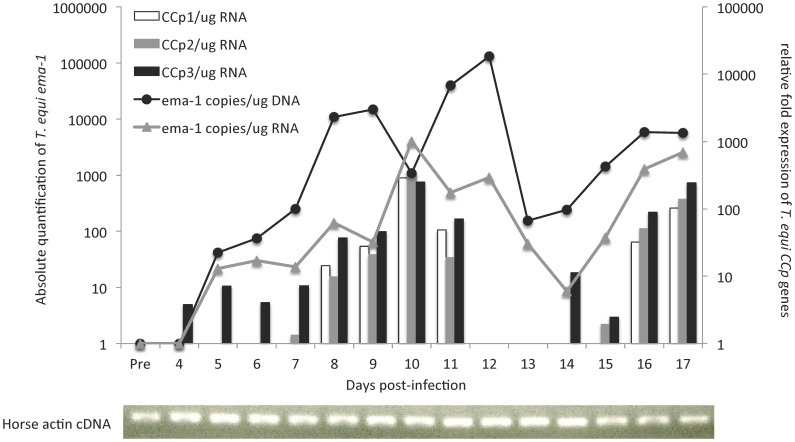
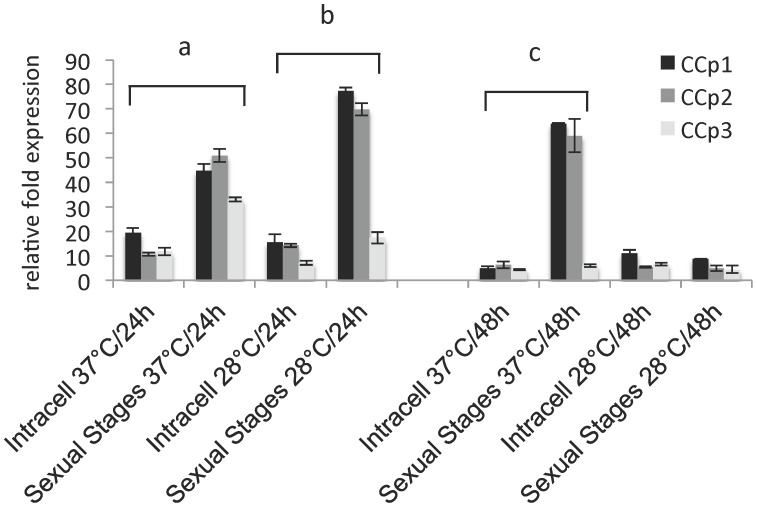
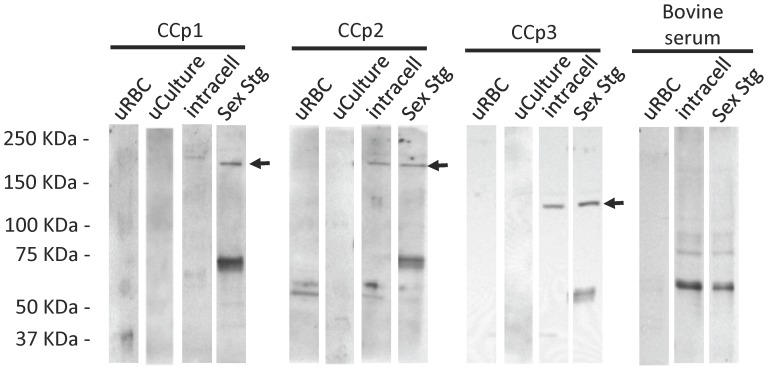
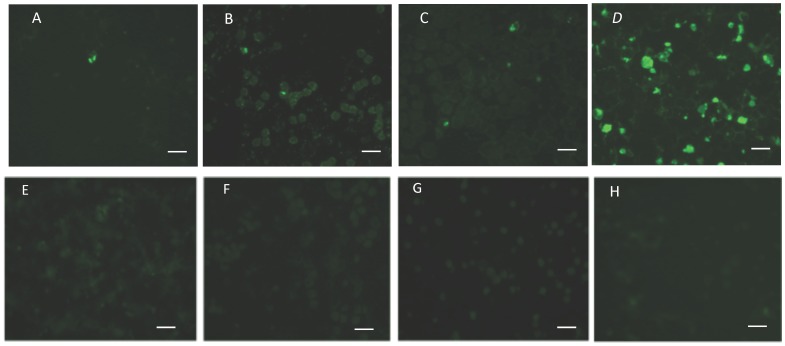
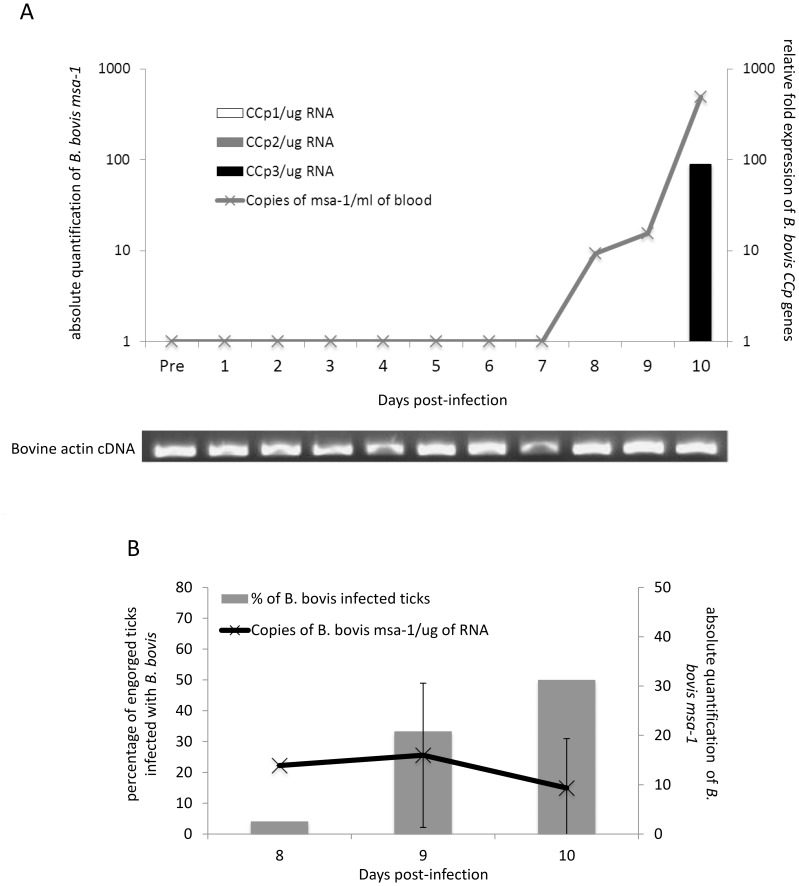
Members of the CCp protein family have been previously described to be expressed on gametocytes of apicomplexan Plasmodium parasites. Knocking out Plasmodium CCp genes blocks the development of the parasite in the mosquito vector, making the CCp proteins potential targets for the development of a transmission-blocking vaccine. Apicomplexans Babesia bovis and Babesia bigemina are the causative agents of bovine babesiosis, and apicomplexan Theileria equi causes equine piroplasmosis. Bovine babesiosis and equine piroplasmosis are the most economically important parasite diseases that affect worldwide cattle and equine industries, respectively. The recent sequencing of the B. bovis and T. equi genomes has provided the opportunity to identify novel genes involved in parasite biology. Here we characterize three members of the CCp family, named CCp1, CCp2 and CCp3, in B. bigemina, B. bovis and T. equi. Using B. bigemina as an in vitro model, expression of all three CCp genes and proteins was demonstrated in temperature-induced sexual stages. Transcripts for all three CCp genes were found in vivo in blood stages of T. equi, and transcripts for CCp3 were detected in vivo in blood stages of B. bovis. However, no protein expression was detected in T. equi blood stages or B. bovis blood stages or B. bovis tick stages. Collectively, the data demonstrated a differential pattern of expression of three orthologous genes of the multidomain adhesion CCp family by B. bigemina, B. bovis and T. equi. The novel CCp members represent potential targets for innovative approaches to control bovine babesiosis and equine piroplasmosis.
CCp 蛋白家族的成员以前被描述为在锥虫纲疟原虫的配子体上表达。敲除疟原虫 CCp 基因可阻止寄生虫在蚊媒中的发育,使 CCp 蛋白成为开发传播阻断疫苗的潜在靶点。巴贝斯虫属的牛巴贝斯虫和双芽巴贝斯虫是牛巴贝斯虫病的病原体,泰勒虫属的马泰勒虫引起马梨形虫病。牛巴贝斯虫病和马梨形虫病是分别影响全球牛和马产业的最重要的经济寄生虫病。最近对 B. bovis 和 T. equi 基因组的测序为鉴定参与寄生虫生物学的新基因提供了机会。在这里,我们描述了 B. bigemina、B. bovis 和 T. equi 中三个 CCp 家族成员(CCp1、CCp2 和 CCp3)的特征。使用 B. bigemina 作为体外模型,证明了所有三个 CCp 基因和蛋白在温度诱导的有性阶段的表达。在 T. equi 的体内血阶段发现了所有三个 CCp 基因的转录本,在 B. bovis 的体内血阶段检测到了 CCp3 的转录本。然而,在 T. equi 的血液阶段或 B. bovis 的血液阶段或 B. bovis 的蜱阶段均未检测到蛋白表达。总之,数据显示了 B. bigemina、B. bovis 和 T. equi 三个多结构域粘附 CCp 家族的同源基因的差异表达模式。这些新的 CCp 成员代表了控制牛巴贝斯虫病和马梨形虫病的创新方法的潜在靶点。