Animal Physiology Research Unit, Division of Animal Science, National Institute of Agrobiological Sciences, Tsukuba 305-8602, Japan.
Reprod Biol Endocrinol. 2013 Jul 13;11:62. doi: 10.1186/1477-7827-11-62.
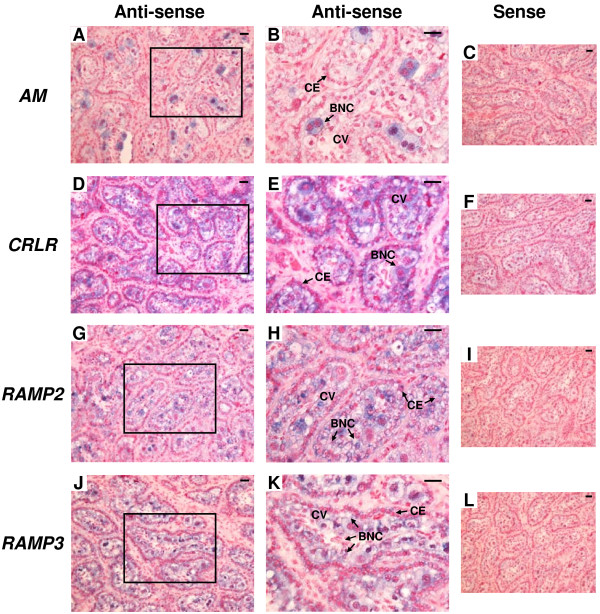
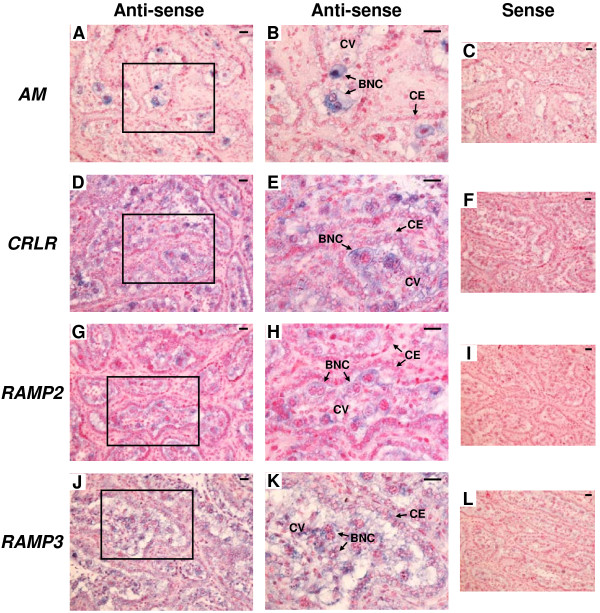
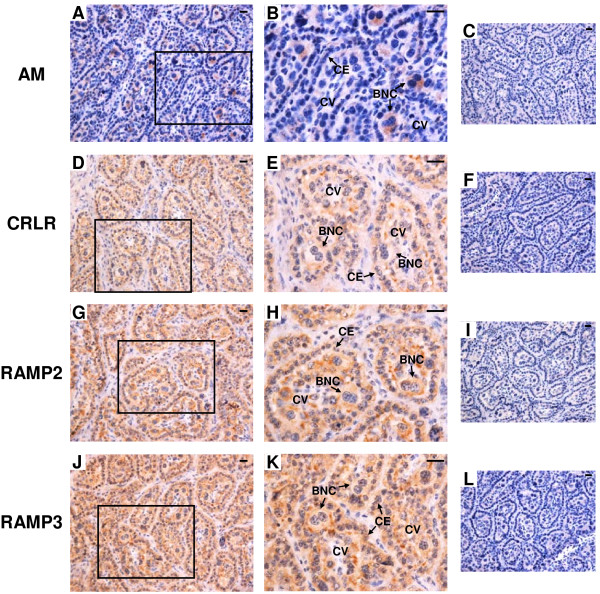
Adrenomedullin (AM) is a potent vasodilator peptide and is also involved in various physiological activities. In humans and rodents, AM is found in the uteroplacental unit and may be responsible for fetal development and maintenance of placental function. This study investigated 1) the mRNA expression patterns of AM and its receptor components (calcitonin receptor-like receptor (CRLR), receptor activity modifying protein (RAMP) 2 and RAMP3) during pregnancy and 2) mRNA and protein localization of AM, CRLR and RAMPs in the bovine placentome.
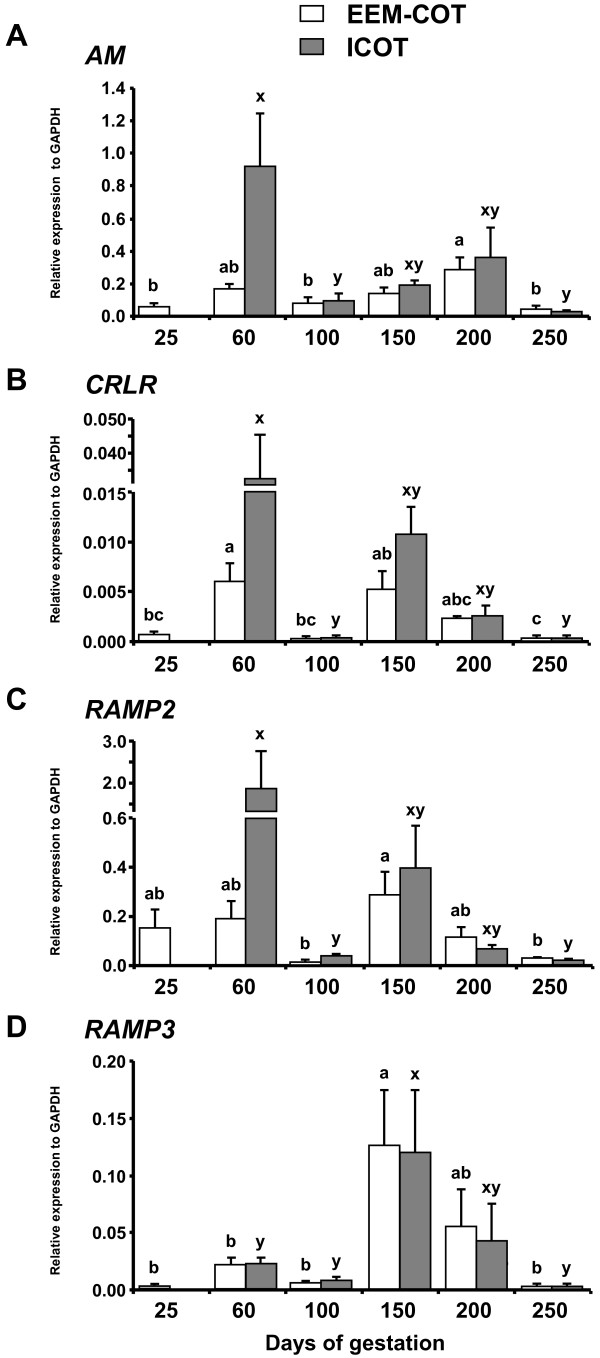
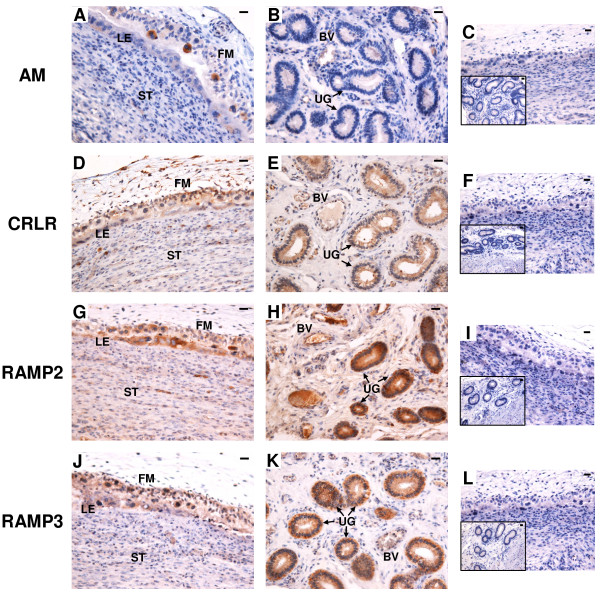
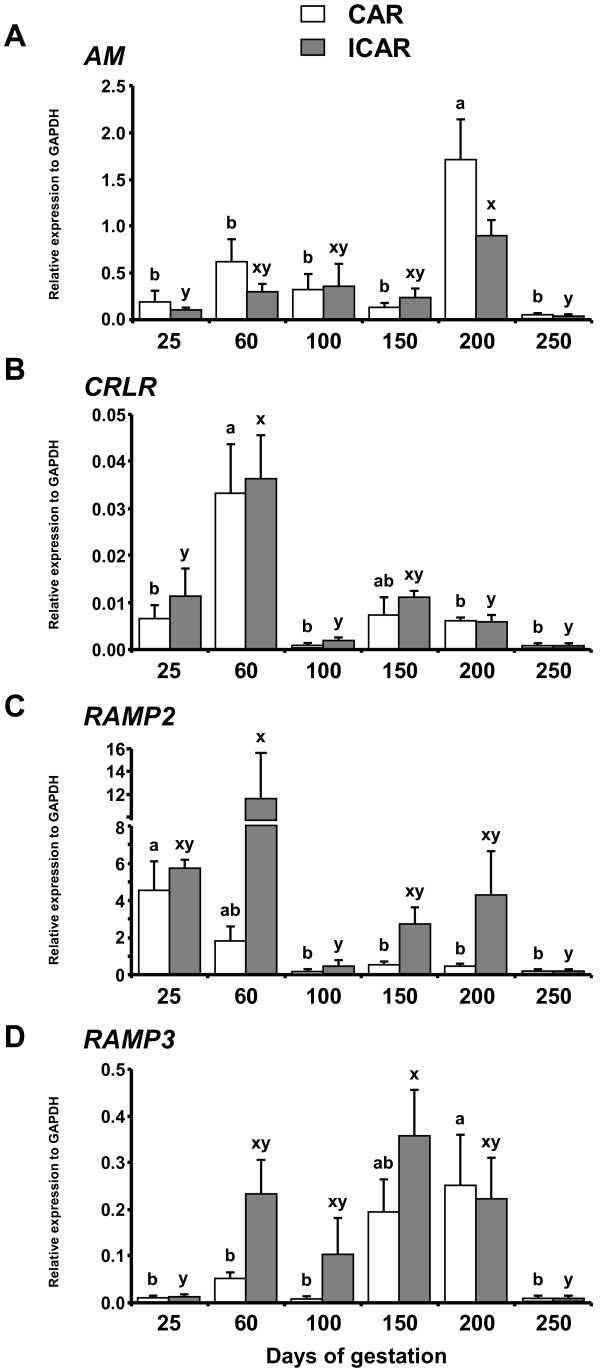
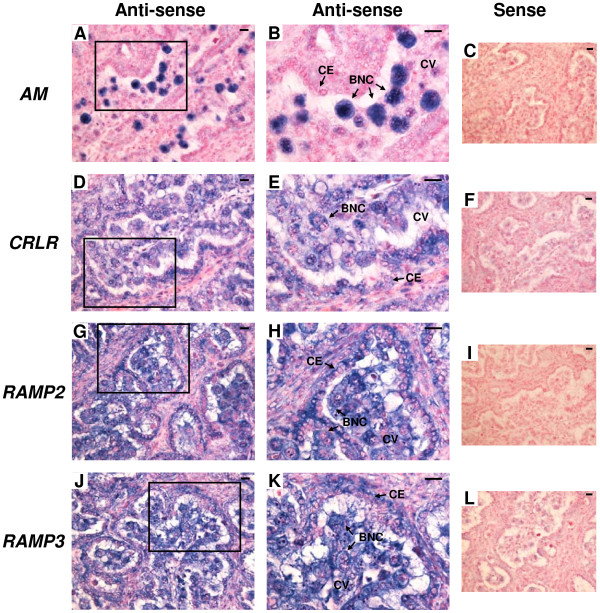
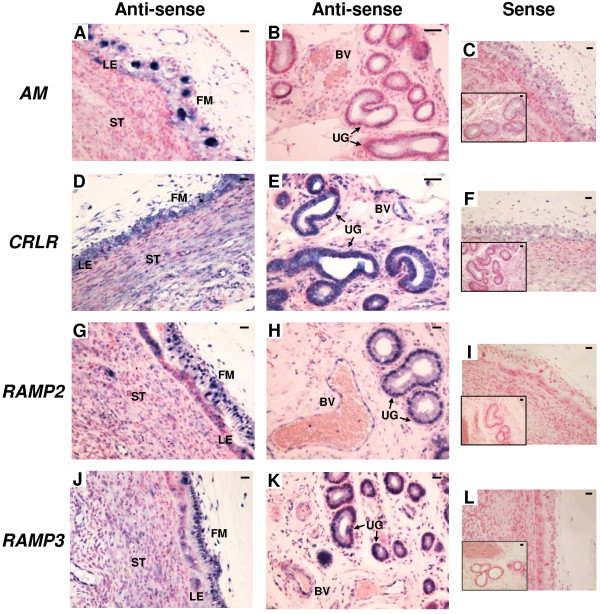
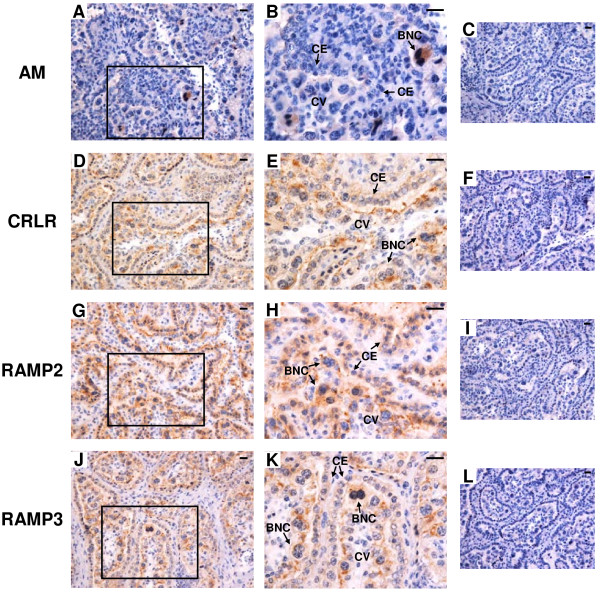
For real-time quantitative RT-PCR, bovine uteroplacental tissues were collected from Day 25, 60, 100, 150, 200 and 250 of gestation and separated into uterine caruncle (CAR), intercaruncular endometrium (ICAR), extra-embryonic membranes on Day 25 and cotyledonary villous after Day 60 (EEM-COT) and intercotyledonary chorion (ICOT). In situ hybridization and immunohistochemistry was performed to investigate the cellular localization of mRNA and protein of AM, CRLR, RAMP2 and RAMP3 in the placentome on Day 56, 150 and 230 of gestation and interplacentomal tissues on Day 56 of gestation.
AM mRNA was highly expressed on Day 200 in EEM-COT, CAR and ICAR. CRLR mRNA was highly expressed on Day 60 in all portions. RAMP2 mRNA was also highly expressed on Day 60 in ICOT and ICAR. In EEM-COT, mRNA expression of CRLR and RAMP2 decreased from Day 150 to 250. RAMP3 mRNA was highly expressed on Day 150 in EEM-COT, ICOT and ICAR. A distinct AM mRNA and protein signal were only found in trophoblast binucleate cells (BNCs), whereas those of CRLR, RAMP2 and RAMP3 were detected in cotyledonary villous and caruncular epithelial cells. In interplacentomal tissues, AM was detected in BNCs of fetal membrane and a small part of luminal epithelium, endothelial lineage of blood vessels and glandular epithelium of the endometrium. Distinct signals of CRLR, RAMP2 and RAMP3 were found in trophoblast cells, luminal epithelium, stroma under the epithelium, endothelial lineage of blood vessels and glandular epithelium.
Our results indicate that the AM system in the bovine uteroplacental unit may be activated at placentation and transition from the mid to late gestation period. Locally produced AM in the BNCs may play a crucial role in regulation of placental vascular and cellular functions during pregnancy.
肾上腺髓质素(AM)是一种有效的血管扩张肽,也参与各种生理活动。在人类和啮齿动物中,AM 存在于胎盘单位中,可能负责胎儿发育和维持胎盘功能。本研究调查了 1)AM 及其受体成分(降钙素受体样受体(CRLR)、受体活性修饰蛋白(RAMP)2 和 RAMP3)在怀孕期间的 mRNA 表达模式,2)牛胎盘组织中 AM、CRLR 和 RAMPs 的 mRNA 和蛋白定位。
实时定量 RT-PCR 中,从妊娠第 25、60、100、150、200 和 250 天采集牛的子宫胎盘组织,并分为子宫肉阜(CAR)、子宫肉阜间子宫内膜(ICAR)、妊娠第 25 天的外胚膜(EEM-COT)和妊娠第 60 天后的绒毛膜小叶(EEM-COT)和绒毛膜小叶间绒毛(ICOT)。在第 56、150 和 230 天的妊娠和第 56 天的胎盘间组织中进行原位杂交和免疫组织化学,以研究 AM、CRLR、RAMP2 和 RAMP3 的 mRNA 和蛋白在胎盘组织中的细胞定位。
在 EEM-COT、CAR 和 ICAR 中,AM mRNA 在第 200 天高度表达。CRLR mRNA 在第 60 天在所有部位高度表达。RAMP2 mRNA 也在第 60 天在 ICOT 和 ICAR 中高度表达。在 EEM-COT 中,CRLR 和 RAMP2 的 mRNA 表达从第 150 天到第 250 天下降。RAMP3 mRNA 在 EEM-COT、ICOT 和 ICAR 中于第 150 天高度表达。AM mRNA 和蛋白信号仅在滋养层双核细胞(BNC)中发现,而 CRLR、RAMP2 和 RAMP3 的信号则在绒毛膜小叶和肉阜上皮细胞中发现。在胎盘间组织中,AM 在胎儿膜的 BNC 和一小部分腔上皮、血管内皮谱系和子宫内膜的腺上皮中被检测到。CRLR、RAMP2 和 RAMP3 的明显信号在滋养层细胞、腔上皮、上皮下基质、血管内皮谱系和腺上皮中被发现。
我们的结果表明,牛子宫胎盘单位中的 AM 系统可能在胎盘形成和从中孕期到晚期孕期的过渡中被激活。BNC 中局部产生的 AM 可能在妊娠期间调节胎盘血管和细胞功能中发挥关键作用。