Department of Molecular Structural Biology, Max Planck Institute of Biochemistry, Martinsried 82152, Germany.
Structure. 2013 Aug 6;21(8):1396-405. doi: 10.1016/j.str.2013.05.018. Epub 2013 Jul 11.
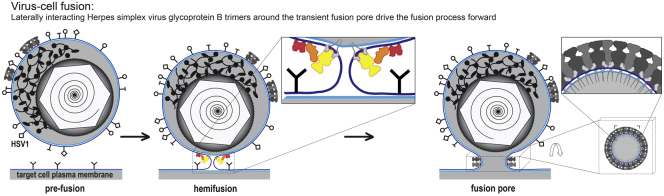
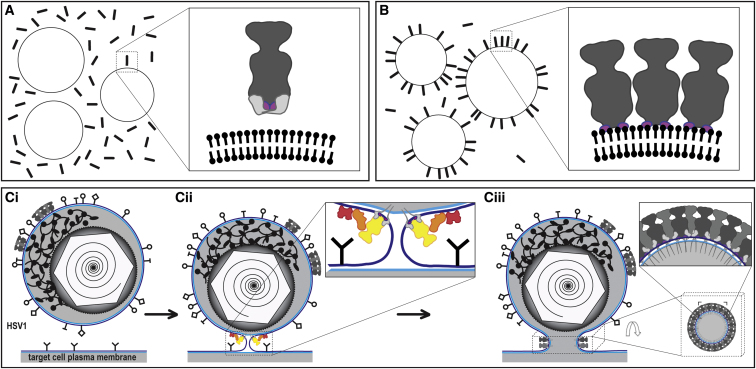
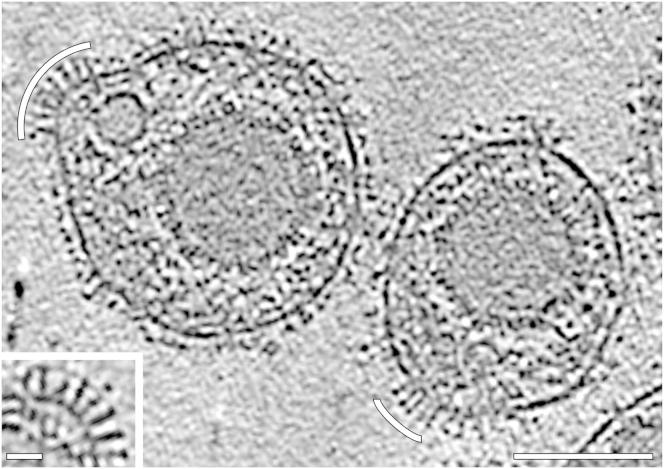
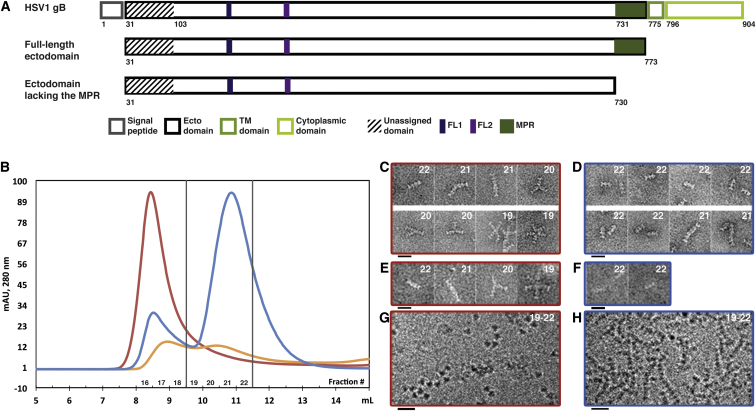
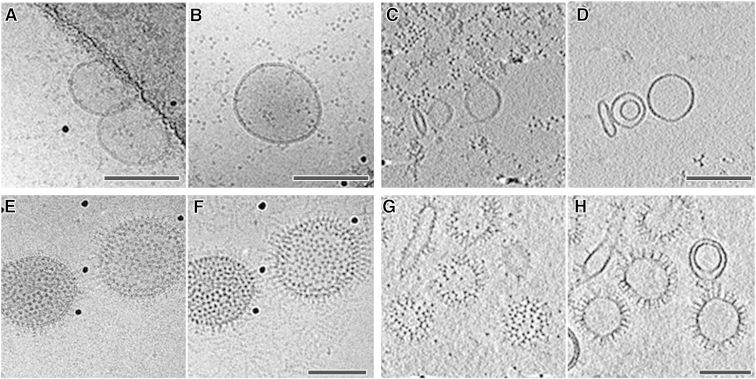
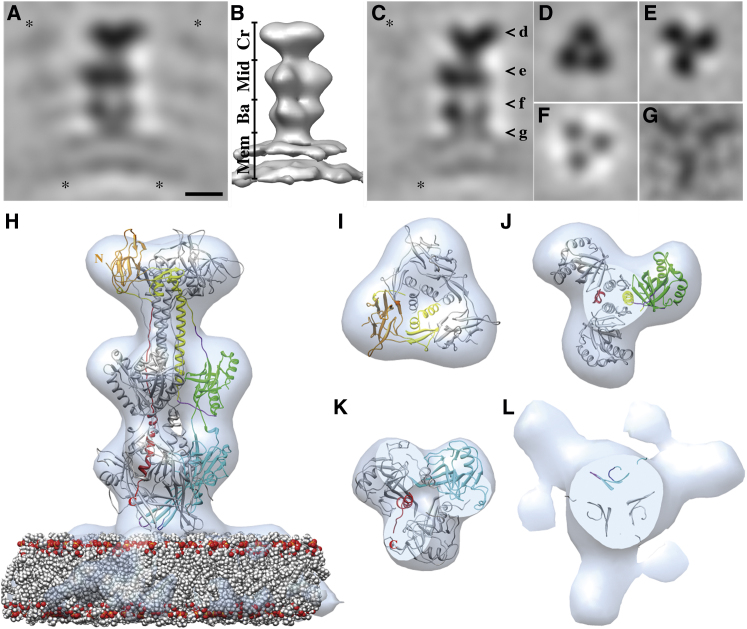
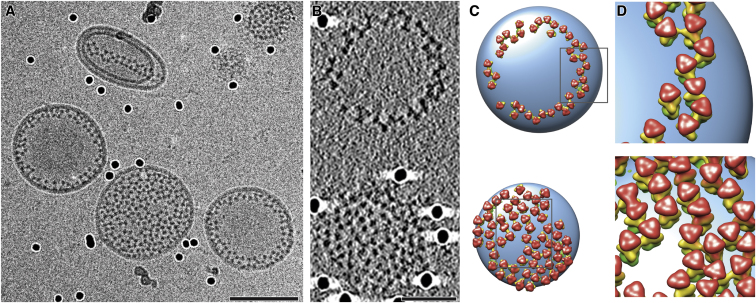
Glycoprotein B (gB) is a key component of the complex herpesvirus fusion machinery. We studied membrane interaction of two gB ectodomain forms and present an electron cryotomography structure of the gB-bilayer complex. The two forms differed in presence or absence of the membrane proximal region (MPR) but showed an overall similar trimeric shape. The presence of the MPR impeded interaction with liposomes. In contrast, the MPR-lacking form interacted efficiently with liposomes. Lateral interaction resulted in coat formation on the membranes. The structure revealed that interaction of gB with membranes was mediated by the fusion loops and limited to the outer membrane leaflet. The observed intrinsic propensity of gB to cluster on membranes indicates an additional role of gB in driving the fusion process forward beyond the transient fusion pore opening and subsequently leading to fusion pore expansion.
糖蛋白 B(gB)是疱疹病毒融合机制的关键组成部分。我们研究了两种 gB 胞外结构域形式的膜相互作用,并呈现了 gB-双层复合物的电子 cryotomography 结构。这两种形式在是否存在膜近端区域(MPR)方面存在差异,但表现出总体相似的三聚体形状。MPR 的存在阻碍了与脂质体的相互作用。相比之下,缺乏 MPR 的形式与脂质体有效相互作用。侧向相互作用导致在膜上形成衣壳。该结构表明,gB 与膜的相互作用是由融合环介导的,并且仅限于外膜小叶。观察到 gB 内在地倾向于在膜上聚集,这表明 gB 在推动融合过程方面具有额外的作用,超越了短暂的融合孔开口,并随后导致融合孔扩张。