Center for Addiction Research, Department of Pharmacology and Toxicology, University of Texas Medical Branch, Galveston, TX 77555, USA.
Neuropharmacology. 2014 Jan;76 Pt B(0 0):460-78. doi: 10.1016/j.neuropharm.2013.06.030. Epub 2013 Jul 11.
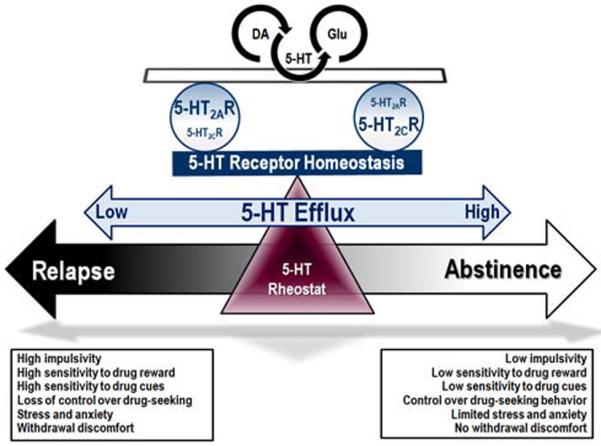
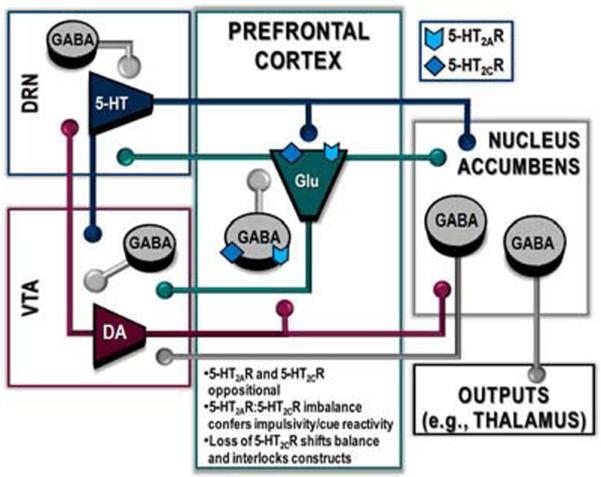
Cocaine abuse and addiction remain great challenges on the public health agendas in the U.S. and the world. Increasingly sophisticated perspectives on addiction to cocaine and other drugs of abuse have evolved with concerted research efforts over the last 30 years. Relapse remains a particularly powerful clinical problem as, even upon termination of drug use and initiation of abstinence, the recidivism rates can be very high. The cycling course of cocaine intake, abstinence and relapse is tied to a multitude of behavioral and cognitive processes including impulsivity (a predisposition toward rapid unplanned reactions to stimuli without regard to the negative consequences), and cocaine cue reactivity (responsivity to cocaine-associated stimuli) cited as two key phenotypes that contribute to relapse vulnerability even years into recovery. Preclinical studies suggest that serotonin (5-hydroxytryptamine; 5-HT) neurotransmission in key neural circuits may contribute to these interlocked phenotypes well as the altered neurobiological states evoked by cocaine that precipitate relapse events. As such, 5-HT is an important target in the quest to understand the neurobiology of relapse-predictive phenotypes, to successfully treat this complex disorder and improve diagnostic and prognostic capabilities. This review emphasizes the role of 5-HT and its receptor proteins in key addiction phenotypes and the implications of current findings to the future of therapeutics in addiction. This article is part of a Special Issue entitled 'NIDA 40th Anniversary Issue'.
可卡因滥用和成瘾仍然是美国和世界公共卫生议程上的重大挑战。在过去 30 年的协同研究努力下,人们对可卡因和其他药物成瘾的看法越来越深入。尽管已经停止使用药物并开始戒除,但复发仍然是一个特别严重的临床问题,复发率可能非常高。可卡因摄入、戒断和复发的循环过程与多种行为和认知过程有关,包括冲动性(对刺激做出快速、无计划的反应的倾向,而不考虑负面后果)和可卡因线索反应性(对与可卡因相关的刺激的反应性),这两个关键表型被认为是导致复发易感性的因素,即使在康复多年后也是如此。临床前研究表明,关键神经回路中的 5-羟色胺(5-羟色胺;5-HT)神经传递可能有助于这些相互关联的表型,以及可卡因引起的改变神经生物学状态,从而引发复发事件。因此,5-HT 是理解复发预测表型的神经生物学、成功治疗这种复杂疾病以及提高诊断和预后能力的重要目标。本文强调了 5-HT 及其受体蛋白在关键成瘾表型中的作用,以及当前研究结果对成瘾治疗未来的意义。本文是一个特刊的一部分,题为“NIDA 40 周年特刊”。