State Key Laboratory of Pollution Control and Resource Reuse, College of Environmental Science & Engineering, Tongji University, Shanghai 200092, China.
Int J Mol Sci. 2013 Jul 11;14(7):14395-407. doi: 10.3390/ijms140714395.
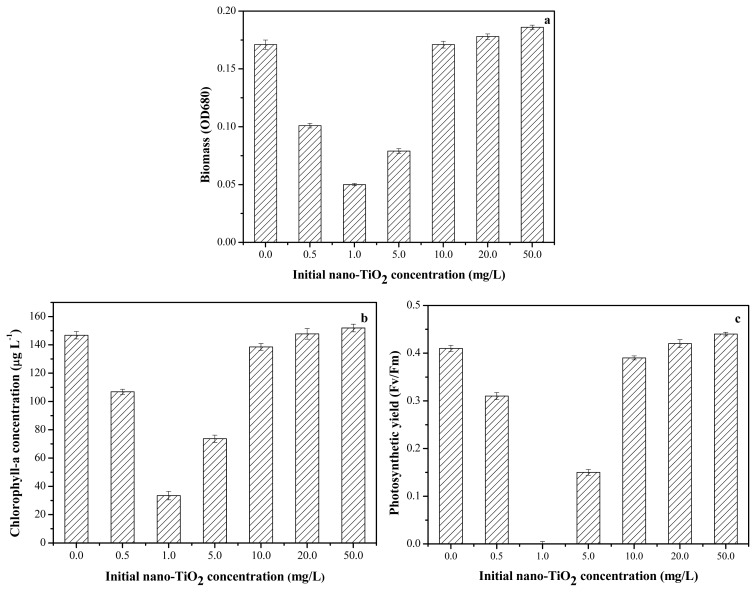
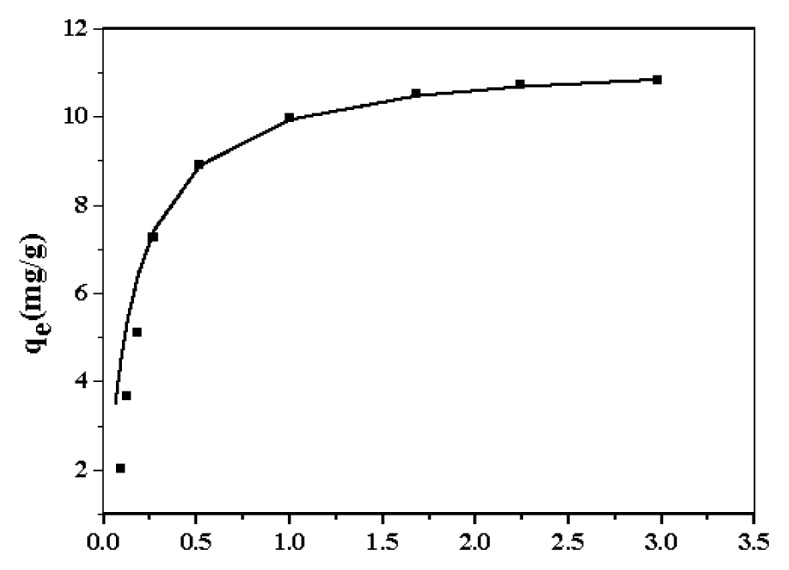
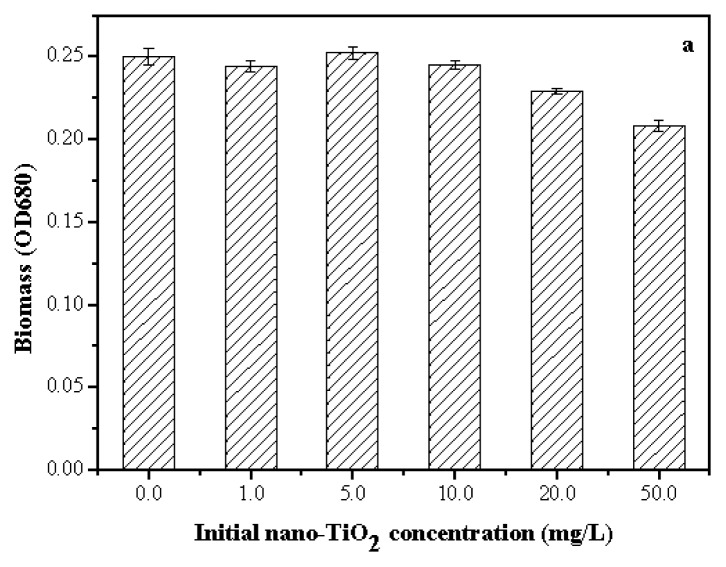
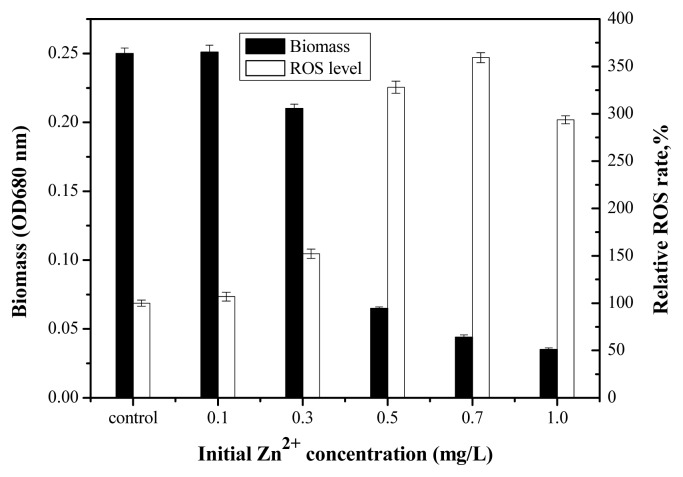
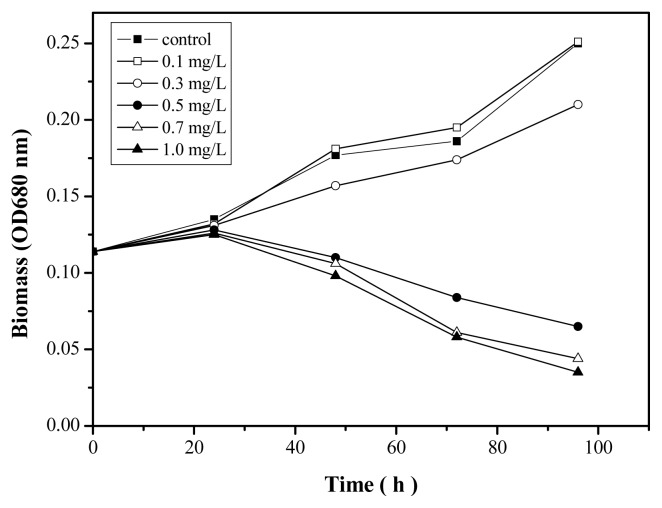
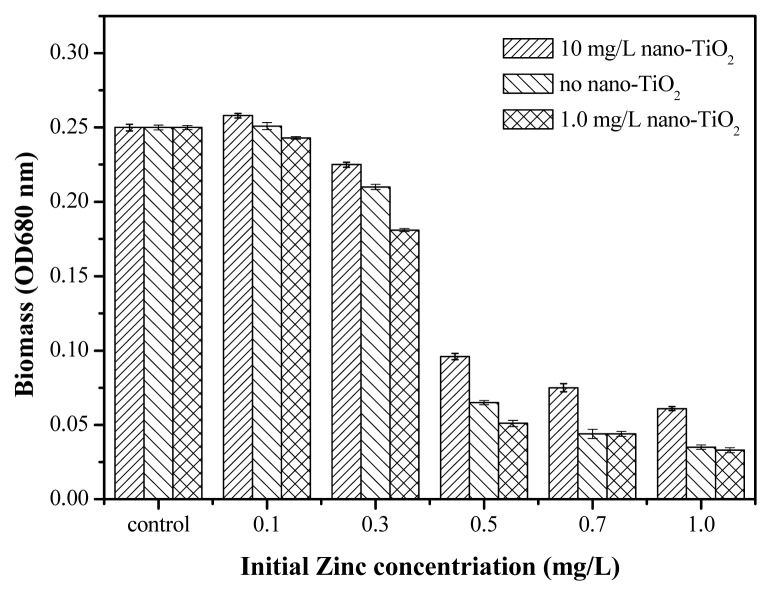
Anabaena sp. was used to examine the toxicity of exposure to a nano-TiO2 suspension, Zn2+ solution, and mixtures of nano-TiO2 and Zn2+ suspensions. Typical chlorophyll fluorescence parameters, including effective quantum yield, photosynthetic efficiency and maximal electron transport rate, were measured by a pulse-amplitude modulated fluorometer. Nano-TiO2 particles exhibited no significant toxicity at concentrations lower than 10.0 mg/L. The 96 h concentration for the 50% maximal effect (EC50) of Zn2+ alone to Anabaena sp. was 0.38 ± 0.004 mg/L. The presence of nano-TiO2 at low concentrations (<1.0 mg/L) significantly enhanced the toxicity of Zn2+ and consequently reduced the EC50 value to 0.29 ± 0.003 mg/L. However, the toxicity of the Zn2+/TiO2 system decreased with increasing nano-TiO2 concentration because of the substantial adsorption of Zn2+ by nano-TiO2. The toxicity curve of the Zn2+/TiO2 system as a function of incremental nano-TiO2 concentrations was parabolic. The toxicity significantly increased at the initial stage, reached its maximum, and then decreased with increasing nano-TiO2 concentration. Hydrodynamic sizes, concentration of nano-TiO2 and Zn2+ loaded nano-TiO2 were the main parameters for synergistic toxicity.
利用鱼腥藻研究了暴露于纳米 TiO2 悬浮液、Zn2+溶液以及纳米 TiO2 和 Zn2+混合悬浮液中的毒性。采用脉冲调制荧光仪测量了典型的叶绿素荧光参数,包括有效量子产量、光合效率和最大电子传递速率。当纳米 TiO2 浓度低于 10.0 mg/L 时,其没有表现出显著的毒性。Zn2+对鱼腥藻的 96 h 半最大效应浓度(EC50)为 0.38 ± 0.004 mg/L。在低浓度(<1.0 mg/L)下,纳米 TiO2 的存在显著增强了 Zn2+的毒性,进而将 EC50 值降低至 0.29 ± 0.003 mg/L。然而,随着纳米 TiO2 浓度的增加,Zn2+/TiO2 体系的毒性降低,因为 Zn2+被纳米 TiO2 大量吸附。Zn2+/TiO2 体系的毒性曲线随纳米 TiO2 浓度的增加呈抛物线形。毒性在初始阶段显著增加,达到最大值,然后随着纳米 TiO2 浓度的增加而降低。水动力粒径、纳米 TiO2 浓度和负载 Zn2+的纳米 TiO2 是协同毒性的主要参数。