Division of Tumor Virology, Program Infection and Cancer, German Cancer Research Center (DKFZ), Im Neuenheimer Feld 242, Heidelberg, Germany; Department of Pediatric Hematology, Oncology and Immunology, Heidelberg University Hospital, Im Neuenheimer Feld 430, Heidelberg, Germany.
Int J Cancer. 2014 Feb 1;134(3):703-16. doi: 10.1002/ijc.28386. Epub 2013 Sep 2.
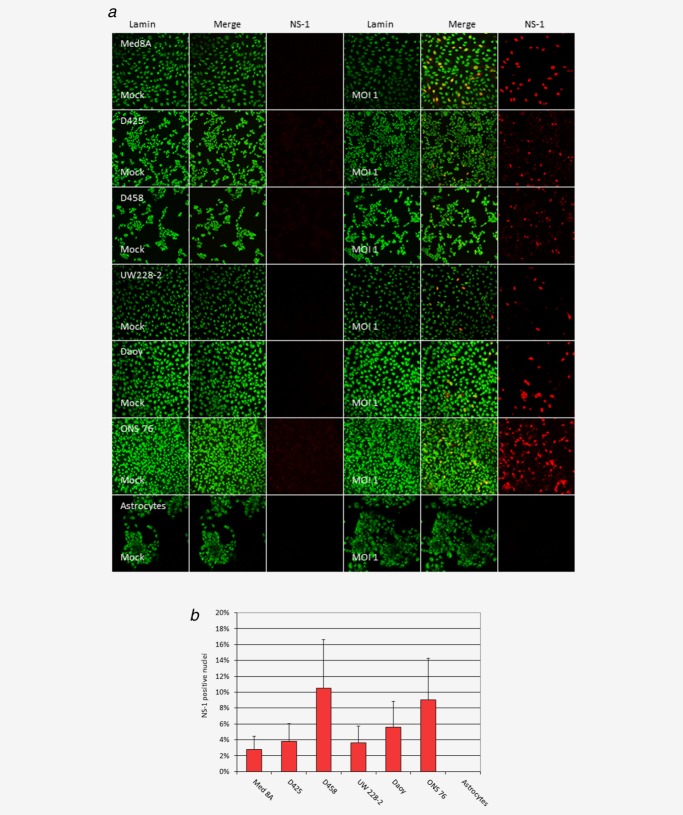
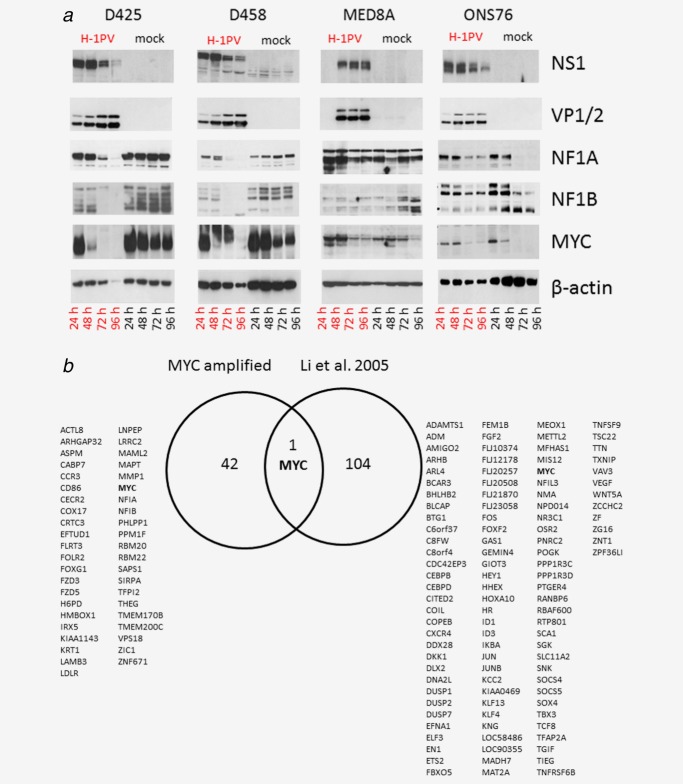
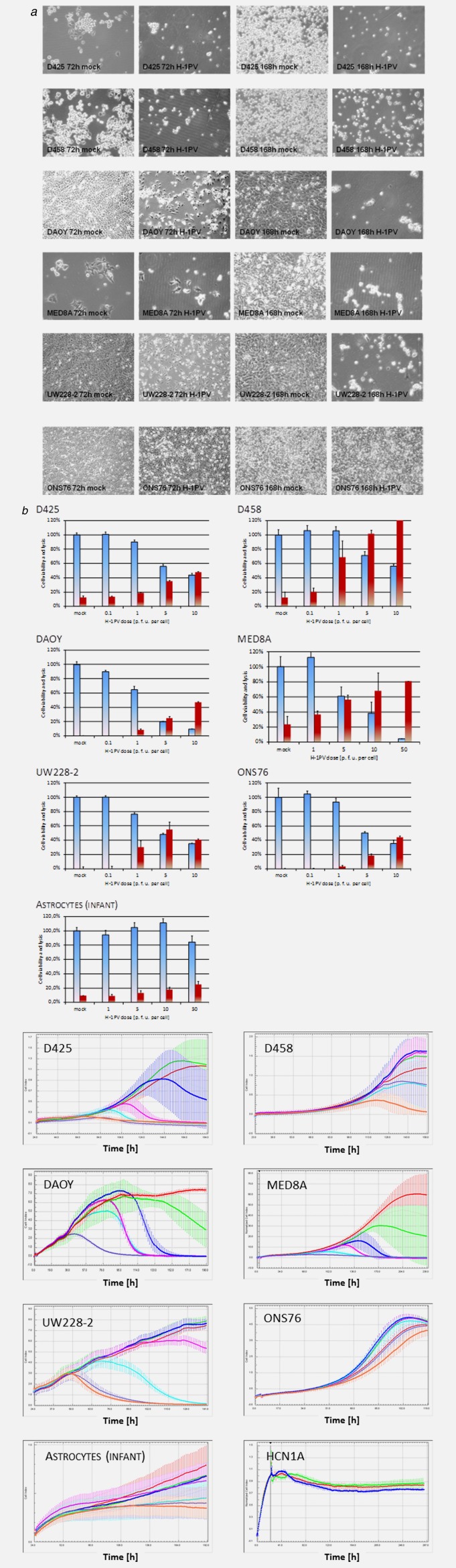
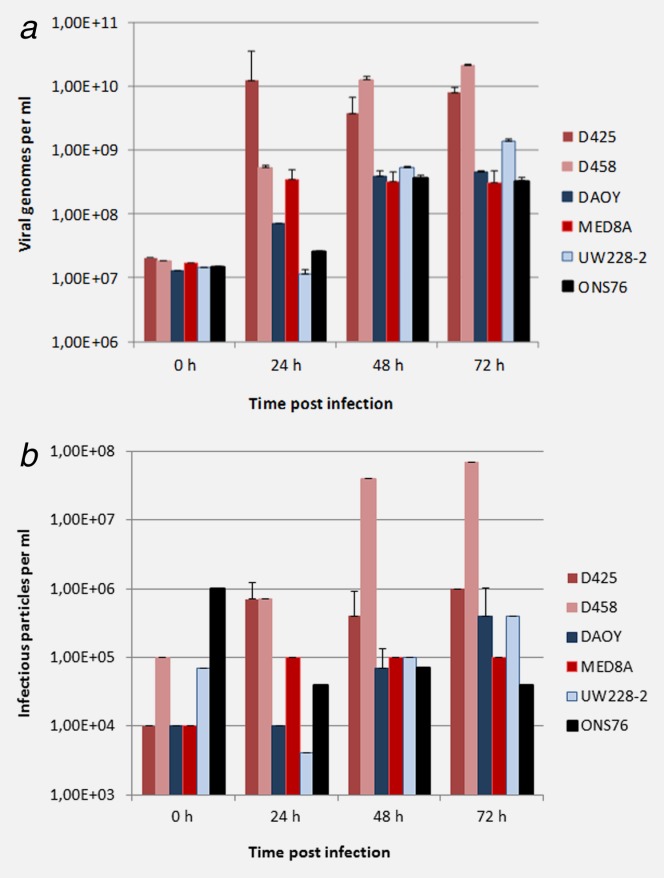
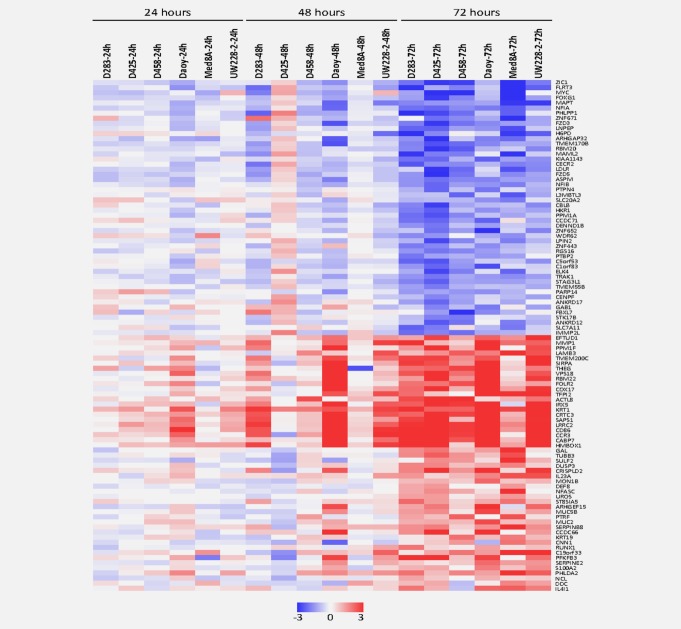
Based on extensive pre-clinical studies, the oncolytic parvovirus H-1 (H-1PV) is currently applied to patients with recurrent glioblastoma in a phase I/IIa clinical trial (ParvOryx01, NCT01301430). Cure rates of about 40% in pediatric high-risk medulloblastoma (MB) patients also indicate the need of new therapeutic approaches. In order to prepare a future application of oncolytic parvovirotherapy to MB, the present study preclinically evaluates the cytotoxic efficacy of H-1PV on MB cells in vitro and characterizes cellular target genes involved in this effect. Six MB cell lines were analyzed by whole genome oligonucleotide microarrays after treatment and the results were matched to known molecular and cytogenetic risk factors. In contrast to non-transformed infant astrocytes and neurons, in five out of six MB cell lines lytic H-1PV infection and efficient viral replication could be demonstrated. The cytotoxic effects induced by H-1PV were observed at LD50s below 0.05 p. f. u. per cell indicating high susceptibility. Gene expression patterns in the responsive MB cell lines allowed the identification of candidate target genes mediating the cytotoxic effects of H-1PV. H-1PV induced down-regulation of key regulators of early neurogenesis shown to confer poor prognosis in MB such as ZIC1, FOXG1B, MYC, and NFIA. In MB cell lines with genomic amplification of MYC, expression of MYC was the single gene most significantly repressed after H-1PV infection. H-1PV virotherapy may be a promising treatment approach for MB since it targets genes of functional relevance and induces cell death at very low titers of input virus.
基于广泛的临床前研究,溶瘤细小病毒 H-1(H-1PV)目前正在一项 I/IIa 期临床试验中应用于复发性胶质母细胞瘤患者(ParvOryx01,NCT01301430)。在儿科高危髓母细胞瘤(MB)患者中约 40%的治愈率也表明需要新的治疗方法。为了为溶瘤细小病毒治疗 MB 做好未来的应用准备,本研究在体外临床前评估了 H-1PV 对 MB 细胞的细胞毒性作用,并对参与该作用的细胞靶基因进行了表征。在用 H-1PV 处理后,通过全基因组寡核苷酸微阵列分析了六种 MB 细胞系,结果与已知的分子和细胞遗传学危险因素相匹配。与未转化的婴儿星形胶质细胞和神经元不同,在六种 MB 细胞系中的五种中,可证明溶细胞性 H-1PV 感染和有效的病毒复制。H-1PV 诱导的细胞毒性作用在 LD50 下观察到,低于 0.05 p. f. u. per cell,表明高度敏感性。在对 H-1PV 有反应的 MB 细胞系中的基因表达模式允许鉴定介导 H-1PV 细胞毒性作用的候选靶基因。H-1PV 诱导了在 MB 中赋予不良预后的早期神经发生关键调节剂的下调,例如 ZIC1、FOXG1B、MYC 和 NFIA。在 MYC 基因组扩增的 MB 细胞系中,H-1PV 感染后 MYC 的表达是单个基因被抑制最显著的基因。H-1PV 病毒疗法可能是 MB 的一种有前途的治疗方法,因为它针对功能相关的基因,并在输入病毒的非常低滴度下诱导细胞死亡。