Wang Qinggai, Li Shibei, Jia Peng, Qi Changjun, Ding Feng
Appraisal Center for Environment and Engineering, Ministry of Environmental Protection, Beijing 100012, China.
ScientificWorldJournal. 2013 Jun 17;2013:231768. doi: 10.1155/2013/231768. Print 2013.
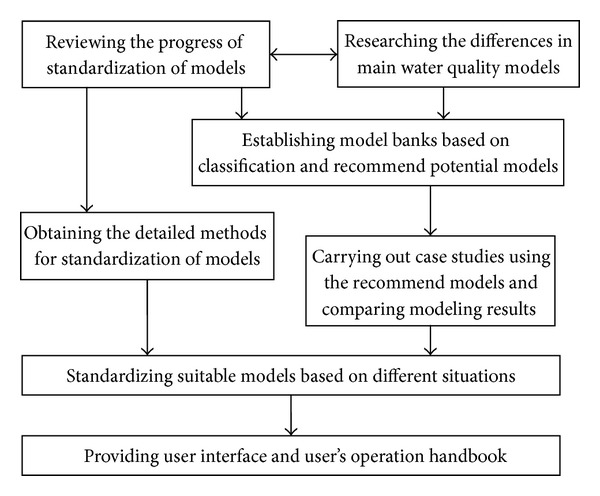
Surface water quality models can be useful tools to simulate and predict the levels, distributions, and risks of chemical pollutants in a given water body. The modeling results from these models under different pollution scenarios are very important components of environmental impact assessment and can provide a basis and technique support for environmental management agencies to make right decisions. Whether the model results are right or not can impact the reasonability and scientificity of the authorized construct projects and the availability of pollution control measures. We reviewed the development of surface water quality models at three stages and analyzed the suitability, precisions, and methods among different models. Standardization of water quality models can help environmental management agencies guarantee the consistency in application of water quality models for regulatory purposes. We concluded the status of standardization of these models in developed countries and put forward available measures for the standardization of these surface water quality models, especially in developing countries.
地表水水质模型是模拟和预测给定水体中化学污染物的水平、分布和风险的有用工具。这些模型在不同污染情景下的建模结果是环境影响评估的非常重要的组成部分,可为环境管理机构做出正确决策提供依据和技术支持。模型结果是否正确会影响获批建设项目的合理性和科学性以及污染控制措施的有效性。我们回顾了地表水水质模型三个阶段的发展,并分析了不同模型之间的适用性、精度和方法。水质模型的标准化有助于环境管理机构确保在监管目的下应用水质模型的一致性。我们总结了这些模型在发达国家的标准化状况,并提出了使这些地表水水质模型标准化的可行措施,特别是在发展中国家。