Department of Biology, The Catholic University of America, Washington, District of Columbia, United States of America.
PLoS Pathog. 2013;9(7):e1003495. doi: 10.1371/journal.ppat.1003495. Epub 2013 Jul 11.
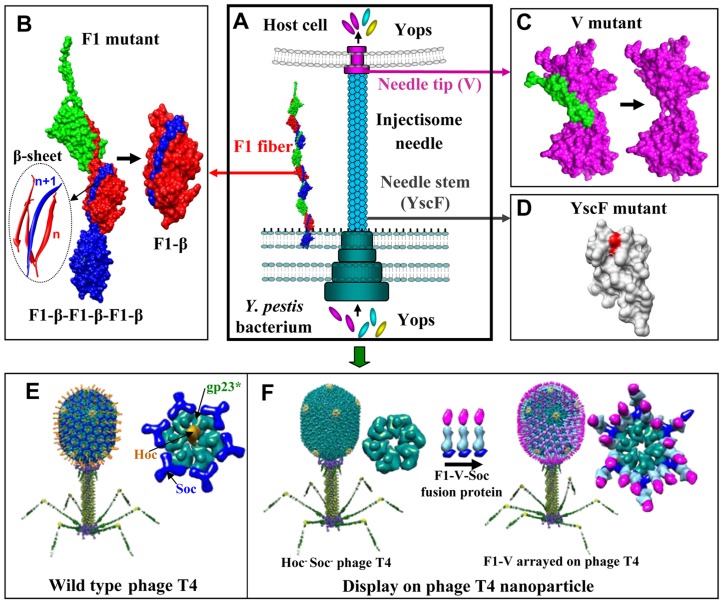
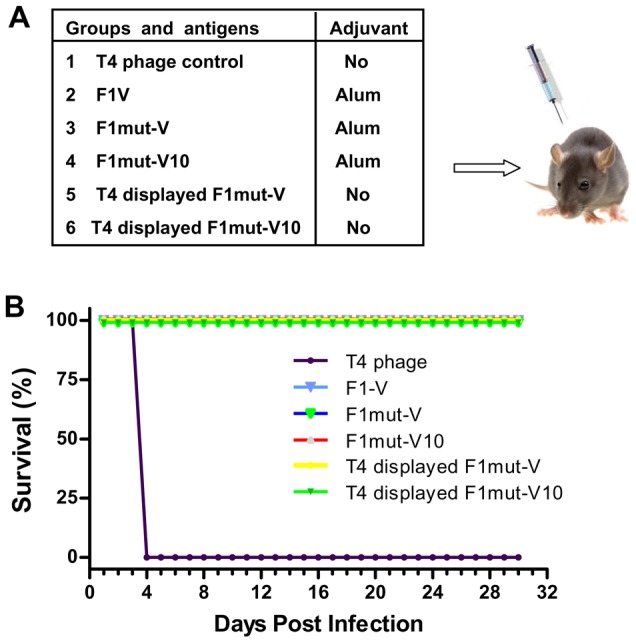
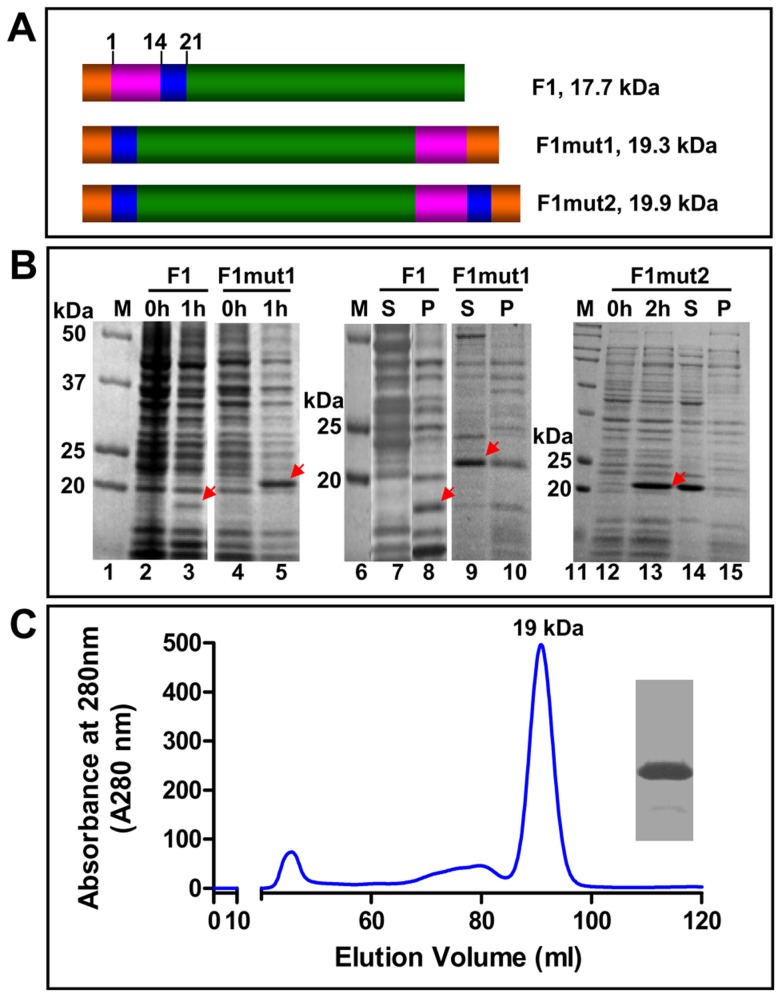
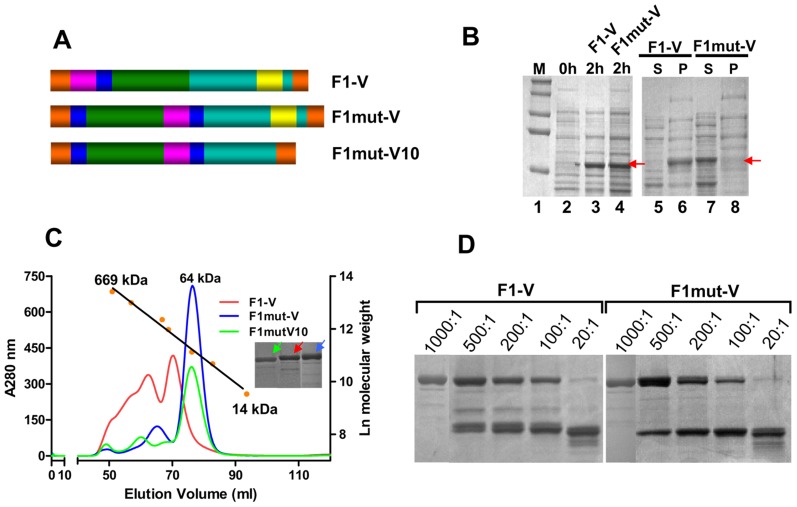
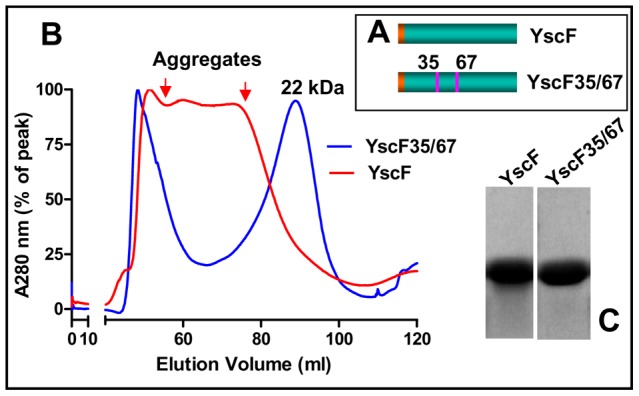
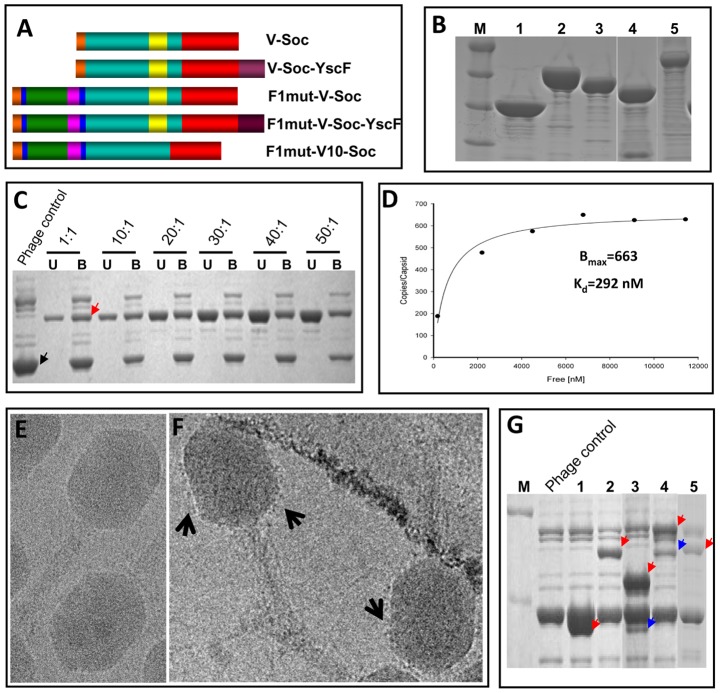
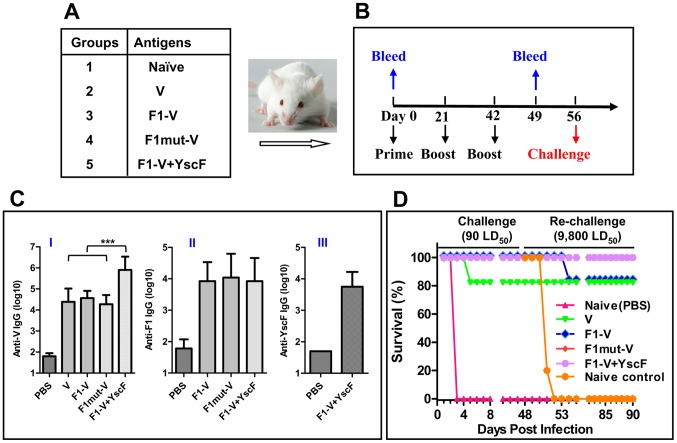
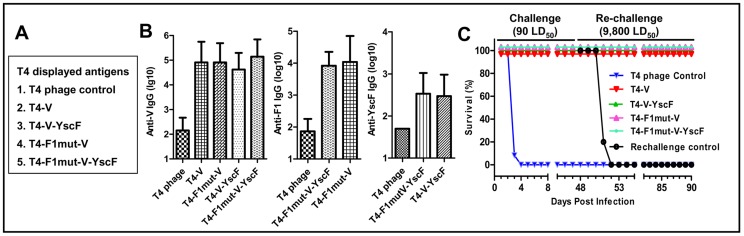
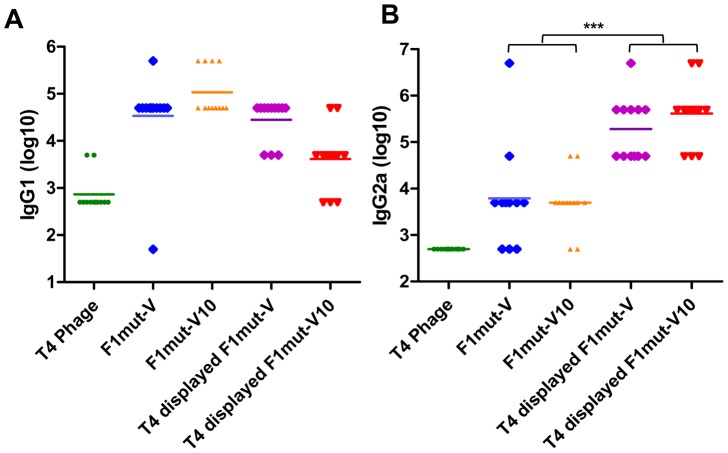
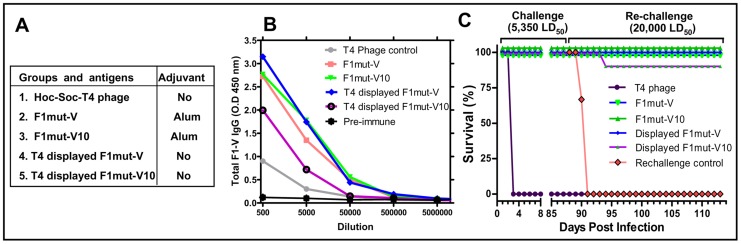
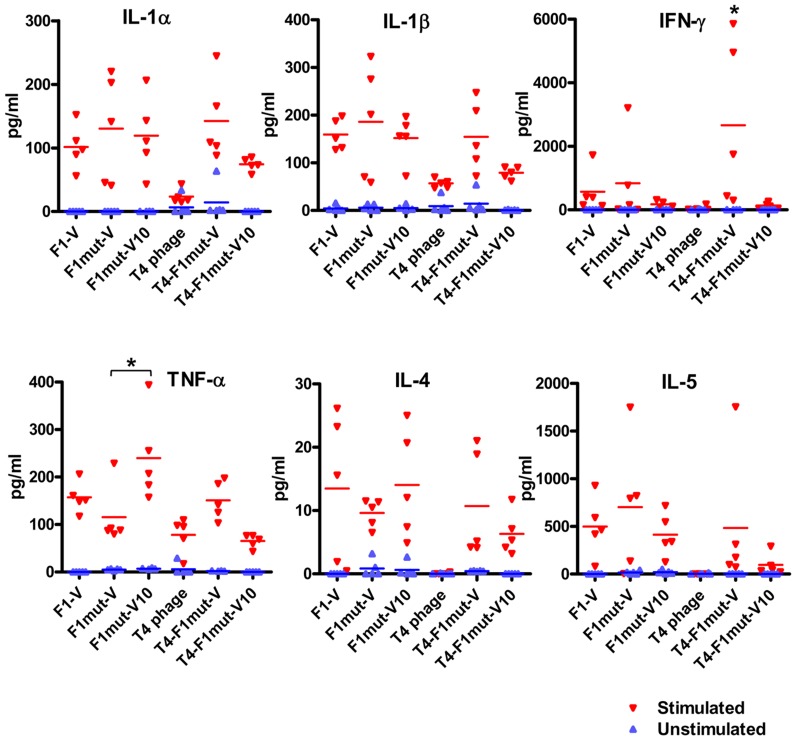
Pneumonic plague is a highly virulent infectious disease with 100% mortality rate, and its causative organism Yersinia pestis poses a serious threat for deliberate use as a bioterror agent. Currently, there is no FDA approved vaccine against plague. The polymeric bacterial capsular protein F1, a key component of the currently tested bivalent subunit vaccine consisting, in addition, of low calcium response V antigen, has high propensity to aggregate, thus affecting its purification and vaccine efficacy. We used two basic approaches, structure-based immunogen design and phage T4 nanoparticle delivery, to construct new plague vaccines that provided complete protection against pneumonic plague. The NH₂-terminal β-strand of F1 was transplanted to the COOH-terminus and the sequence flanking the β-strand was duplicated to eliminate polymerization but to retain the T cell epitopes. The mutated F1 was fused to the V antigen, a key virulence factor that forms the tip of the type three secretion system (T3SS). The F1mut-V protein showed a dramatic switch in solubility, producing a completely soluble monomer. The F1mut-V was then arrayed on phage T4 nanoparticle via the small outer capsid protein, Soc. The F1mut-V monomer was robustly immunogenic and the T4-decorated F1mut-V without any adjuvant induced balanced TH1 and TH2 responses in mice. Inclusion of an oligomerization-deficient YscF, another component of the T3SS, showed a slight enhancement in the potency of F1-V vaccine, while deletion of the putative immunomodulatory sequence of the V antigen did not improve the vaccine efficacy. Both the soluble (purified F1mut-V mixed with alhydrogel) and T4 decorated F1mut-V (no adjuvant) provided 100% protection to mice and rats against pneumonic plague evoked by high doses of Y. pestis CO92. These novel platforms might lead to efficacious and easily manufacturable next generation plague vaccines.
肺鼠疫是一种高毒力的传染病,死亡率为 100%,其病原体鼠疫耶尔森菌被认为是故意用作生物恐怖剂的严重威胁。目前,还没有获得 FDA 批准的鼠疫疫苗。聚合细菌荚膜蛋白 F1 是目前测试的双价亚单位疫苗的关键组成部分,此外还有低钙反应 V 抗原,它有很高的聚集倾向,从而影响其纯化和疫苗效力。我们使用了两种基本方法,基于结构的免疫原设计和噬菌体 T4 纳米颗粒传递,来构建新的鼠疫疫苗,这些疫苗能够提供针对肺鼠疫的完全保护。F1 的 NH2 末端β-链被移植到 COOH 末端,并且围绕β-链的序列被复制,以消除聚合但保留 T 细胞表位。突变的 F1 与 V 抗原融合,V 抗原是形成 III 型分泌系统 (T3SS) 尖端的关键毒力因子。F1mut-V 蛋白的溶解度发生了显著变化,产生了完全可溶的单体。然后,F1mut-V 通过小外壳蛋白 Soc 排列在噬菌体 T4 纳米颗粒上。F1mut-V 单体具有很强的免疫原性,并且没有任何佐剂的 T4 修饰的 F1mut-V 在小鼠中诱导了平衡的 TH1 和 TH2 反应。包含 III 型分泌系统的另一个组件寡聚缺陷 YscF 稍微增强了 F1-V 疫苗的效力,而删除 V 抗原的假定免疫调节序列并没有提高疫苗效力。可溶性(纯化的 F1mut-V 与氢氧化铝凝胶混合)和 T4 修饰的 F1mut-V(无佐剂)都为小鼠和大鼠提供了针对高剂量鼠疫耶尔森菌 CO92 引起的肺鼠疫的 100%保护。这些新型平台可能会导致有效且易于制造的下一代鼠疫疫苗。