Department of Pharmacology, Nara Medical University School of Medicine, Japan.
Sci Rep. 2013;3:2202. doi: 10.1038/srep02202.
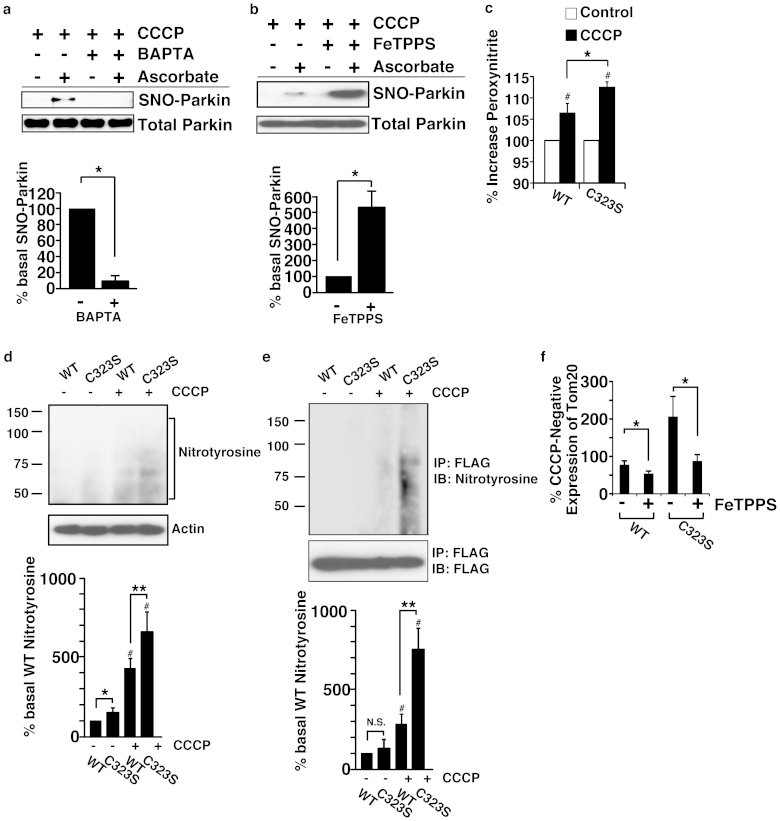
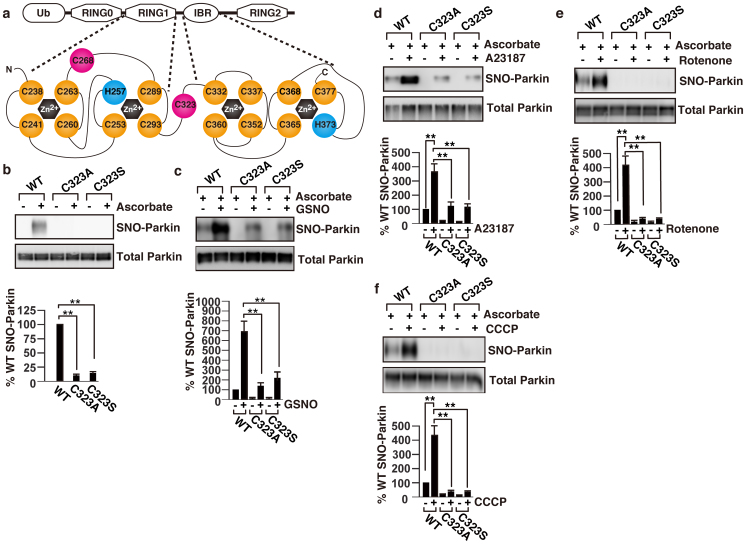
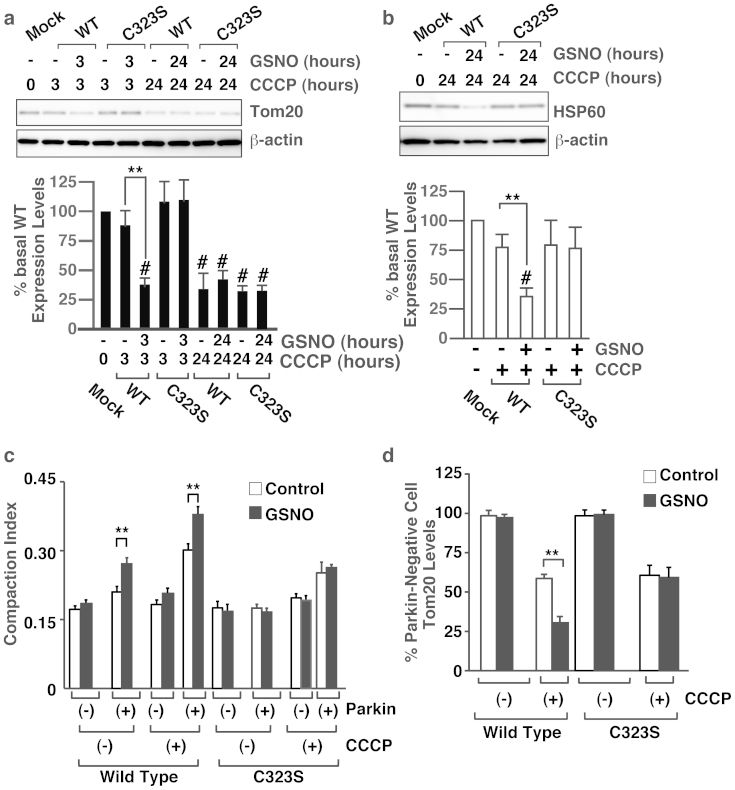
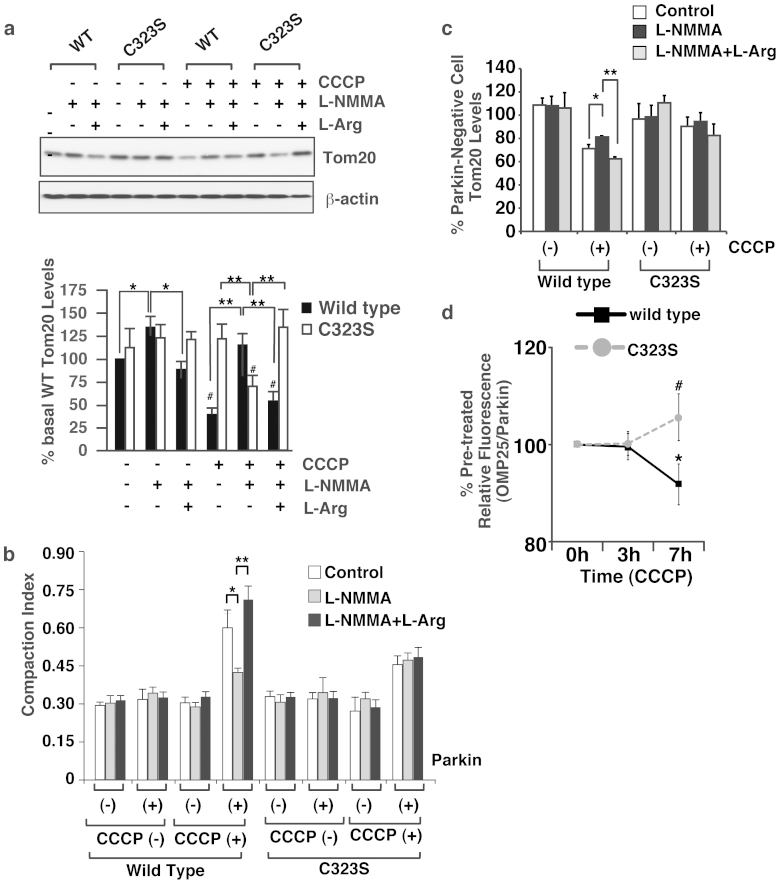
Parkin, a ubiquitin E3 ligase of the ring between ring fingers family, has been implicated in mitochondrial quality control. A series of recent reports have suggested that the recruitment of parkin is regulated by phosphorylation. However, the molecular mechanism that activates parkin to induce mitochondrial degradation is not well understood. Here, and in contrast to previous reports that S-nitrosylation of parkin is exclusively inhibitory, we identify a previously unrecognized site of S-nitrosylation in parkin (Cys323) that induces mitochondrial degradation. We demonstrate that endogenous S-nitrosylation of parkin is in fact responsible for activation of its E3 ligase activity to induce aggregation and degradation. We further demonstrate that mitochondrial uncoupling agents result in denitrosylation of parkin, and that prevention of denitrosylation restores mitochondrial degradation. Our data indicates that NO both positive effects on mitochondrial quality control, and suggest that targeted S-nitrosylation could provide a novel therapeutic strategy against Parkinson's disease.
Parkin 是一种指环指家族的泛素 E3 连接酶,已被牵连到线粒体质量控制中。最近的一系列报告表明,Parkin 的募集受到磷酸化的调节。然而,激活 Parkin 诱导线粒体降解的分子机制尚不清楚。在这里,与之前的报告相反,我们确定了 Parkin 中一个以前未被识别的 S-亚硝化为 Cys323 的位点,该位点诱导线粒体降解。我们证明了 Parkin 的内源性 S-亚硝化为其 E3 连接酶活性的激活实际上负责诱导聚集和降解。我们进一步证明线粒体解偶联剂导致 Parkin 的去亚硝化,而防止去亚硝化则恢复线粒体降解。我们的数据表明,NO 对线粒体质量控制有积极影响,并表明靶向 S-亚硝化可能为治疗帕金森病提供一种新的治疗策略。