The Oncology Institute Prof.Dr.I. Chiricuta, 400015 Republicii Str,, nr, 34-36, Cluj-Napoca, Romania.
BMC Genomics. 2013 Jul 16;14:480. doi: 10.1186/1471-2164-14-480.
Cancer cells frequently adopt cellular and molecular alterations and acquire resistance to cytostatic drugs. Chemotherapy with oxaliplatin is among the leading treatments for colorectal cancer with a response rate of 50%, inducing intrastrand cross-links on the DNA. Despite of this drug's efficiency, resistance develops in nearly all metastatic patients. Chemoresistance being of crucial importance for the drug's clinical efficiency this study aimed to contribute to the identification and description of some cellular and molecular alterations induced by prolonged oxaliplatin therapy. Resistance to oxaliplatin was induced in Colo320 (Colo320R) and HT-29 (HT-29R) colorectal adenocarcinoma cell lines by exposing the cells to increasing concentrations of the drug. Alterations in morphology, cytotoxicity, DNA cross-links formation and gene expression profiles were assessed in the parental and resistant variants with microscopy, MTT, alkaline comet and pangenomic microarray assays, respectively.
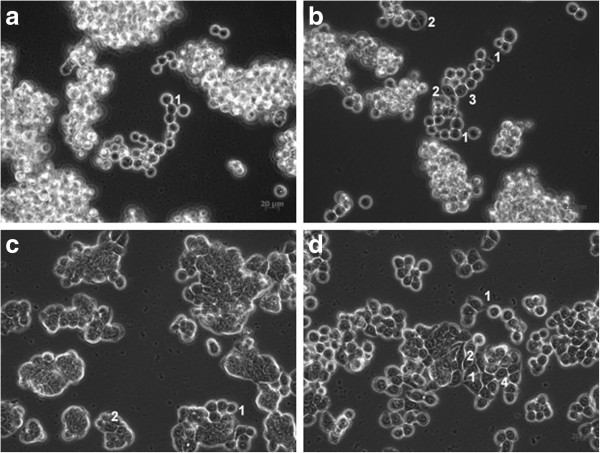
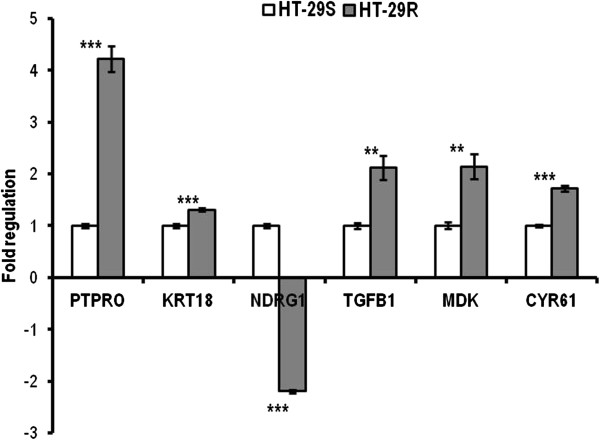
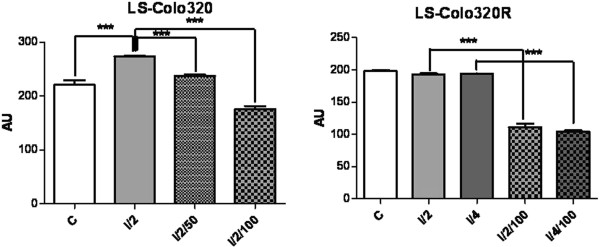
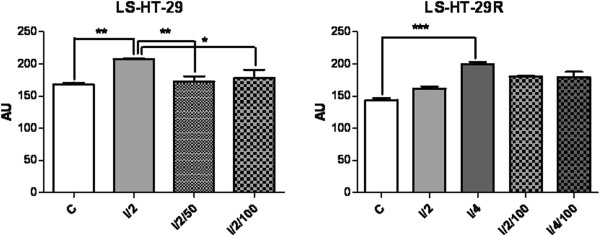
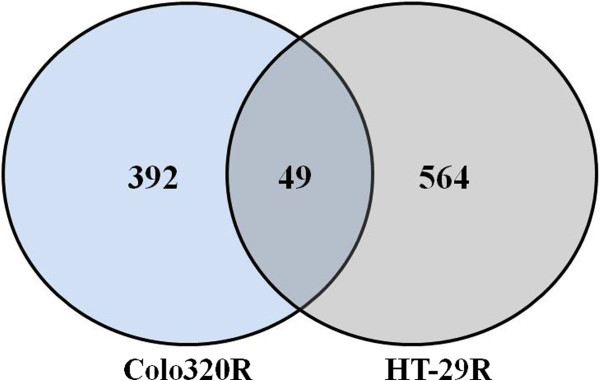
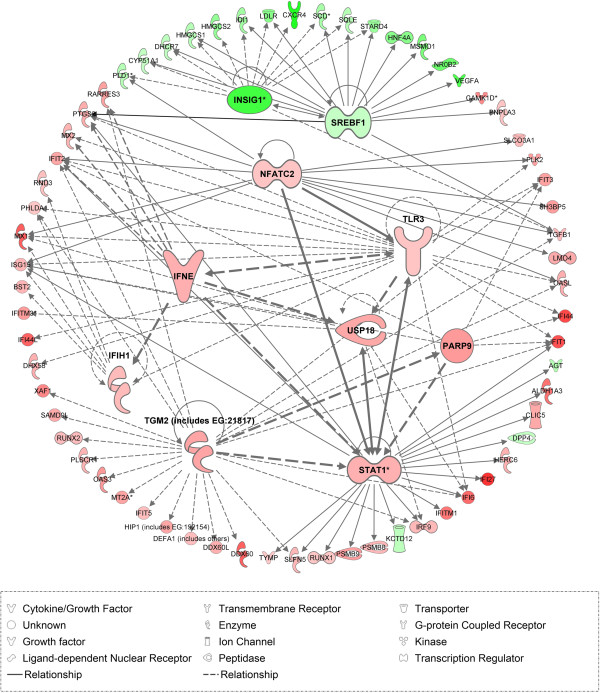
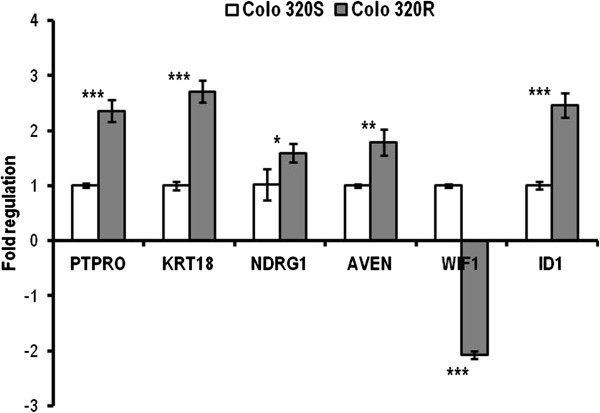
Morphology analysis revealed epithelial-to-mesenchymal transition in the resistant vs parental cells suggesting alterations of the cells' adhesion complexes, through which they acquire increased invasiveness and adherence. Cytotoxicity measurements demonstrated resistance to oxaliplatin in both cell lines; Colo320 being more sensitive than HT-29 to this drug (P < 0.001). The treatment with oxaliplatin caused major DNA cross-links in both parental cell lines; in Colo320R small amounts of DNA cross-links were still detectable, while in HT-29R not. We identified 441 differentially expressed genes in Colo320R and 613 in HT-29R as compared to their parental counterparts (at least 1.5 -fold up- or down- regulation, p < 0.05). More disrupted functions and pathways were detected in HT-29R cell line than in Colo320R, involving genes responsible for apoptosis inhibition, cellular proliferation and epithelial-to-mesenchymal transition. Several upstream regulators were detected as activated in HT-29R cell line, but not in Colo320R.
Our findings revealed a more resistant phenotype in HT-29R as compared to Colo320R and different cellular and molecular chemoresistance patterns induced by prolonged treatment with oxaliplatin in cell lines with identical origins (colorectal adenocarcinomas).
癌细胞经常发生细胞和分子改变,并对细胞毒性药物产生耐药性。奥沙利铂化疗是结直肠癌的主要治疗方法之一,其反应率为 50%,在 DNA 上诱导链间交联。尽管这种药物具有疗效,但几乎所有转移性患者都会产生耐药性。鉴于耐药性对药物临床疗效至关重要,本研究旨在确定并描述奥沙利铂长期治疗诱导的一些细胞和分子改变。通过将细胞暴露于逐渐增加的药物浓度,在结肠直肠腺癌细胞系 Colo320(Colo320R)和 HT-29(HT-29R)中诱导对奥沙利铂的耐药性。通过显微镜、MTT、碱性彗星和全基因组微阵列分析,分别评估亲本和耐药变体的形态变化、细胞毒性、DNA 交联形成和基因表达谱。
形态分析显示耐药细胞与亲本细胞相比发生上皮间质转化,表明细胞黏附复合物发生改变,使细胞获得更高的侵袭性和黏附性。细胞毒性测量表明两种细胞系均对奥沙利铂耐药;Colo320 比 HT-29 对该药物更敏感(P<0.001)。奥沙利铂处理在两种亲本细胞系中均引起大量 DNA 交联;在 Colo320R 中仍可检测到少量 DNA 交联,而在 HT-29R 中则未检测到。与亲本细胞相比,Colo320R 中有 441 个差异表达基因,HT-29R 中有 613 个(至少 1.5 倍上调或下调,p<0.05)。与 Colo320R 相比,HT-29R 中检测到更多功能和途径失调,涉及抑制细胞凋亡、细胞增殖和上皮间质转化的基因。在 HT-29R 细胞系中检测到几个激活的上游调节剂,但在 Colo320R 中没有。
与 Colo320R 相比,HT-29R 表现出更强的耐药表型,并且在用奥沙利铂长期治疗后,两种同源(结直肠腺癌)细胞系的细胞和分子耐药模式不同。