Department of Psychology, Northwestern University, Evanston, IL, USA; Beckman Institute, University of Illinois Urbana-Champaign, Urbana, IL, USA.
Neuroimage. 2013 Dec;83:849-61. doi: 10.1016/j.neuroimage.2013.07.039. Epub 2013 Jul 19.
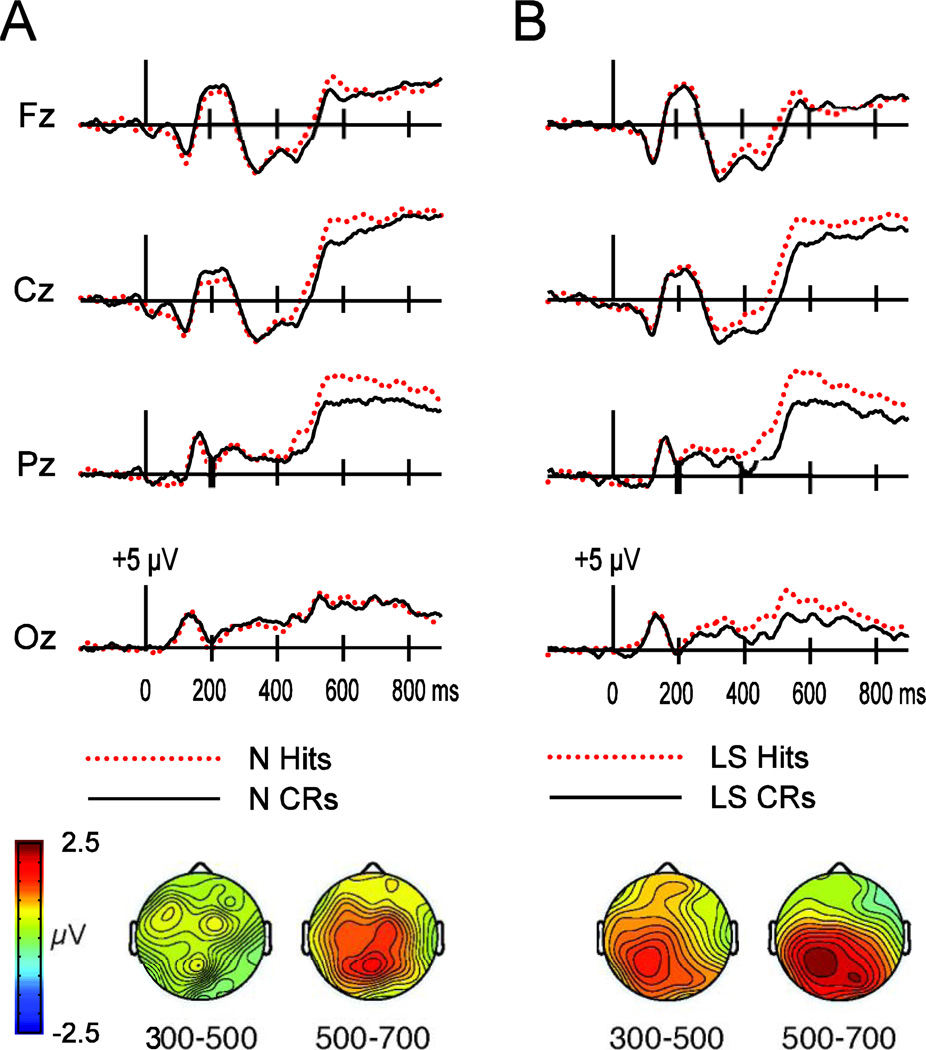
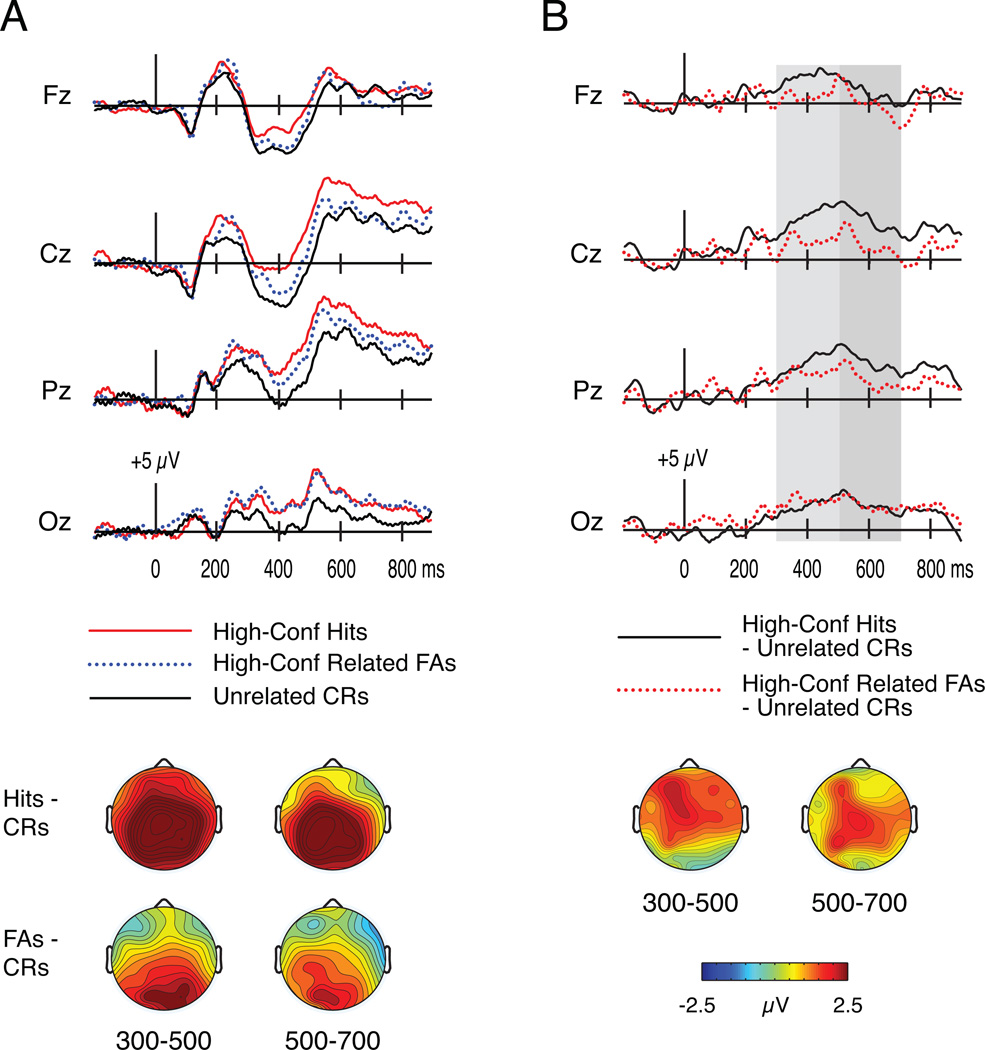
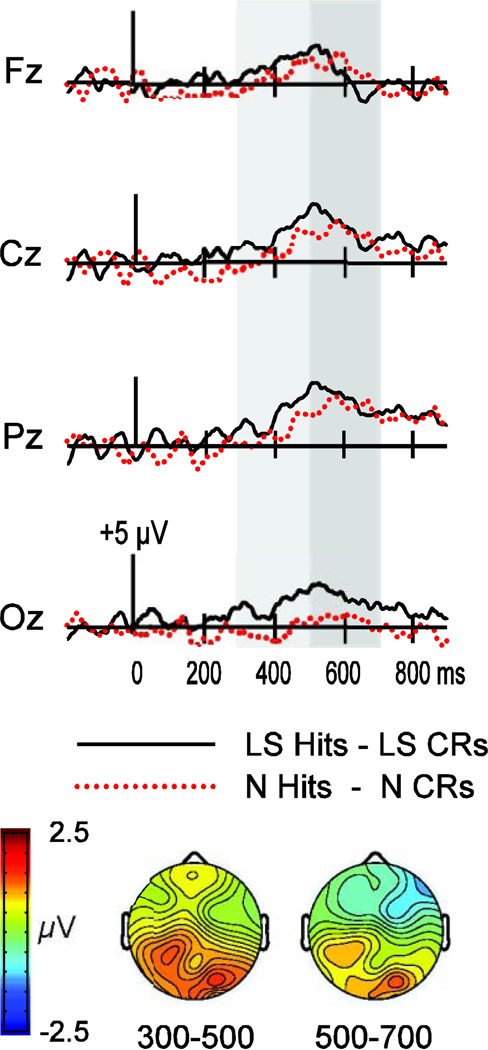
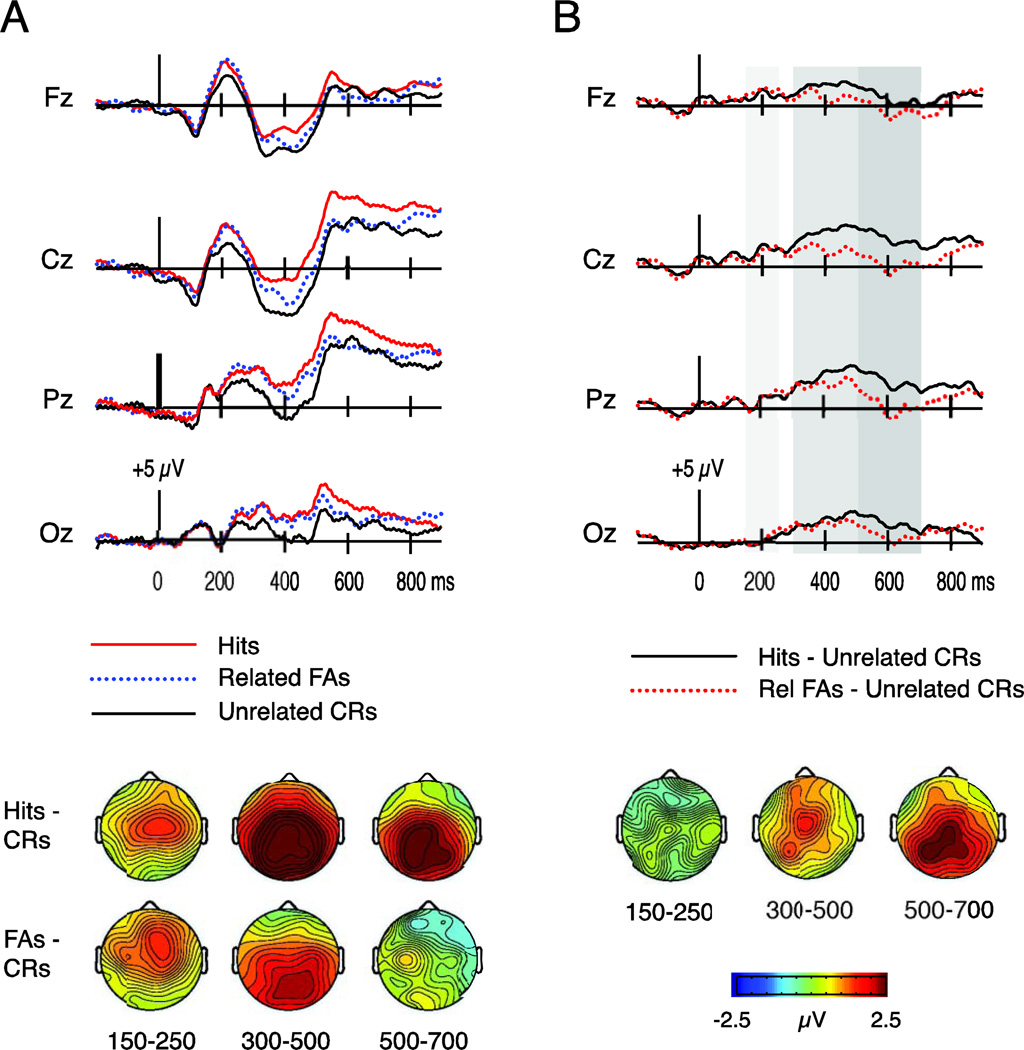
The mechanisms that give rise to familiarity memory have received intense research interest. One current topic of debate concerns the extent to which familiarity is driven by the same fluency sources that give rise to certain implicit memory phenomena. Familiarity may be tied to conceptual fluency, given that familiarity and conceptual implicit memory can exhibit similar neurocognitive properties. However, familiarity can also be driven by perceptual factors, and its neural basis under these circumstances has received less attention. Here we recorded brain potentials during recognition testing using a procedure that has previously been shown to encourage a reliance on letter information when assessing familiarity for words. Studied and unstudied words were derived either from two separate letter pools or a single letter pool ("letter-segregated" and "normal" conditions, respectively) in a within-subjects contrast. As predicted, recognition accuracy was higher in the letter-segregated relative to the normal condition. Electrophysiological analyses revealed parietal old-new effects from 500-700 ms in both conditions. In addition, a topographically dissociable occipital old-new effect from 300-700 ms was present in the letter-segregated condition only. In a second experiment, we found that similar occipital brain potentials were associated with confident false recognition of words that shared letters with studied words but were not themselves studied. These findings indicate that familiarity is a multiply determined phenomenon, and that the stimulus dimensions on which familiarity is based can moderate its neural correlates. Conceptual and perceptual contributions to familiarity vary across testing circumstances, and both must be accounted for in theories of recognition memory and its neural basis.
产生熟悉记忆的机制引起了强烈的研究兴趣。目前一个争论的话题是,熟悉程度在多大程度上是由导致某些内隐记忆现象的相同流畅性来源驱动的。熟悉程度可能与概念流畅性有关,因为熟悉程度和概念内隐记忆可以表现出相似的神经认知特征。然而,熟悉程度也可能受到知觉因素的驱动,而在这些情况下,其神经基础受到的关注较少。在这里,我们在识别测试中记录了脑电波,使用的程序以前已经证明,当评估单词的熟悉度时,会鼓励依赖字母信息。在被试内的对比中,研究和未研究的单词分别来自两个单独的字母池或一个单一的字母池(分别为“字母分离”和“正常”条件)。正如预测的那样,在字母分离条件下,识别准确率高于正常条件。电生理分析显示,在两种条件下,从 500-700 毫秒都有顶叶的新旧效应。此外,在字母分离条件下,仅在 300-700 毫秒有一个具有拓扑差异的枕叶新旧效应。在第二个实验中,我们发现,与熟悉的单词共享字母但本身未被学习的单词的自信错误识别相关的相似的枕叶脑电位。这些发现表明,熟悉程度是一个多决定的现象,并且熟悉程度所基于的刺激维度可以调节其神经相关性。熟悉程度的概念和知觉贡献因测试情况而异,在记忆和其神经基础的理论中,都必须考虑到这两个因素。