Clinical Memory Research Unit, Department of Clinical Medicine, Lund University, Lund, Sweden.
PLoS One. 2013 Jul 18;8(7):e66932. doi: 10.1371/journal.pone.0066932. Print 2013.
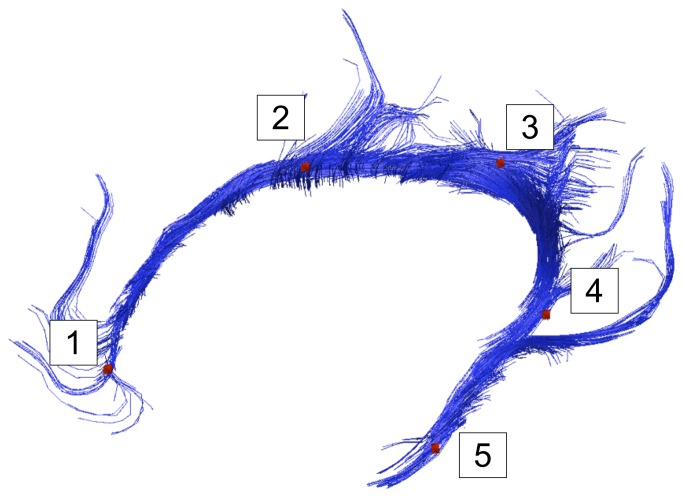
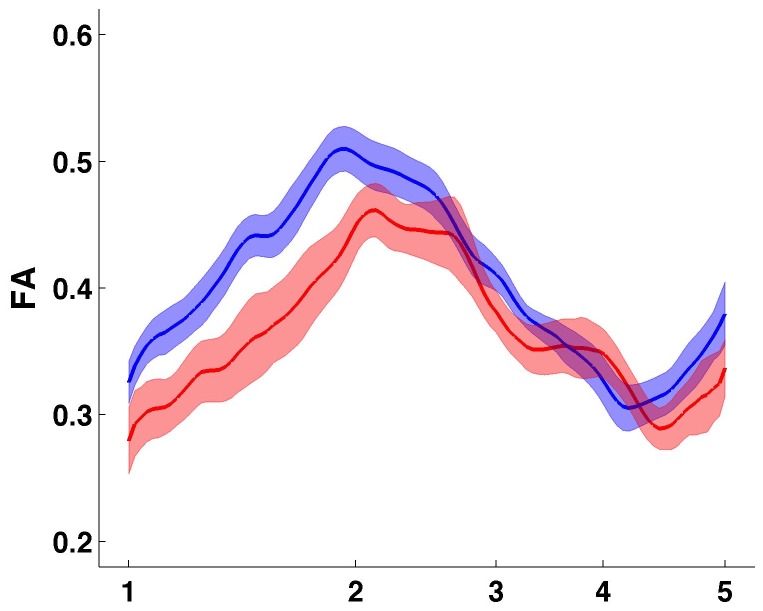
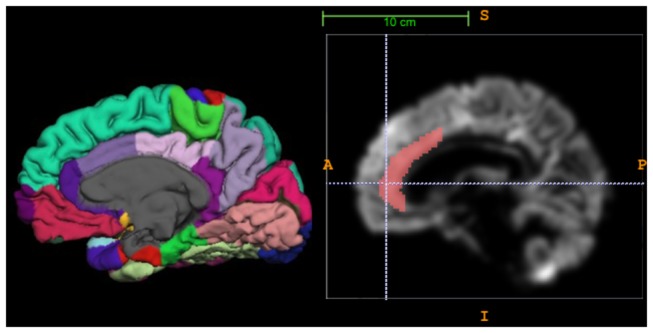
MRI diffusion tensor imaging (DTI) studies of white matter integrity in behavioral variant frontotemporal dementia have consistently shown involvement of frontal and temporal white matter, corresponding to regional loss of cortical volume. Volumetric imaging has a suboptimal sensitivity as a diagnostic tool and thus we wanted to explore if DTI is a better method to discriminate patients and controls than volumetric imaging. We examined the anterior cingulum bundle in 14 patients with behavioral variant frontotemporal dementia and 22 healthy controls using deterministic manual diffusion tensor tractography, and compared DTI parameters with two measures of cortical atrophy, VBM and cortical thickness, of the anterior cingulate cortex (ACC). Statistically significant changes between patients and controls were detected in all DTI parameters, with large effect sizes. ROC-AUC was for the best DTI parameters: 0.92 (fractional anisotropy) to 0.97 (radial diffusivity), 0.82 for the best cortical parameter, VBM of the ACC. Results from the AUC were confirmed with binary logistic regression analysis including demographic variables, but only for fractional anisotropy and mean diffusivity. Ability to classify patient/nonpatient status was significantly better for mean diffusivity vs. VBM (p=0.031), and borderline significant for fractional anisotropy vs. VBM (p=0.062). The results indicate that DTI could offer advantages in comparison with the assessment of cortical volume in differentiating patients with behavioral variant frontotemporal dementia and controls.
MRI 弥散张量成像(DTI)研究行为变异型额颞叶痴呆的脑白质完整性,一致显示额叶和颞叶白质受累,与皮质体积的区域性丧失相对应。容积成像作为一种诊断工具的灵敏度较低,因此我们想探讨 DTI 是否比容积成像更能区分患者和对照者。我们使用确定性手动弥散张量跟踪法检查了 14 例行为变异型额颞叶痴呆患者和 22 名健康对照者的前扣带束,将 DTI 参数与前扣带皮质(ACC)的皮质体积测量(VBM)和皮质厚度两种皮质萎缩测量方法进行了比较。在所有 DTI 参数中,患者与对照组之间均检测到统计学上显著的变化,具有较大的效应量。最佳 DTI 参数的 ROC-AUC 为:0.92(各向异性分数)至 0.97(辐射状弥散系数),最佳皮质参数为 0.82(ACC 的 VBM)。AUC 的结果得到了包括人口统计学变量的二元逻辑回归分析的证实,但仅针对各向异性分数和平均弥散系数。与 VBM 相比,平均弥散系数对区分患者/非患者状态的能力明显更好(p=0.031),与 VBM 相比,各向异性分数的结果接近显著(p=0.062)。结果表明,与评估皮质体积相比,DTI 在区分行为变异型额颞叶痴呆患者和对照者方面可能具有优势。