Division of Endocrinology and Metabolism, Samsung Biomedical Research Institute, Seoul, Korea.
PLoS One. 2013 Jul 9;8(7):e67802. doi: 10.1371/journal.pone.0067802. Print 2013.
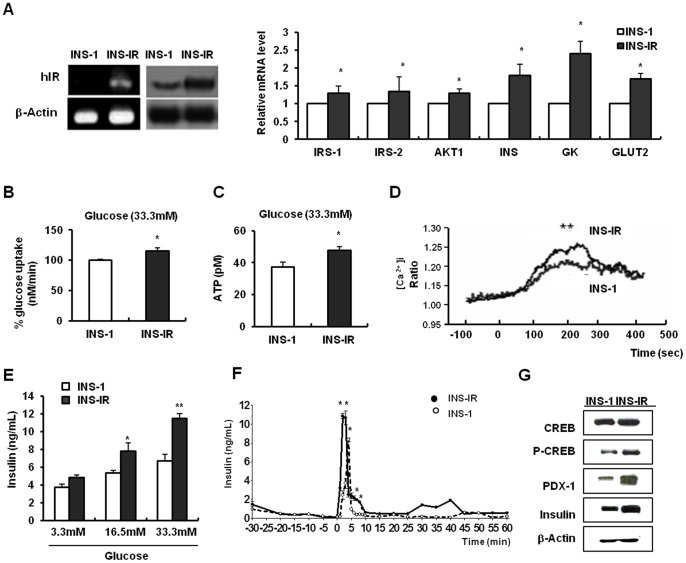
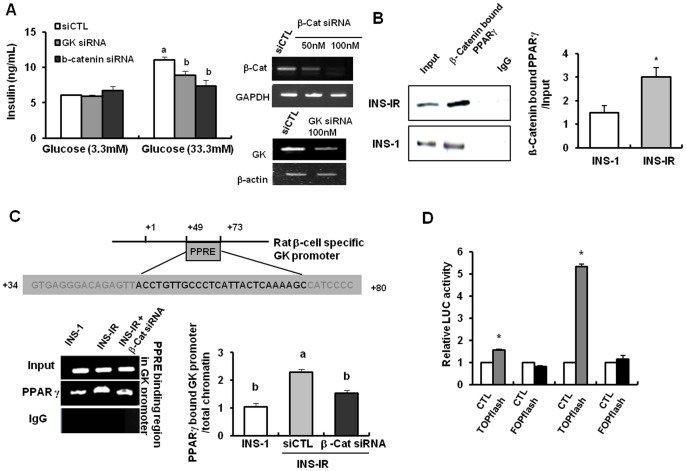
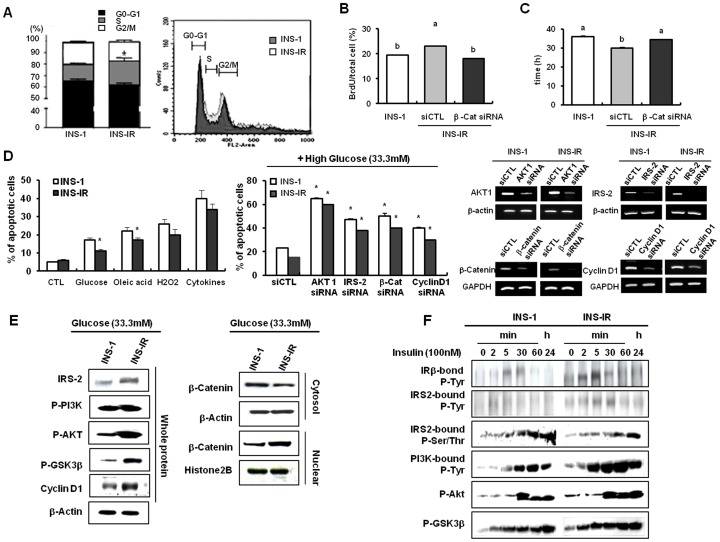
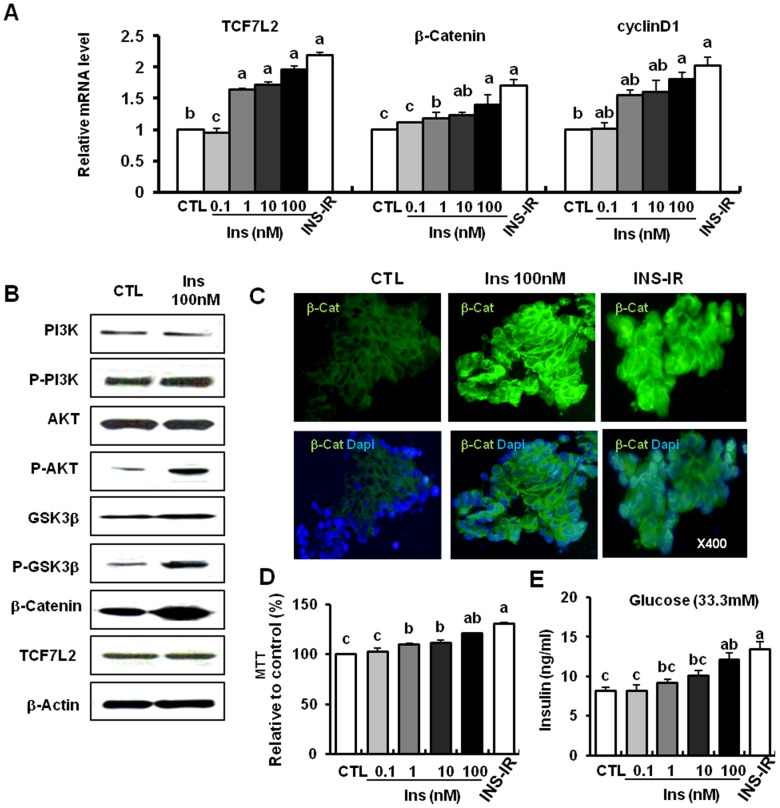
To investigate the therapeutic efficacy and mechanism of β-cells with insulin receptor (IR) overexpression on diabetes mellitus (DM), rat insulinoma (INS-1) cells were engineered to stably express human insulin receptor (INS-IR cells), and subsequently transplanted into streptozotocin- induced diabetic rats. Compared with INS-1 cells, INS-IR cells showed improved β-cell function, including the increase in glucose utilization, calcium mobilization, and insulin secretion, and exhibited a higher rate of cell proliferation, and maintained lower levels of blood glucose in diabetic rats. These results were attributed to the increase of β-catenin/PPARγ complex bindings to peroxisome proliferator response elements in rat glucokinase (GK) promoter and the prolongation of S-phase of cell cycle by cyclin D1. These events resulted from more rapid and higher phosphorylation levels of insulin-signaling intermediates, including insulin receptor substrate (IRS)-1/IRS-2/phosphotylinositol 3 kinase/v-akt murine thymoma viral oncogene homolog (AKT) 1, and the consequent enhancement of β-catenin nuclear translocation and Wnt responsive genes including GK and cyclin D1. Indeed, the higher functionality and proliferation shown in INS-IR cells were offset by β-catenin, cyclin D1, GK, AKT1, and IRS-2 gene depletion. In addition, the promotion of cell proliferation and insulin secretion by Wnt signaling activation was shown by 100 nM insulin treatment, and to a similar degree, was shown in INS-IR cells. In this regard, this study suggests that transferring INS-IR cells into diabetic animals is an effective and feasible DM treatment. Accordingly, the method might be a promising alternative strategy for treatment of DM given the adverse effects of insulin among patients, including the increased risk of modest weight gain and hypoglycemia. Additionally, this study demonstrates that the novel mechanism of cross-talk between insulin and Wnt signaling plays a primary role in the higher therapeutic efficacy of IR-overexpressing β-cells.
为了研究胰岛素受体(IR)过表达β细胞对糖尿病(DM)的治疗效果和机制,我们对大鼠胰岛素瘤(INS-1)细胞进行了基因工程改造,使其稳定表达人胰岛素受体(INS-IR 细胞),然后将其移植到链脲佐菌素诱导的糖尿病大鼠体内。与 INS-1 细胞相比,INS-IR 细胞表现出改善的β细胞功能,包括葡萄糖利用、钙动员和胰岛素分泌的增加,并且具有更高的细胞增殖率,并维持糖尿病大鼠的较低血糖水平。这些结果归因于β-连环蛋白/过氧化物酶体增殖物激活受体γ(PPARγ)复合物与大鼠葡萄糖激酶(GK)启动子中过氧化物酶体增殖物反应元件的结合增加,以及周期蛋白 D1 使细胞周期 S 期延长。这些事件导致胰岛素信号转导中间产物(包括胰岛素受体底物(IRS)-1/IRS-2/磷酸肌醇 3 激酶/v-akt 鼠胸腺瘤病毒癌基因同源物(AKT)1)的更快和更高磷酸化水平,从而增强β-连环蛋白核易位和 Wnt 反应基因,包括 GK 和 cyclin D1。事实上,INS-IR 细胞中显示出更高的功能和增殖能力被β-连环蛋白、周期蛋白 D1、GK、AKT1 和 IRS-2 基因缺失所抵消。此外,通过用 100 nM 胰岛素处理证实了 Wnt 信号激活对细胞增殖和胰岛素分泌的促进作用,并且在 INS-IR 细胞中也显示出类似的程度。在这方面,这项研究表明将 INS-IR 细胞转入糖尿病动物体内是一种有效的、可行的 DM 治疗方法。因此,鉴于胰岛素在患者中引起的不良反应,包括轻微体重增加和低血糖的风险增加,该方法可能是治疗糖尿病的一种有前途的替代策略。此外,这项研究表明胰岛素和 Wnt 信号之间的新型串扰机制在过表达 IR 的β细胞的更高治疗效果中起主要作用。