Jing Yu-Hong, Qi Chu-Chu, Yuan Li, Liu Xiang-Wen, Gao Li-Ping, Yin Jie
Institute of Anatomy and Histology & Embryology and Neuroscience, School of Basic Medical Sciences, Lanzhou University, Lanzhou, Gansu Province, China.
Key Laboratory of Preclinical Study for New Drugs of Gansu Province, Lanzhou University, Lanzhou, Gansu Province, China.
Neural Regen Res. 2017 Jul;12(7):1111-1118. doi: 10.4103/1673-5374.211190.
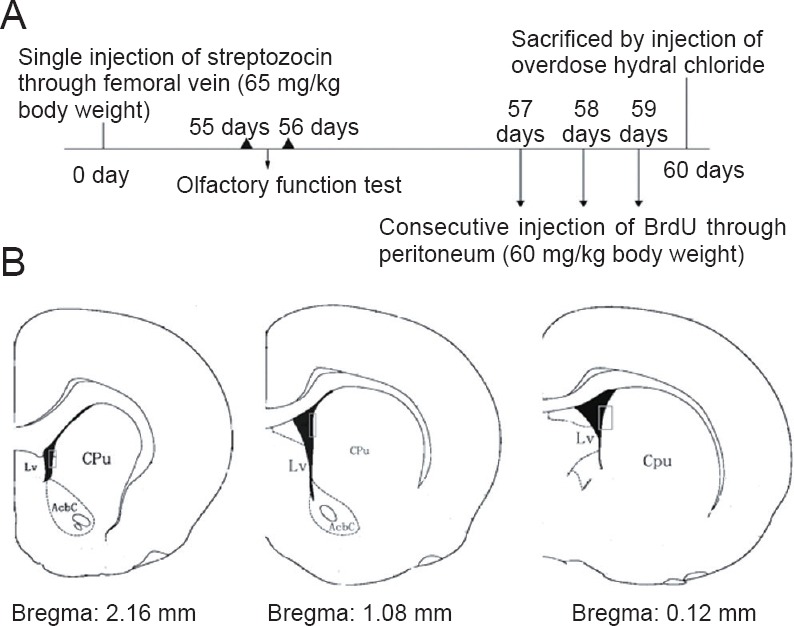
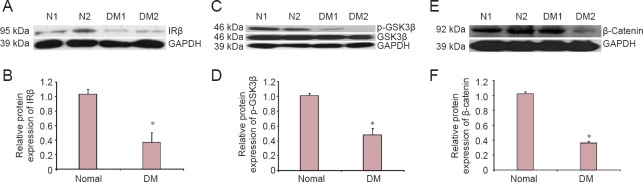
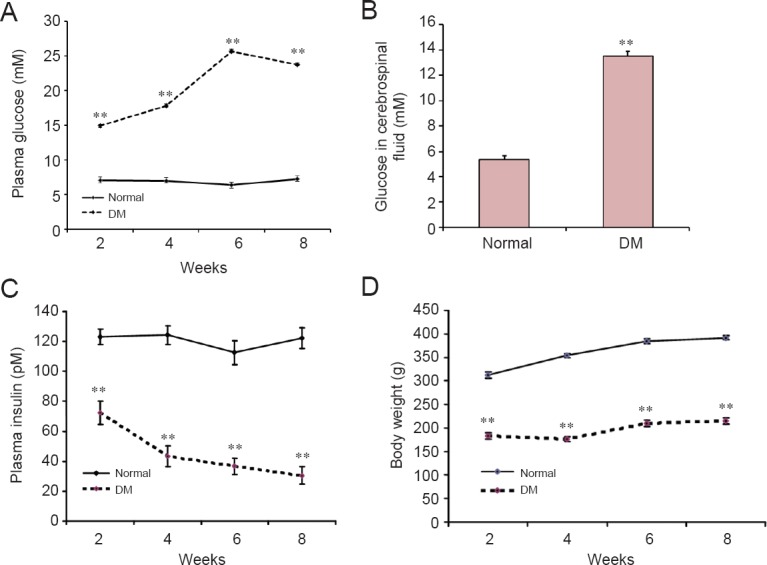
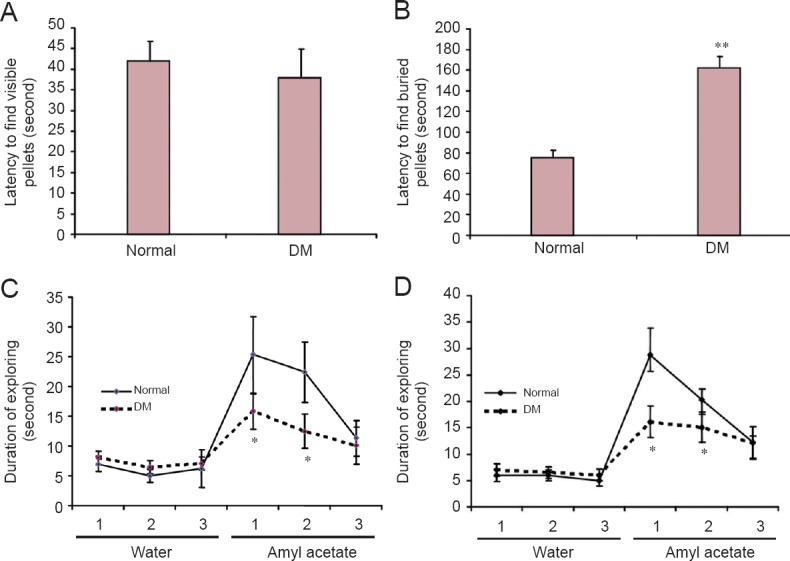
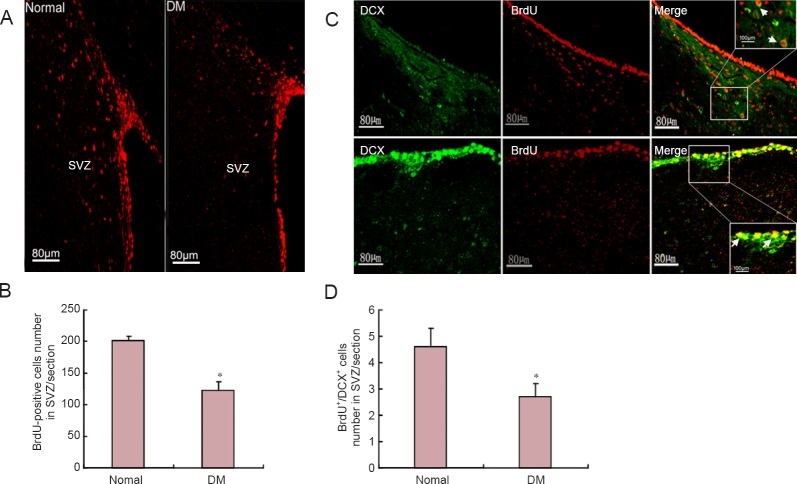
Sensitive smell discrimination is based on structural plasticity of the olfactory bulb, which depends on migration and integration of newborn neurons from the subventricular zone. In this study, we examined the relationship between neural stem cell status in the subventricular zone and olfactory function in rats with diabetes mellitus. Streptozotocin was injected through the femoral vein to induce type 1 diabetes mellitus in Sprague-Dawley rats. Two months after injection, olfactory sensitivity was decreased in diabetic rats. Meanwhile, the number of BrdU-positive and BrdU/DCX double-labeled cells was lower in the subventricular zone of diabetic rats compared with age-matched normal rats. Western blot results revealed downregulated expression of insulin receptor β, phosphorylated glycogen synthase kinase 3β, and β-catenin in the subventricular zone of diabetic rats. Altogether, these results indicate that diabetes mellitus causes insulin deficiency, which negatively regulates glycogen synthase kinase 3β and enhances β-catenin degradation, with these changes inhibiting neural stem cell proliferation. Further, these signaling pathways affect proliferation and differentiation of neural stem cells in the subventricular zone. Dysfunction of subventricular zone neural stem cells causes a decline in olfactory bulb structural plasticity and impairs olfactory sensitivity in diabetic rats.
灵敏的嗅觉辨别基于嗅球的结构可塑性,而这取决于来自脑室下区的新生神经元的迁移和整合。在本研究中,我们检测了糖尿病大鼠脑室下区神经干细胞状态与嗅觉功能之间的关系。通过股静脉注射链脲佐菌素以诱导Sprague-Dawley大鼠患1型糖尿病。注射两个月后,糖尿病大鼠的嗅觉敏感性降低。同时,与年龄匹配的正常大鼠相比,糖尿病大鼠脑室下区BrdU阳性和BrdU/DCX双标记细胞的数量较少。蛋白质免疫印迹结果显示,糖尿病大鼠脑室下区胰岛素受体β、磷酸化糖原合酶激酶3β和β-连环蛋白的表达下调。总之,这些结果表明糖尿病导致胰岛素缺乏,这对糖原合酶激酶3β产生负调节作用并增强β-连环蛋白的降解,这些变化抑制神经干细胞增殖。此外,这些信号通路影响脑室下区神经干细胞的增殖和分化。脑室下区神经干细胞功能障碍导致嗅球结构可塑性下降,并损害糖尿病大鼠的嗅觉敏感性。