Center on Addiction, Learning, Memory, Baylor College of Medicine, Houston, TX 77030, USA.
Biochem Pharmacol. 2013 Oct 15;86(8):1181-93. doi: 10.1016/j.bcp.2013.07.007. Epub 2013 Jul 19.
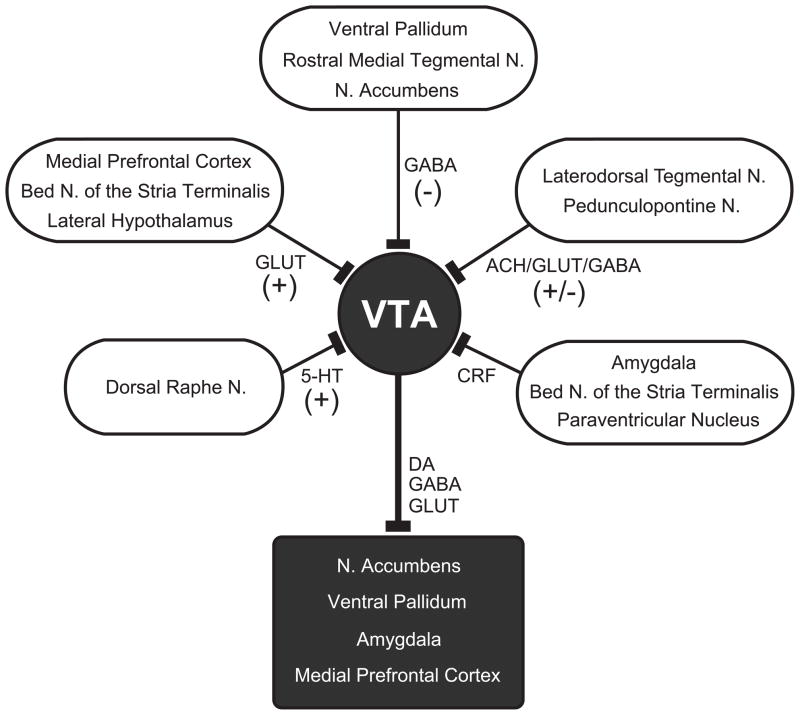
Epidemiological studies consistently find correlations between nicotine and alcohol use, yet the neural mechanisms underlying their interaction remain largely unknown. Nicotine and alcohol (i.e., ethanol) share many common molecular and cellular targets that provide potential substrates for nicotine-alcohol interactions. These targets for interaction often converge upon the mesocorticolimbic dopamine system, where the link to drug self-administration and reinforcement is well documented. Both nicotine and alcohol activate the mesocorticolimbic dopamine system, producing downstream dopamine signals that promote the drug reinforcement process. While nicotine primarily acts via nicotinic acetylcholine receptors, alcohol acts upon a wider range of receptors and molecular substrates. The complex pharmacological profile of these two drugs generates overlapping responses that ultimately intersect within the mesocorticolimbic dopamine system to promote drug use. Here we will examine overlapping targets between nicotine and alcohol and provide evidence for their interaction. Based on the existing literature, we will also propose some potential targets that have yet to be directly tested. Mechanistic studies that examine nicotine-alcohol interactions would ultimately improve our understanding of the factors that contribute to the associations between nicotine and alcohol use.
流行病学研究一致发现尼古丁和酒精使用之间存在相关性,但它们相互作用的神经机制在很大程度上仍不清楚。尼古丁和酒精(即乙醇)共享许多共同的分子和细胞靶点,这些靶点为尼古丁-酒精相互作用提供了潜在的基础。这些相互作用的靶点通常集中在中脑边缘多巴胺系统,该系统与药物自我给药和强化的联系已有充分的记录。尼古丁和酒精都能激活中脑边缘多巴胺系统,产生下游多巴胺信号,促进药物强化过程。虽然尼古丁主要通过烟碱型乙酰胆碱受体起作用,但酒精作用于更广泛的受体和分子底物。这两种药物复杂的药理学特征产生了重叠的反应,最终在中脑边缘多巴胺系统内相互作用,促进药物使用。在这里,我们将检查尼古丁和酒精之间的重叠靶点,并提供它们相互作用的证据。基于现有的文献,我们还将提出一些尚未直接测试的潜在靶点。研究尼古丁-酒精相互作用的机制研究将最终增进我们对导致尼古丁和酒精使用之间关联的因素的理解。