Department of Medicine, Stony Brook University, NY, USA.
FEBS J. 2013 Dec;280(24):6354-66. doi: 10.1111/febs.12446. Epub 2013 Aug 19.
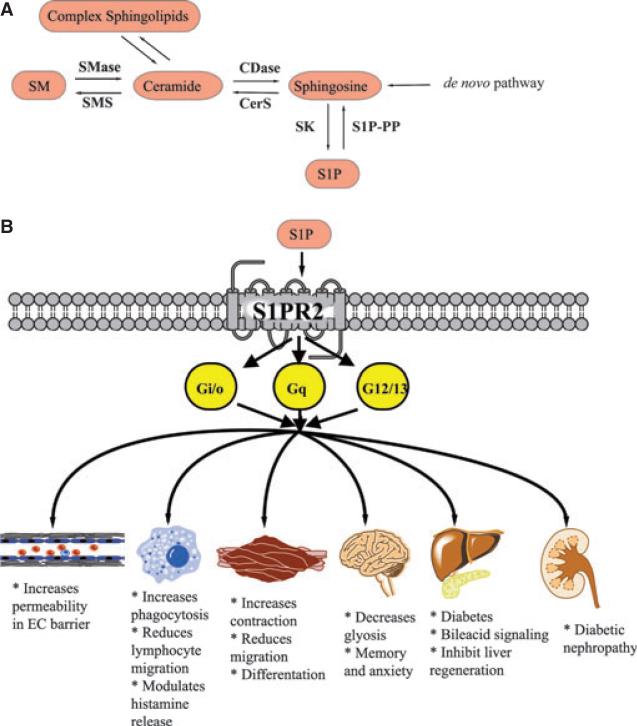
Sphingosine-1-phosphate (S1P) is a potent bioactive sphingolipid involved in cell proliferation, angiogenesis, inflammation and malignant transformation among other functions. S1P acts either directly on intracellular targets or activates G protein-coupled receptors, specifically five S1P receptors (S1PRs). The identified S1PRs differ in cellular and tissue distribution, and each is coupled to specific G proteins, which mediate unique functions. Here, we describe functional characteristics of all five receptors, emphasizing S1PR2, which is critical in the immune, nervous, metabolic, cardiovascular, musculoskeletal, and renal systems. This review also describes the role of this receptor in tumor growth and metastasis and suggests potential therapeutic avenues that exploit S1PR2.
鞘氨醇-1-磷酸(S1P)是一种有效的生物活性鞘脂,参与细胞增殖、血管生成、炎症和恶性转化等功能。S1P 可以直接作用于细胞内靶标,也可以激活 G 蛋白偶联受体,特别是五种 S1P 受体(S1PRs)。已鉴定的 S1PRs 在细胞和组织分布上存在差异,并且每种受体都与特定的 G 蛋白偶联,介导独特的功能。在这里,我们描述了所有五种受体的功能特征,重点介绍了在免疫、神经、代谢、心血管、肌肉骨骼和肾脏系统中起关键作用的 S1PR2。本综述还描述了该受体在肿瘤生长和转移中的作用,并提出了利用 S1PR2 的潜在治疗途径。