Computer, Electrical and Mathematical Sciences and Engineering Division, King Abdullah University of Science and Technology (KAUST), Thuwal, 23955-6900, Saudi Arabia.
Sci Rep. 2013;3:2297. doi: 10.1038/srep02297.
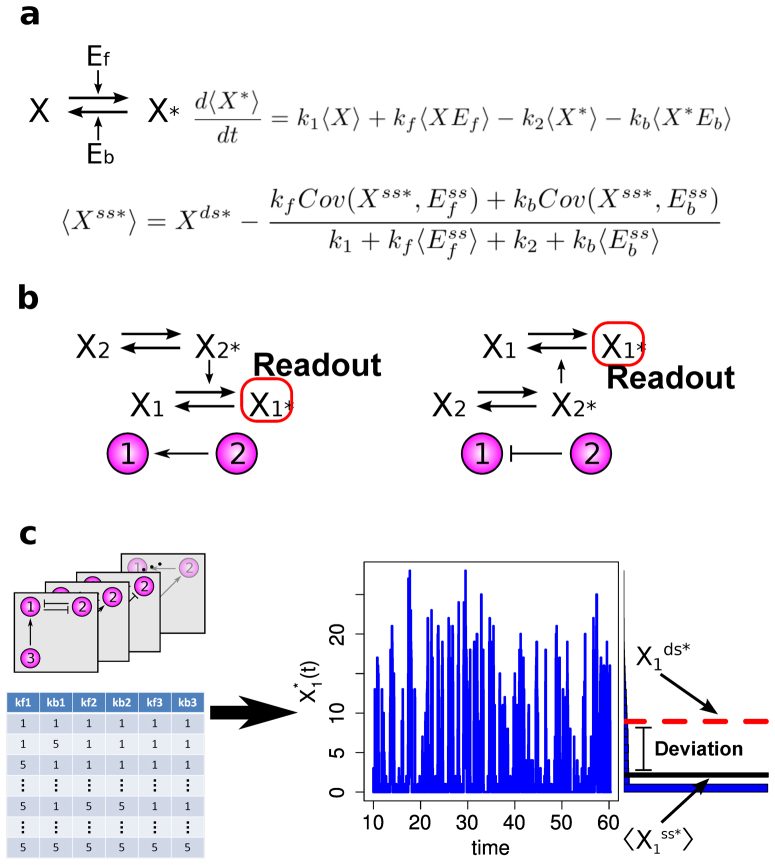
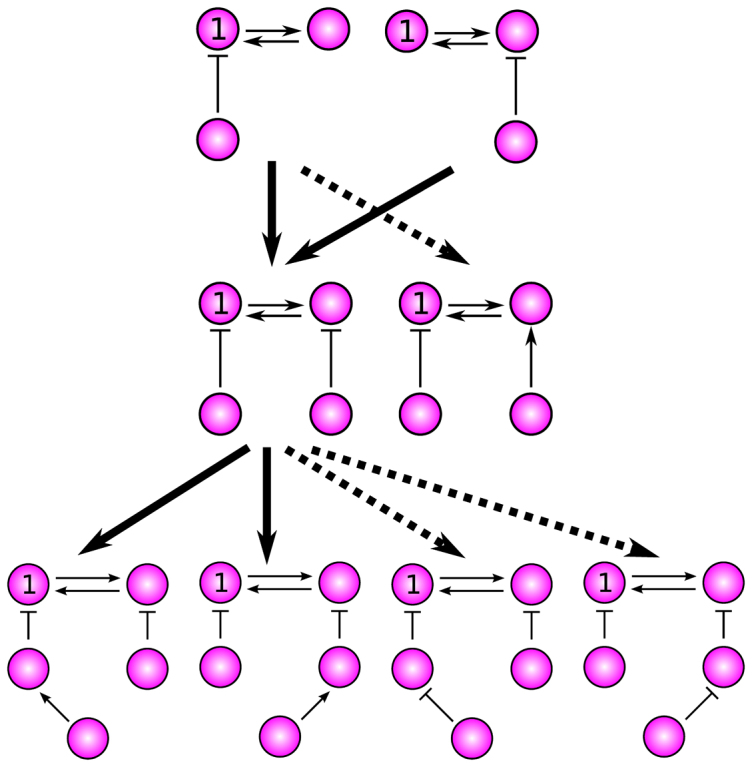
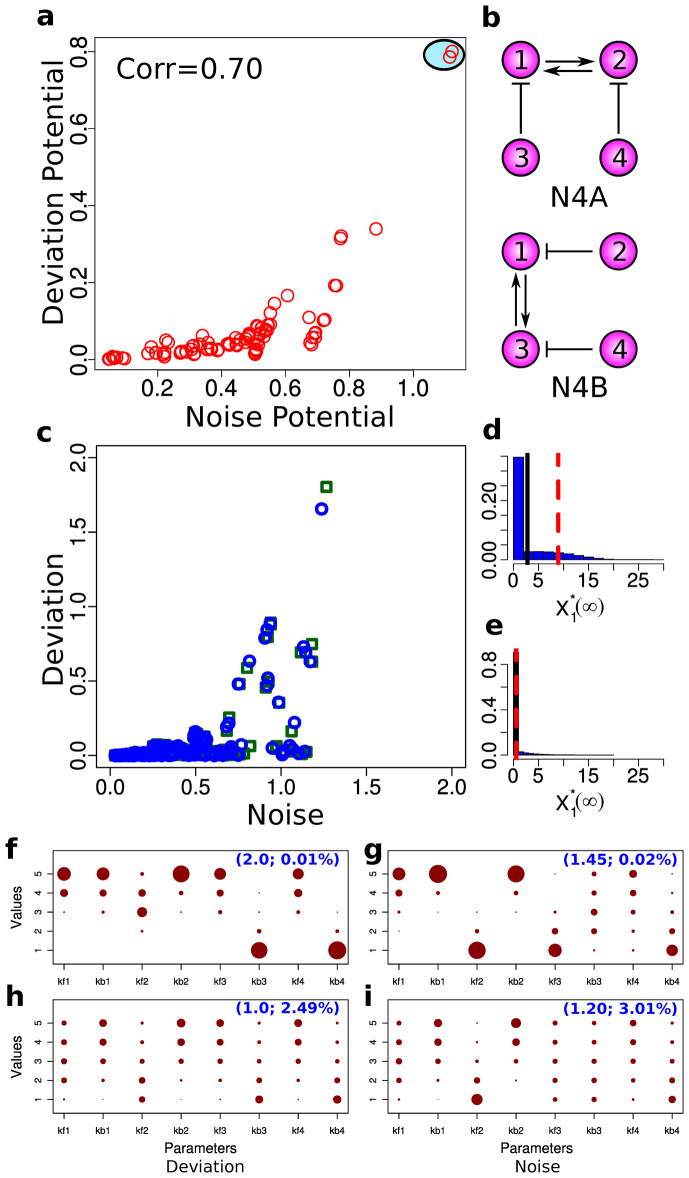
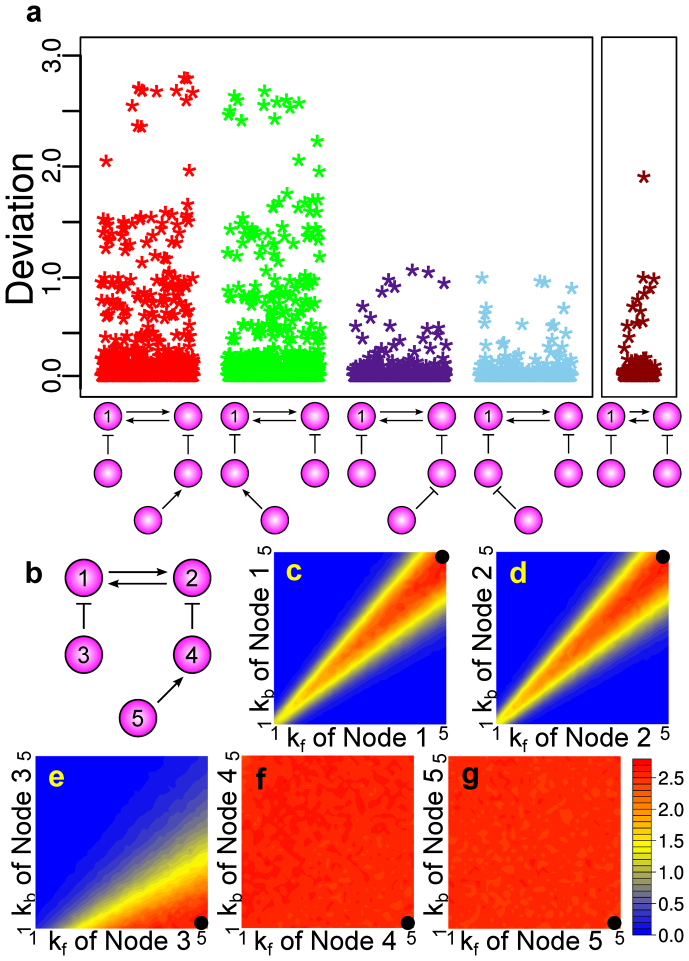
Cellular signaling networks are complex and appear to include many nonfunctional elements. Recently, it was suggested that nonfunctional interactions of proteins cause signaling noise, which, perhaps, shapes the signal transduction mechanism. However, the conditions under which molecular noise influences cellular information processing remain unclear. Here, we explore a large number of simple biological models of varying network sizes to understand the architectural conditions under which the interactions of signaling proteins can exhibit specific stochastic effects--called deviant effects--in which the average behavior of a biological system is substantially altered in the presence of molecular noise. We find that a small fraction of these networks does exhibit deviant effects and shares a common architectural feature whereas most of the networks show only insignificant levels of deviations. Interestingly, addition of seemingly unimportant interactions into protein networks gives rise to deviant effects.
细胞信号网络非常复杂,似乎包含许多非功能元件。最近有人提出,蛋白质的非功能相互作用会导致信号噪声,而这种噪声可能会影响信号转导机制。然而,分子噪声影响细胞信息处理的条件尚不清楚。在这里,我们研究了大量不同网络规模的简单生物学模型,以了解在何种结构条件下,信号蛋白的相互作用可以表现出特定的随机效应,即偏差效应,其中生物系统的平均行为在分子噪声存在的情况下会发生显著改变。我们发现,一小部分网络确实表现出了偏差效应,并且具有共同的结构特征,而大多数网络只表现出了微不足道的偏差。有趣的是,向蛋白质网络中添加看似不重要的相互作用会导致偏差效应的出现。