
三种拟南芥生态型响应盐胁迫的转录组学和生理学变化。
Transcriptomic and physiological variations of three Arabidopsis ecotypes in response to salt stress.
机构信息
Key Laboratory of Plant Germplasm Enhancement and Specialty Agriculture, Wuhan Botanical Garden, Chinese Academy of Sciences, Wuhan, Hubei Province, China.
出版信息
PLoS One. 2013 Jul 23;8(7):e69036. doi: 10.1371/journal.pone.0069036. Print 2013.
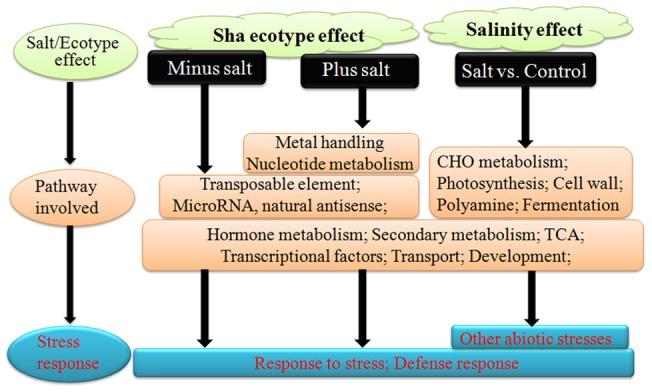
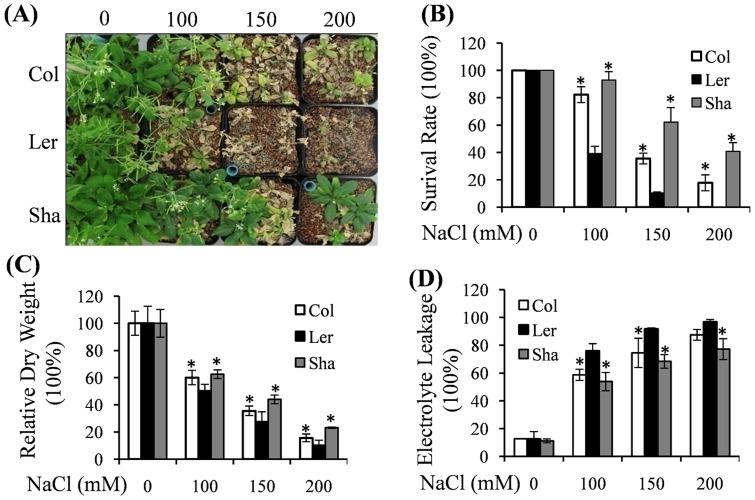
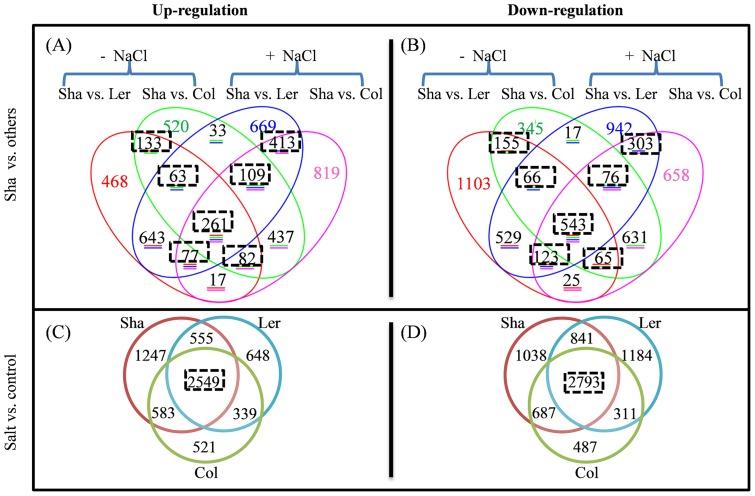
Salt stress is one of the major abiotic stresses in agriculture worldwide. Analysis of natural genetic variation in Arabidopsis is an effective approach to characterize candidate salt responsive genes. Differences in salt tolerance of three Arabidopsis ecotypes were compared in this study based on their responses to salt treatments at two developmental stages: seed germination and later growth. The Sha ecotype had higher germination rates, longer roots and less accumulation of superoxide radical and hydrogen peroxide than the Ler and Col ecotypes after short term salt treatment. With long term salt treatment, Sha exhibited higher survival rates and lower electrolyte leakage. Transcriptome analysis revealed that many genes involved in cell wall, photosynthesis, and redox were mainly down-regulated by salinity effects, while transposable element genes, microRNA and biotic stress related genes were significantly changed in comparisons of Sha vs. Ler and Sha vs. Col. Several pathways involved in tricarboxylic acid cycle, hormone metabolism and development, and the Gene Ontology terms involved in response to stress and defense response were enriched after salt treatment, and between Sha and other two ecotypes. Collectively, these results suggest that the Sha ecotype is preconditioned to withstand abiotic stress. Further studies about detailed gene function are needed. These comparative transcriptomic and analytical results also provide insight into the complexity of salt stress tolerance mechanisms.
盐胁迫是全球农业中主要的非生物胁迫之一。分析拟南芥中的自然遗传变异是鉴定候选盐响应基因的有效方法。本研究基于三个拟南芥生态型在种子萌发和后期生长两个发育阶段对盐处理的反应,比较了它们对盐胁迫的耐受性差异。与 Ler 和 Col 生态型相比,Sha 生态型在短期盐处理后具有更高的萌发率、更长的根、更少的超氧自由基和过氧化氢积累。在长期盐处理下,Sha 表现出更高的存活率和更低的电解质渗漏。转录组分析表明,许多参与细胞壁、光合作用和氧化还原的基因主要受到盐胁迫的下调,而转座元件基因、microRNA 和生物胁迫相关基因在 Sha 与 Ler 和 Sha 与 Col 的比较中显著变化。几个涉及三羧酸循环、激素代谢和发育的途径,以及涉及应激和防御反应的基因本体术语在盐处理后和 Sha 与其他两个生态型之间都有富集。总之,这些结果表明 Sha 生态型对非生物胁迫具有预适应能力。需要进一步研究详细的基因功能。这些比较转录组学和分析结果也为盐胁迫耐受机制的复杂性提供了深入了解。




 Zotero 插件