College of Veterinary Medicine, Nanjing Agricultural University, Nanjing, China.
PLoS One. 2013 Jul 19;8(7):e69066. doi: 10.1371/journal.pone.0069066. Print 2013.
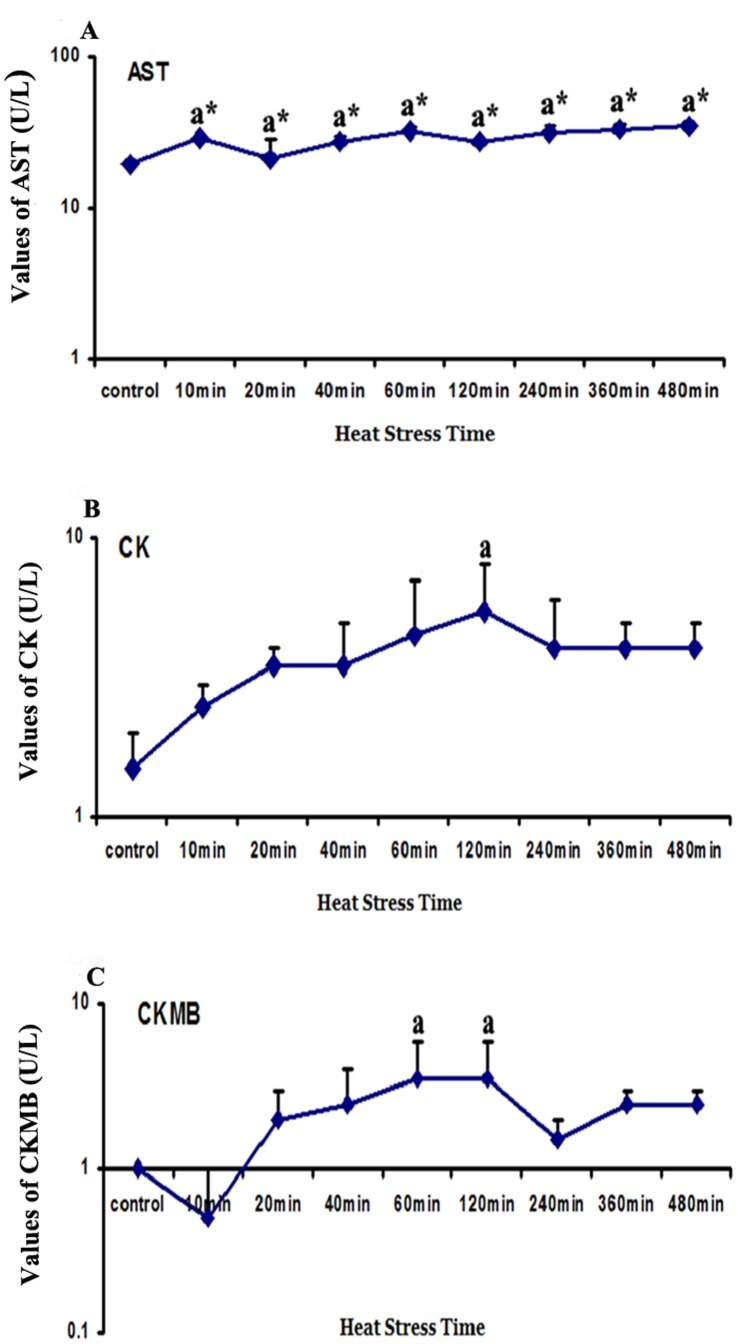
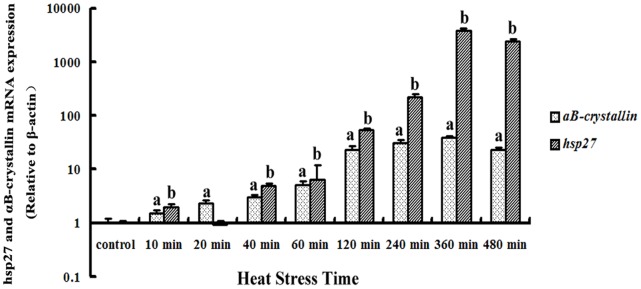
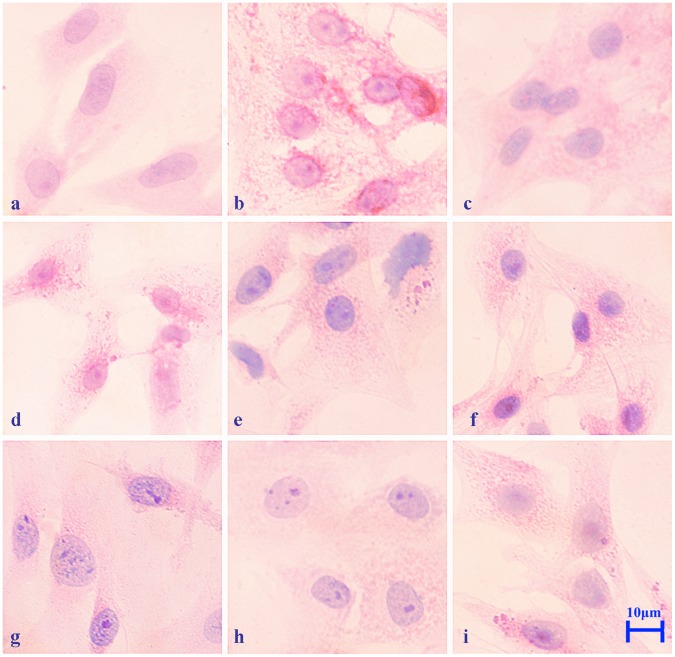
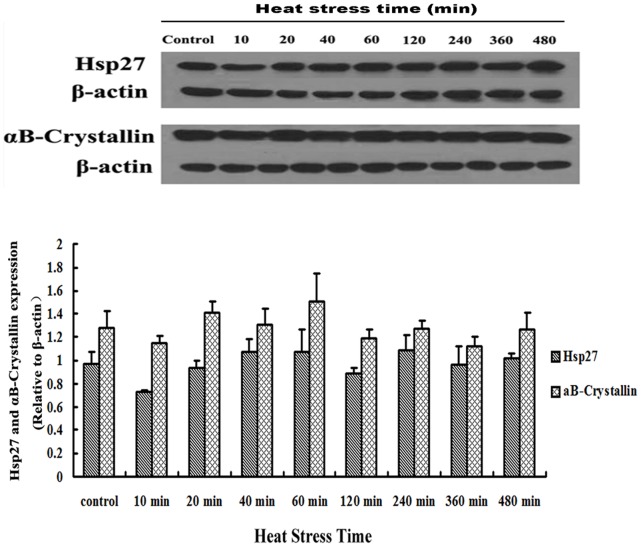
Neonatal rat primary myocardial cells were subjected to heat stress in vitro, as a model for investigating the distribution and expression of Hsp27 and αB-crystallin. After exposure to heat stress at 42°C for different durations, the activities of enzymes expressed during cell damage increased in the supernatant of the heat-stressed myocardial cells from 10 min, and the pathological lesions were characterized by karyopyknosis and acute degeneration. Thus, cell damage was induced at the onset of heat stress. Immunofluorescence analysis showed stronger positive signals for both Hsp27 and αB-crystallin from 10 min to 240 min of exposure compared to the control cells. According to the Western blotting results, during the 480 min of heat stress, no significant variation was found in Hsp27 and αB-crystallin expression; however, significant differences were found in the induction of their corresponding mRNAs. The expression of these small heat shock proteins (sHsps) was probably delayed or overtaxed due to the rapid consumption of sHsps in myocardial cells at the onset of heat stress. Our findings indicate that Hsp27 and αB-crystallin do play a role in the response of cardiac cells to heat stress, but the details of their function remain to be investigated.
原代培养新生大鼠心肌细胞,建立热应激损伤模型,观察热休克蛋白 27(Hsp27)和αB-晶状体蛋白(αB-crystallin)在细胞内的分布和表达变化。结果显示,细胞在 42℃热应激 10 min 后,上清液中细胞损伤相关酶活性即开始升高,病理损伤表现为核固缩和急骤变性。由此可见,细胞损伤发生在热应激的早期。免疫荧光显示,Hsp27 和 αB-crystallin 在热应激 10~240 min 时的阳性信号均强于对照组。Western blot 结果显示,480 min 热应激过程中,Hsp27 和 αB-crystallin 的表达无明显变化,但其相应 mRNA 的表达却有明显变化。这可能是由于心肌细胞在热应激早期迅速消耗小分子热休克蛋白(sHsps),导致 sHsps 的诱导表达延迟或过度。本研究表明,Hsp27 和 αB-crystallin 可能参与了心肌细胞对热应激的反应,但具体作用机制尚待进一步研究。