Biomedical Research Department, Dasman Diabetes Institute, Kuwait, Kuwait.
PLoS One. 2013 Jul 24;8(7):e69217. doi: 10.1371/journal.pone.0069217. Print 2013.
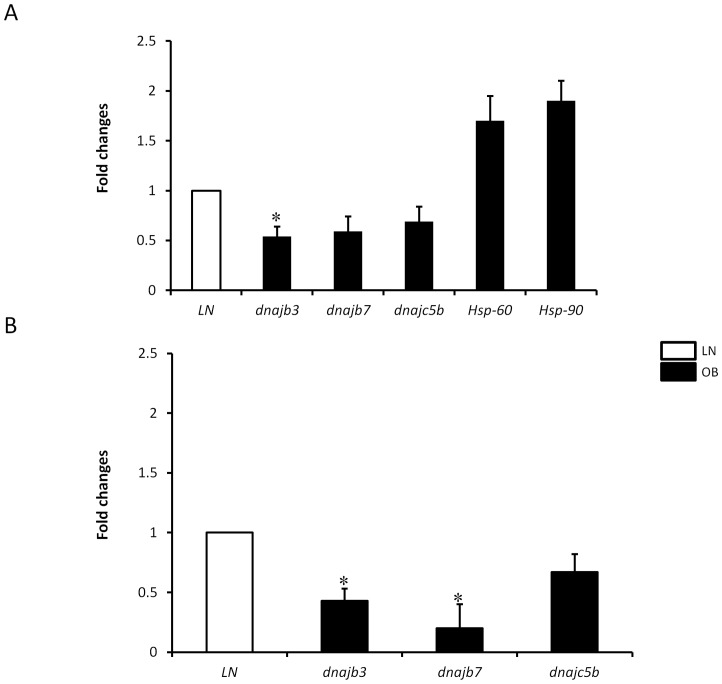
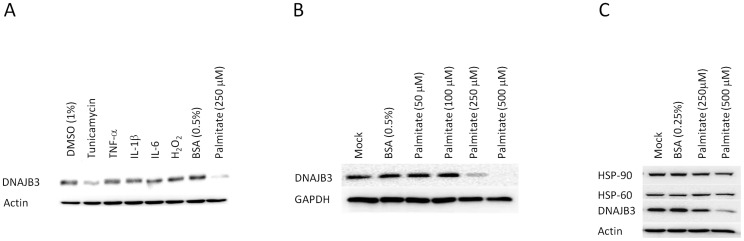
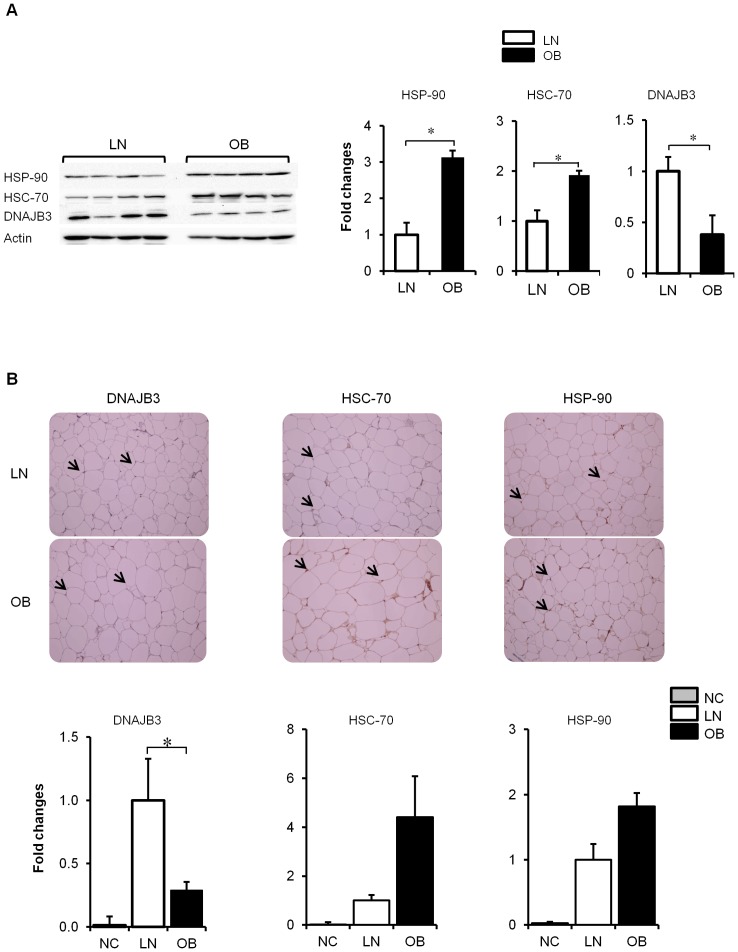
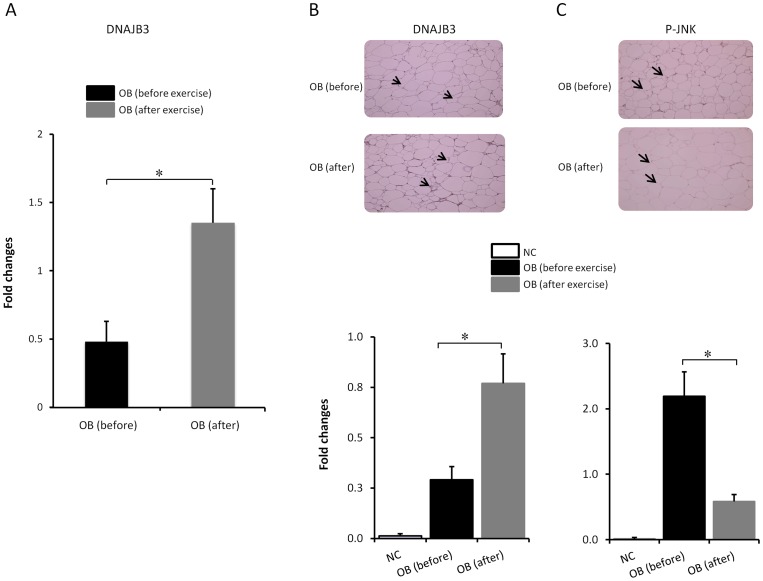
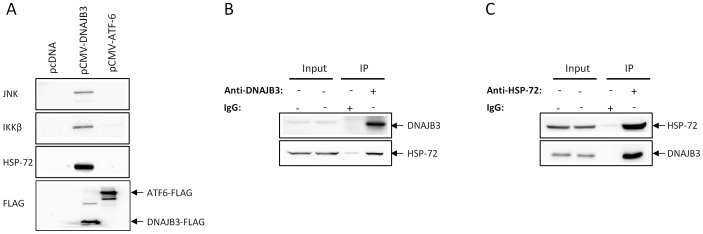
Obesity is a major risk factor for a myriad of disorders such as insulin resistance and diabetes. The mechanisms underlying these chronic conditions are complex but low grade inflammation and alteration of the endogenous stress defense system are well established. Previous studies indicated that impairment of HSP-25 and HSP-72 was linked to obesity, insulin resistance and diabetes in humans and animals while their induction was associated with improved clinical outcomes. In an attempt to identify additional components of the heat shock response that may be dysregulated by obesity, we used the RT(2)-Profiler PCR heat shock array, complemented with RT-PCR and validated by Western blot and immunohistochemistry. Using adipose tissue biopsies and PBMC of non-diabetic lean and obese subjects, we report the downregulation of DNAJB3 cochaperone mRNA and protein in obese that negatively correlated with percent body fat (P = 0.0001), triglycerides (P = 0.035) and the inflammatory chemokines IP-10 and RANTES (P = 0.036 and P = 0.02, respectively). DNAJB positively correlated with maximum oxygen consumption (P = 0.031). Based on the beneficial effect of physical exercise, we investigated its possible impact on DNAJB3 expression and indeed, we found that exercise restored the expression of DNAJB3 in obese subjects with a concomitant decrease of phosphorylated JNK. Using cell lines, DNAJB3 protein was reduced following treatment with palmitate and tunicamycin which is suggestive of the link between the expression of DNAJB3 and the activation of the endoplasmic reticulum stress. DNAJB3 was also shown to coimmunoprecipiate with JNK and IKKβ stress kinases along with HSP-72 and thus, suggesting its potential role in modulating their activities. Taken together, these data suggest that DNAJB3 can potentially play a protective role against obesity.
肥胖是多种疾病的主要危险因素,如胰岛素抵抗和糖尿病。这些慢性疾病的发病机制很复杂,但低度炎症和内源性应激防御系统的改变已得到充分证实。先前的研究表明,HSP-25 和 HSP-72 的损伤与肥胖、胰岛素抵抗和动物及人类的糖尿病有关,而它们的诱导与改善的临床结果有关。为了确定可能因肥胖而失调的热休克反应的其他成分,我们使用了 RT(2)-Profiler PCR 热休克阵列,辅以 RT-PCR,并通过 Western blot 和免疫组织化学进行了验证。使用非糖尿病肥胖和瘦人群体的脂肪组织活检和 PBMC,我们报告了肥胖者 DNAJB3 共伴侣 mRNA 和蛋白的下调,这与体脂百分比(P=0.0001)、甘油三酯(P=0.035)和炎症趋化因子 IP-10 和 RANTES(P=0.036 和 P=0.02)呈负相关。DNAJB 与最大耗氧量呈正相关(P=0.031)。基于体育锻炼的有益效果,我们研究了它对 DNAJB3 表达的可能影响,事实上,我们发现运动恢复了肥胖者 DNAJB3 的表达,同时降低了磷酸化 JNK。使用细胞系,在用软脂酸和衣霉素处理后,DNAJB3 蛋白减少,这表明 DNAJB3 的表达与内质网应激的激活之间存在联系。DNAJB3 还与应激激酶 JNK 和 IKKβ以及 HSP-72 共免疫沉淀,因此,表明其在调节它们的活性方面的潜在作用。总之,这些数据表明 DNAJB3 可能在对抗肥胖方面发挥保护作用。