State Key Laboratory of Vegetation and Environmental Change, Institute of Botany, Chinese Academy of Sciences, Beijing, China.
PLoS One. 2013 Jul 19;8(7):e70114. doi: 10.1371/journal.pone.0070114. Print 2013.
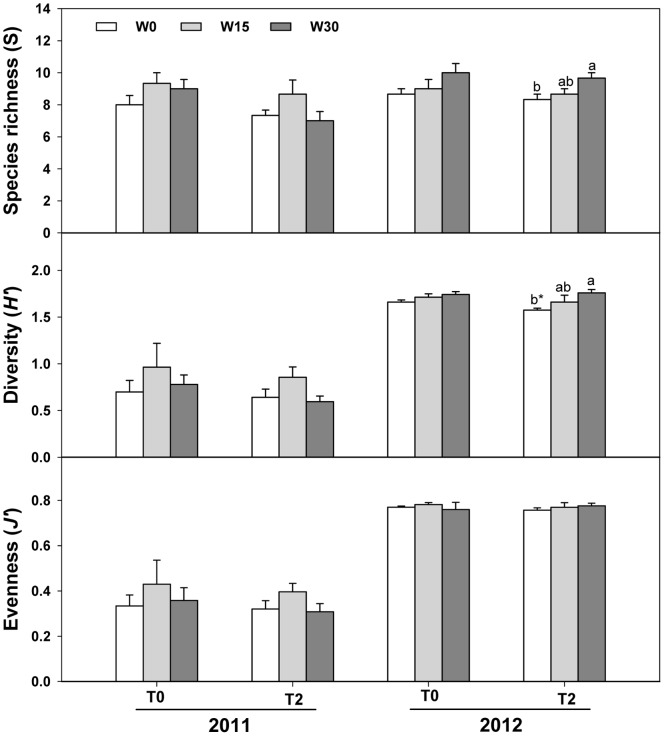
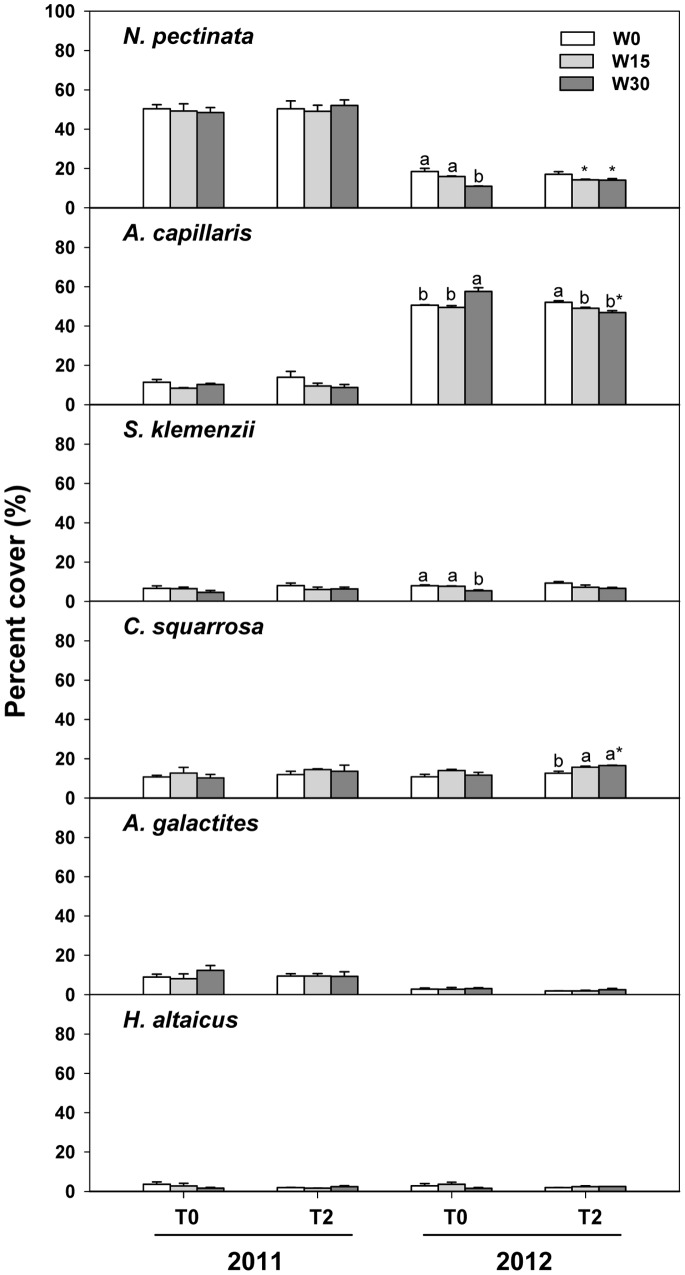
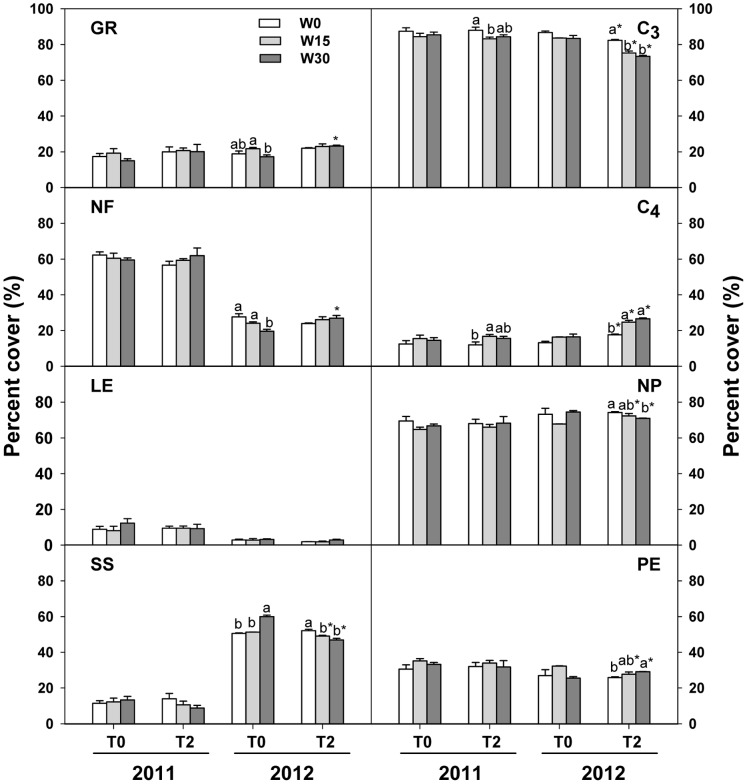
To better understand how warming, increased precipitation and their interactions influence community structure and composition, a field experiment simulating hydrothermal interactions was conducted at an annual forb dominated desert steppe in northern China over 2 years. Increased precipitation increased species richness while warming significantly decreased species richness, and their effects were additive rather than interactive. Although interannual variations in weather conditions may have a major affect on plant community composition on short term experiments, warming and precipitation treatments affected individual species and functional group composition. Warming caused C4 grasses such as Cleistogenes squarrosa to increase while increased precipitation caused the proportions of non-perennial C3 plants like Artemisia capillaris to decrease and perennial C4 plants to increase.
为了更好地理解升温、降水增加及其相互作用如何影响群落结构和组成,在中国北方一个以一年生草本植物为主的荒漠草原上进行了为期两年的模拟水热相互作用的野外实验。降水增加增加了物种丰富度,而升温显著降低了物种丰富度,它们的影响是相加的而不是相互作用的。尽管天气条件的年际变化可能对短期实验中的植物群落组成有重大影响,但升温和降水处理影响了个别物种和功能群的组成。升温导致像 Cleistogenes squarrosa 这样的 C4 草本植物增加,而降水增加导致非多年生 C3 植物如 Artemisia capillaris 的比例减少,多年生 C4 植物增加。