Zhang Tao, Guo Rui, Gao Song, Guo Jixun, Sun Wei
Institute of Grassland Sciences, Northeast Normal University, Key Laboratory of Vegetation Ecology, Ministry of Education, Changchun, China; State Key Laboratory of Desert and Oasis Ecology, Xinjiang Institute of Ecology and Geography, Chinese Academy of Sciences, Urumqi, China.
Institute of Environment and Sustainable Development in Agriculture, Chinese Academy of Agricultural Sciences, Key Laboratory of Dryland Agriculture, Ministry of Agriculture, Beijing, China.
PLoS One. 2015 Apr 13;10(4):e0123160. doi: 10.1371/journal.pone.0123160. eCollection 2015.
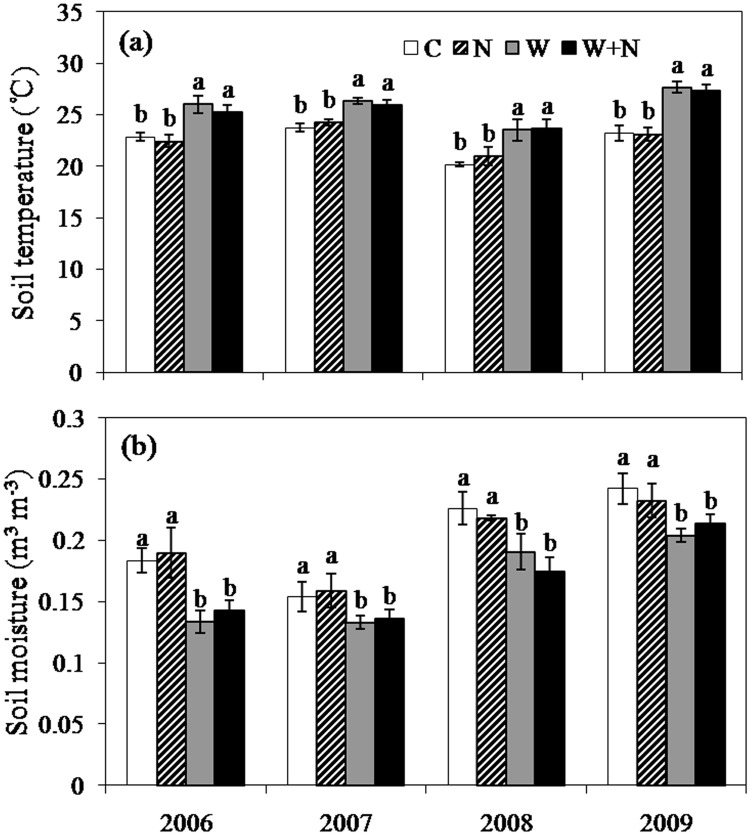
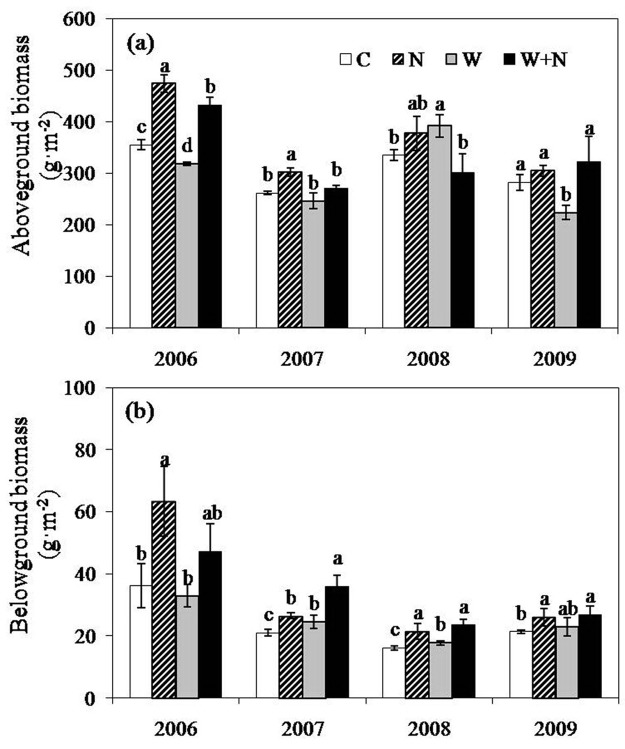
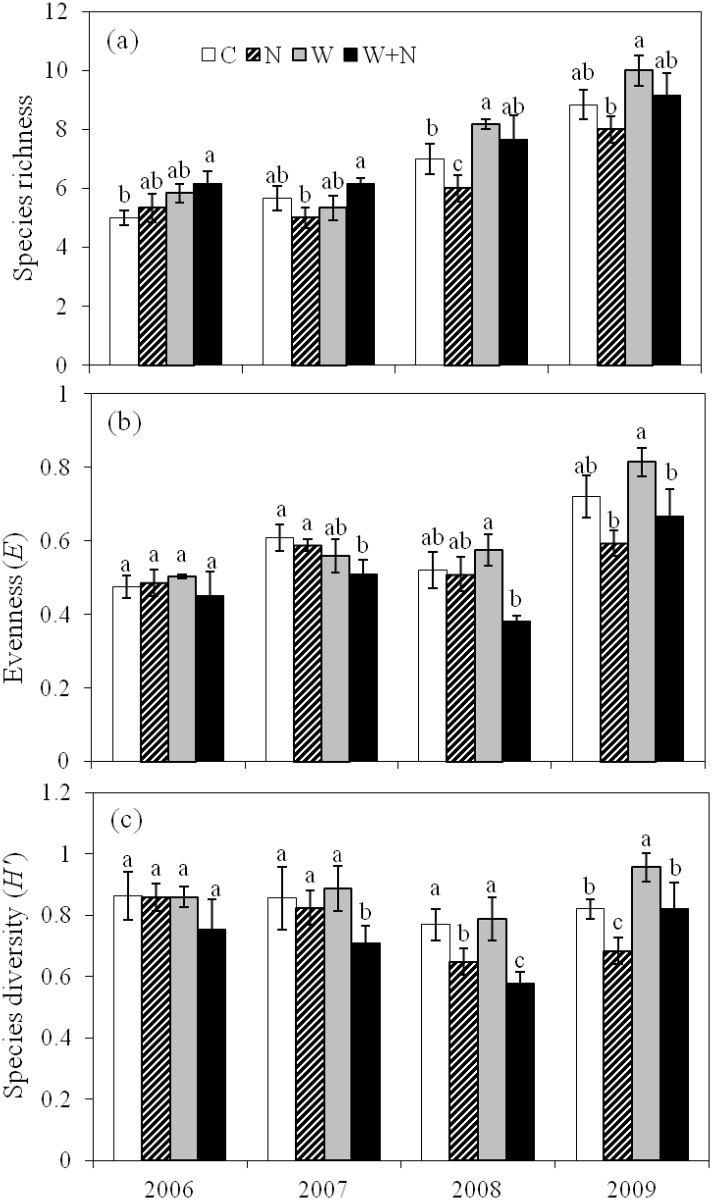
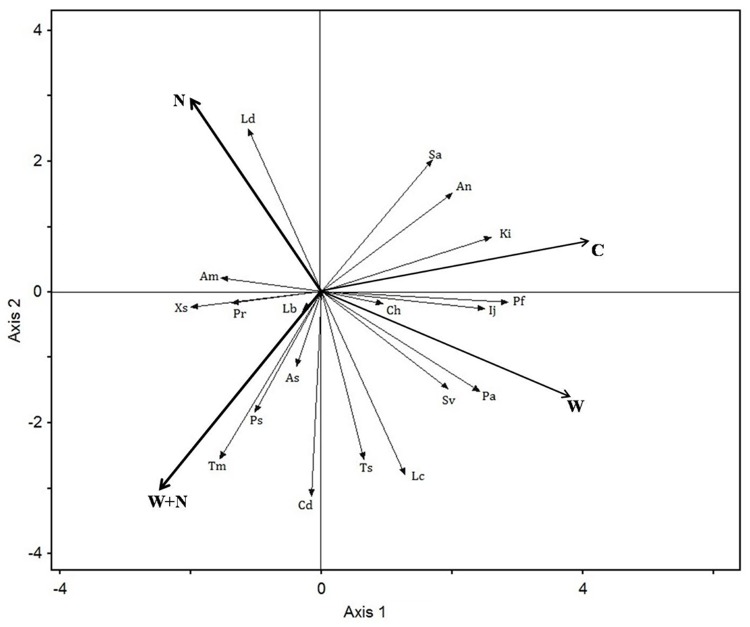
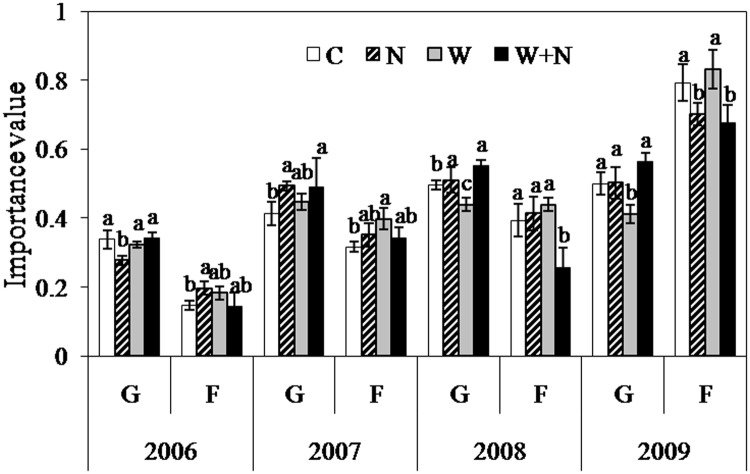
Climate change has profound influences on plant community composition and ecosystem functions. However, its effects on plant community composition and biomass production are not well understood. A four-year field experiment was conducted to examine the effects of warming, nitrogen (N) addition, and their interactions on plant community composition and biomass production in a temperate meadow ecosystem in northeast China. Experimental warming had no significant effect on plant species richness, evenness, and diversity, while N addition highly reduced the species richness and diversity. Warming tended to reduce the importance value of graminoid species but increased the value of forbs, while N addition had the opposite effect. Warming tended to increase the belowground biomass, but had an opposite tendency to decrease the aboveground biomass. The influences of warming on aboveground production were dependent upon precipitation. Experimental warming had little effect on aboveground biomass in the years with higher precipitation, but significantly suppressed aboveground biomass in dry years. Our results suggest that warming had indirect effects on plant production via its effect on the water availability. Nitrogen addition significantly increased above- and below-ground production, suggesting that N is one of the most important limiting factors determining plant productivity in the studied meadow steppe. Significant interactive effects of warming plus N addition on belowground biomass were also detected. Our observations revealed that environmental changes (warming and N deposition) play significant roles in regulating plant community composition and biomass production in temperate meadow steppe ecosystem in northeast China.
气候变化对植物群落组成和生态系统功能有着深远影响。然而,其对植物群落组成和生物量生产的影响尚未得到充分理解。在中国东北的一个温带草甸生态系统中,进行了一项为期四年的田间试验,以研究增温、添加氮(N)及其相互作用对植物群落组成和生物量生产的影响。实验性增温对植物物种丰富度、均匀度和多样性没有显著影响,而添加氮则显著降低了物种丰富度和多样性。增温倾向于降低禾本科植物的重要值,但增加了杂类草的重要值,而添加氮则产生相反的效果。增温倾向于增加地下生物量,但对地上生物量有相反的降低趋势。增温对地上生产的影响取决于降水量。在降水量较高的年份,实验性增温对地上生物量影响较小,但在干旱年份则显著抑制地上生物量。我们的结果表明,增温通过对水分有效性的影响对植物生产产生间接影响。添加氮显著增加了地上和地下生物量,表明氮是决定所研究的草甸草原植物生产力的最重要限制因素之一。还检测到增温加添加氮对地下生物量有显著的交互作用。我们的观察结果表明,环境变化(增温和氮沉降)在中国东北温带草甸草原生态系统中调节植物群落组成和生物量生产方面发挥着重要作用。