Institute of Genetics, University of Mainz, Mainz, Germany.
Development. 2013 Sep;140(17):3552-64. doi: 10.1242/dev.096099. Epub 2013 Jul 31.
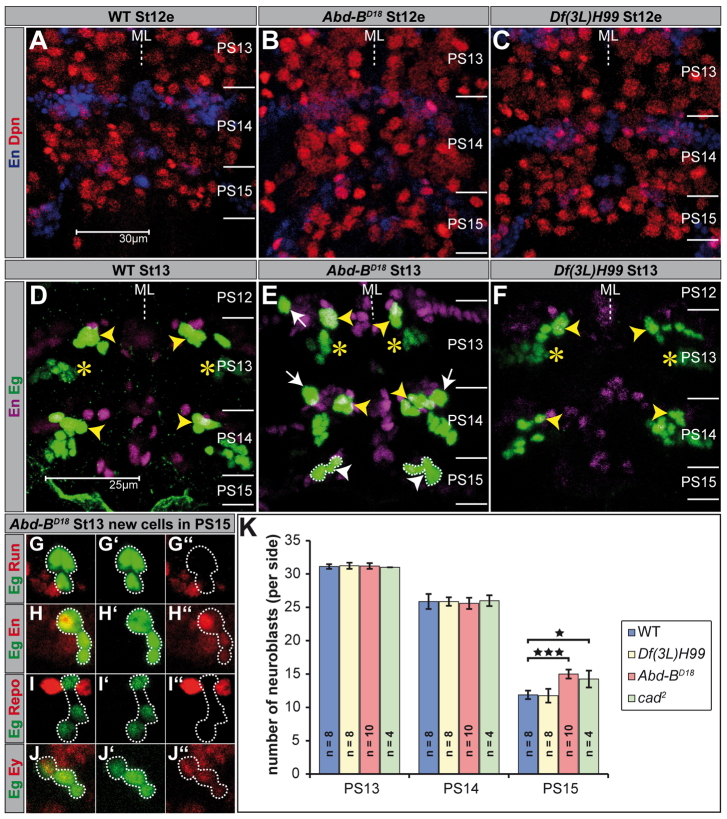
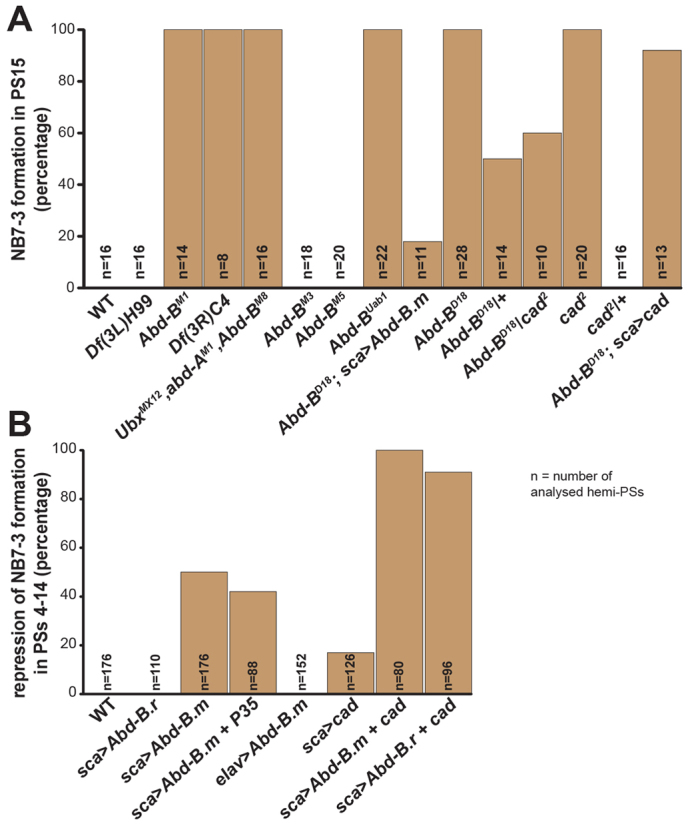
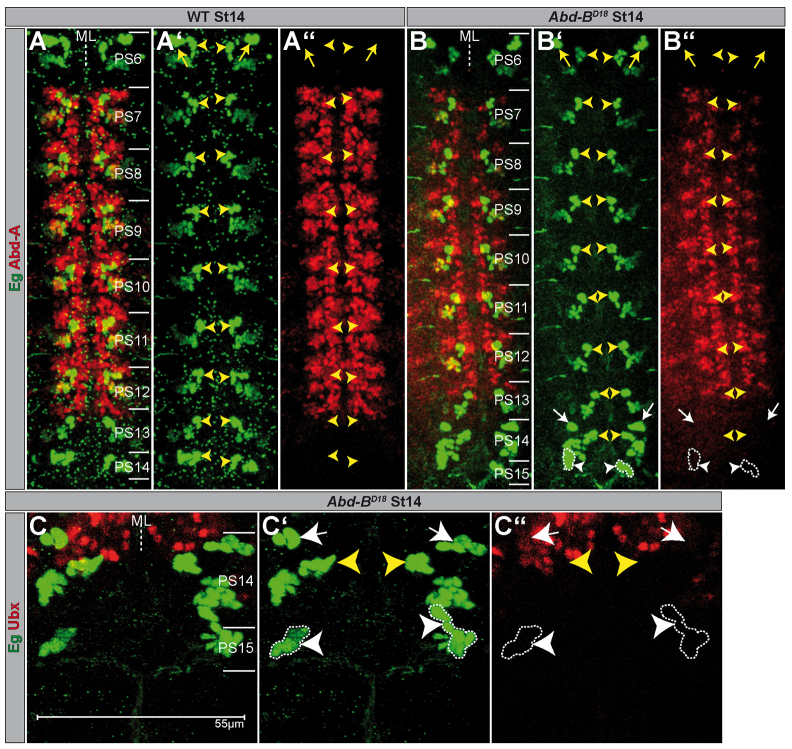
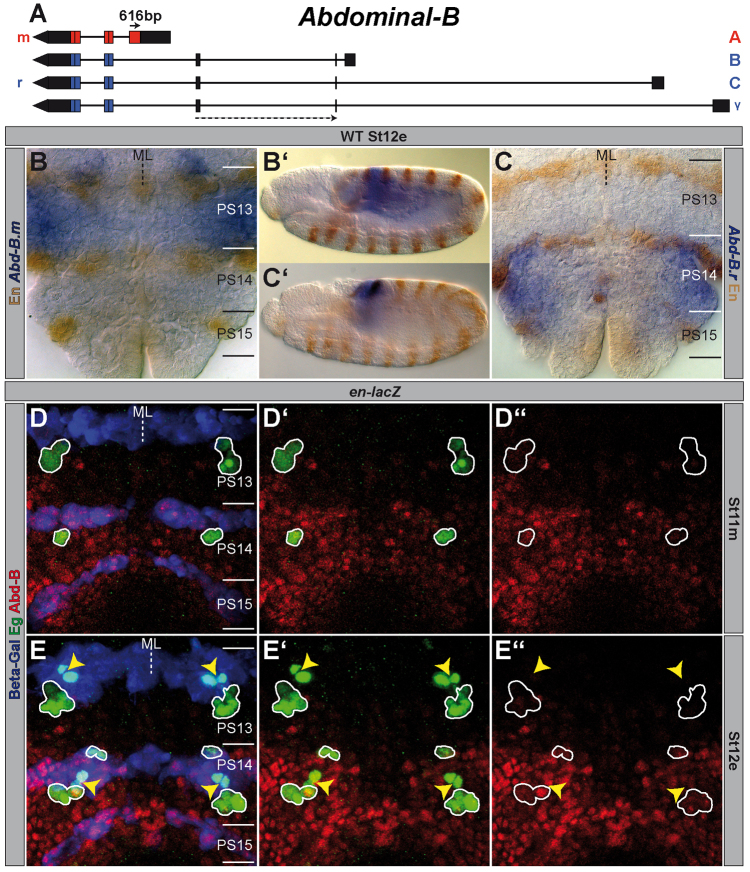
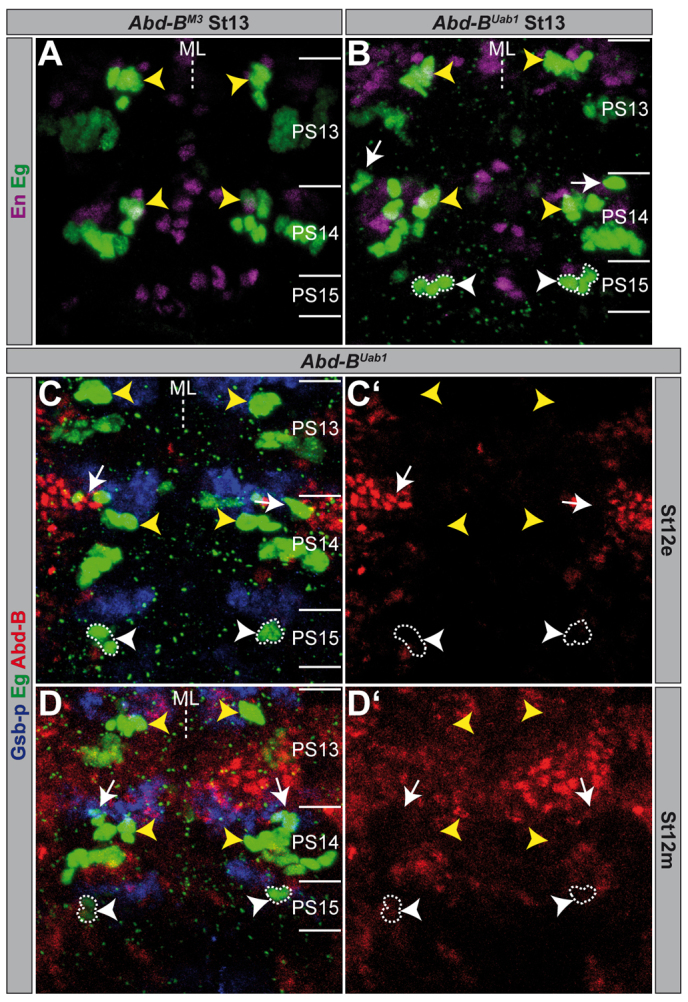
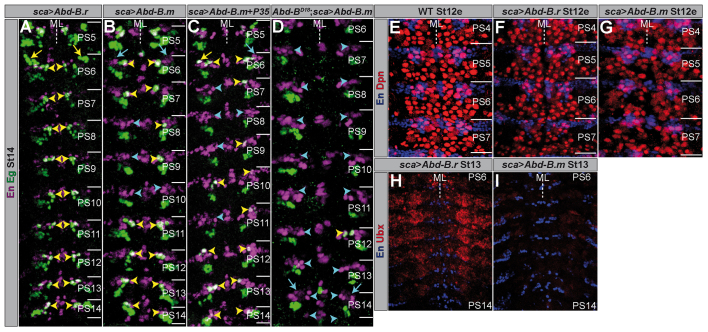
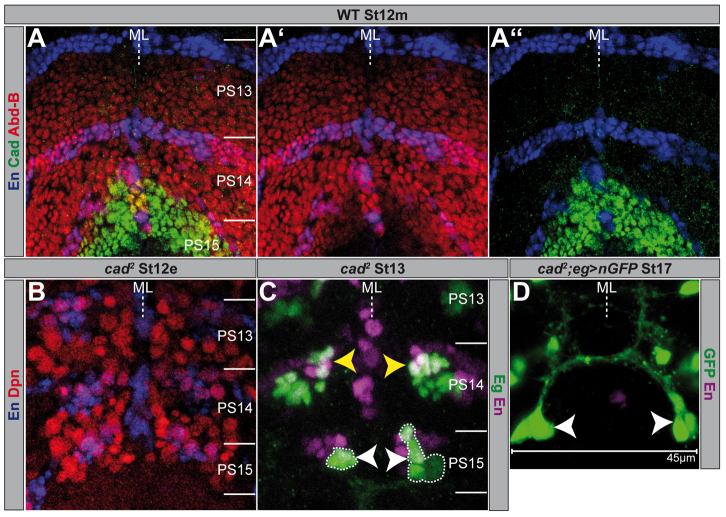
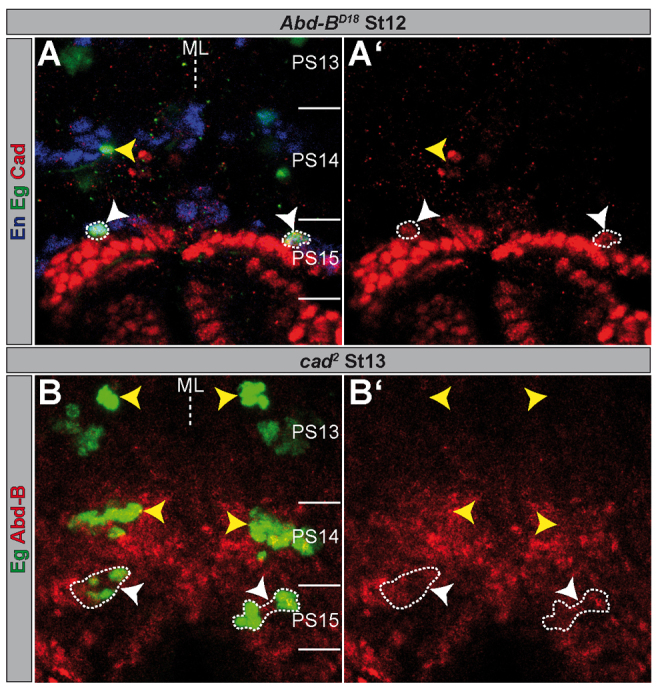
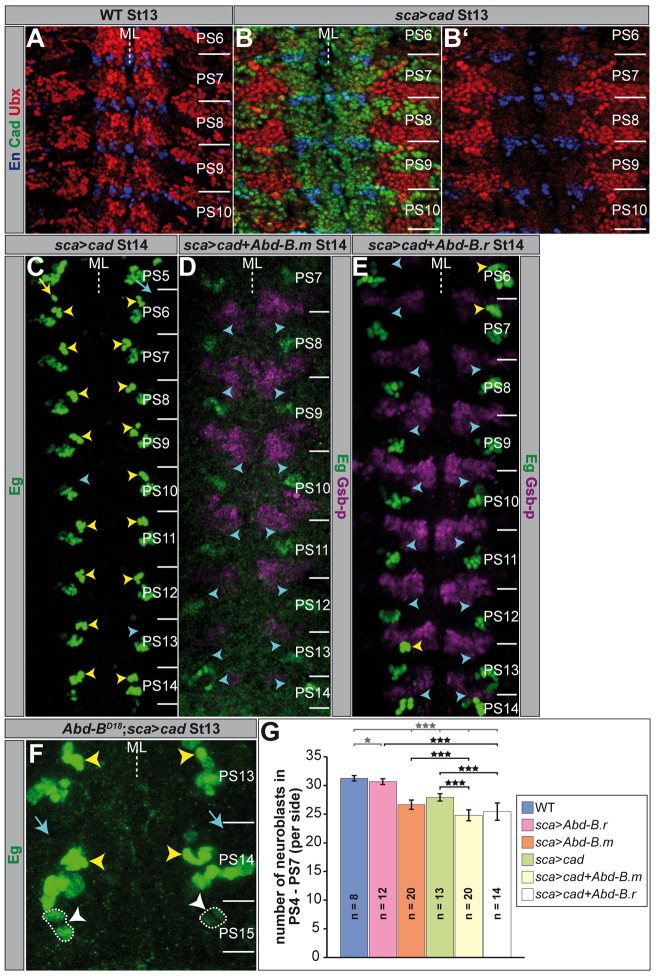
The central nervous system of Drosophila melanogaster consists of fused segmental units (neuromeres), each generated by a characteristic number of neural stem cells (neuroblasts). In the embryo, thoracic and anterior abdominal neuromeres are almost equally sized and formed by repetitive sets of neuroblasts, whereas the terminal abdominal neuromeres are generated by significantly smaller populations of progenitor cells. Here we investigated the role of the Hox gene Abdominal-B in shaping the terminal neuromeres. We show that the regulatory isoform of Abdominal-B (Abd-B.r) not only confers abdominal fate to specific neuroblasts (e.g. NB6-4) and regulates programmed cell death of several progeny cells within certain neuroblast lineages (e.g. NB3-3) in parasegment 14, but also inhibits the formation of a specific set of neuroblasts in parasegment 15 (including NB7-3). We further show that Abd-B.r requires cooperation of the ParaHox gene caudal to unfold its full competence concerning neuroblast inhibition and specification. Thus, our findings demonstrate that combined action of Abdominal-B and caudal contributes to the size and composition of the terminal neuromeres by regulating both the number and lineages of specific neuroblasts.
果蝇的中枢神经系统由融合的节段性单位(神经节)组成,每个神经节由特定数量的神经干细胞(神经母细胞)产生。在胚胎中,胸部和前腹部神经节几乎具有相同的大小,并且由重复的神经母细胞组成,而末端腹部神经节则由明显较小的祖细胞群体产生。在这里,我们研究了 Hox 基因 Abdominal-B 在塑造末端神经节中的作用。我们表明,Abdominal-B 的调节同工型(Abd-B.r)不仅赋予特定神经母细胞(例如 NB6-4)腹部命运,并调节某些神经母细胞谱系(例如 NB3-3)中几个后代细胞的程序性细胞死亡在 14 个副节段中,但也抑制了 15 个副节段(包括 NB7-3)中特定神经母细胞的形成。我们进一步表明,Abd-B.r 需要其尾部的 ParaHox 基因的合作才能发挥其在神经母细胞抑制和特化方面的全部功能。因此,我们的研究结果表明,Abdominal-B 和 caudal 的联合作用通过调节特定神经母细胞的数量和谱系来影响末端神经节的大小和组成。