Nadir Yona, Brenner Benjamin
Thrombosis and Hemostasis Unit, Department of Hematology, Rambam Health Care Campus and Technion-Israel Institute of Technology, Haifa, Israel.
Rambam Maimonides Med J. 2012 Jan 31;3(1):e0002. doi: 10.5041/RMMJ.10069. Print 2012 Jan.
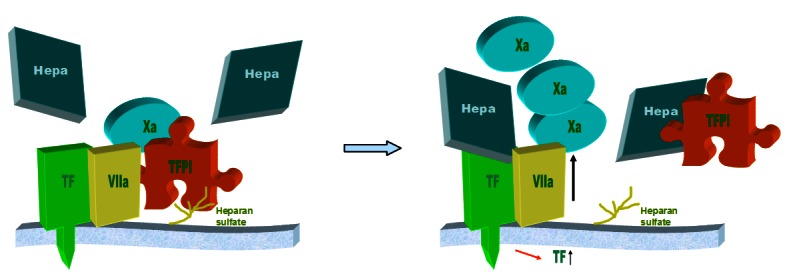
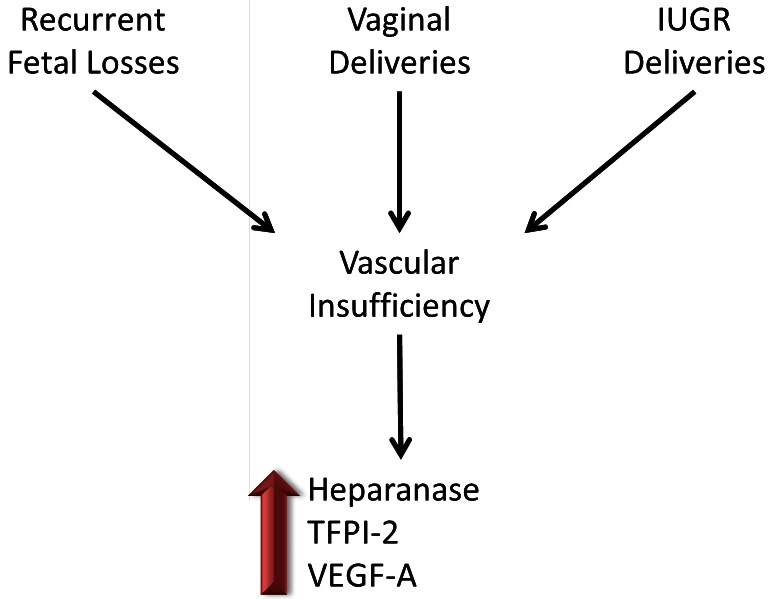
Heparanase that was cloned from and is abundant in the placenta is implicated in cell invasion, tumor metastasis, and angiogenesis. Recently we have demonstrated that heparanase may also affect the hemostatic system in a non-enzymatic manner. Heparanase was shown to up-regulate tissue factor (TF) expression and interact with tissue factor pathway inhibitor (TFPI) on the cell surface, leading to dissociation of TFPI from the cell membrane of endothelial and tumor cells, resulting in increased cell surface coagulation activity. More recently, we have shown that heparanase directly enhances TF activity, resulting in increased factor Xa production and activation of the coagulation system. Data indicate increased levels and possible involvement of heparanase in vascular complications in pregnancy. Taking into account the prometastatic and proangiogenic functions of heparanase, overexpression in human malignancies, and abundance in platelets and placenta, its involvement in the coagulation machinery is an intriguing novel arena for further research.
从胎盘中克隆出来且在胎盘中大量存在的乙酰肝素酶与细胞侵袭、肿瘤转移和血管生成有关。最近我们证明,乙酰肝素酶也可能以非酶促方式影响止血系统。已表明乙酰肝素酶可上调组织因子(TF)的表达,并与细胞表面的组织因子途径抑制剂(TFPI)相互作用,导致TFPI从内皮细胞和肿瘤细胞的细胞膜上解离,从而导致细胞表面凝血活性增加。最近,我们发现乙酰肝素酶可直接增强TF活性,从而增加Xa因子的产生并激活凝血系统。数据表明,乙酰肝素酶水平升高且可能参与妊娠期间的血管并发症。考虑到乙酰肝素酶的促转移和促血管生成功能、在人类恶性肿瘤中的过表达以及在血小板和胎盘中的大量存在,其在凝血机制中的作用是一个引人入胜的新研究领域。