Department of Oral and Maxillofacial Surgery, Head & Neck Oncology Laboratory, Hannover Medical School, Carl-Neuberg-Str, 1, Hannover D-30625, Germany.
Cancer Cell Int. 2013 Aug 6;13(1):78. doi: 10.1186/1475-2867-13-78.
Recent evidence suggests a subset of cells within a tumor with "stem-like" characteristics. These cells are able to transplant tumors in immunodeficient hosts. Distinct from non-malignant stem cells, cancer stem cells (CSC) show low proliferative rates, high self-renewing capacity, propensity to differentiate into actively proliferating tumor cells, and resistance to chemotherapy or radiation. They are often characterized by elevated expression of stem cell surface markers, in particular CD133, and sets of differentially expressed stem cell-associated genes. CSC are usually rare in clinical specimens and hardly amenable to functional studies and gene expression profiling. In this study, a panel of heterogenous melanoma cell lines was screened for typical CSC features.
Nine heterogeneous metastatic melanoma cell lines including D10 and WM115 were studied. Cell lines were phenotyped using flow cytometry and clonogenic assays were performed by limiting dilution analysis on magnetically sorted cells. Spheroidal growth was investigated in pretreated flasks. Gene expression profiles were assessed by using real-time rt-PCR and DNA microarrays. Magnetically sorted tumor cells were subcutaneously injected into the flanks of immunodeficient mice. Comparative immunohistochemistry was performed on xenografts and primary human melanoma sections.
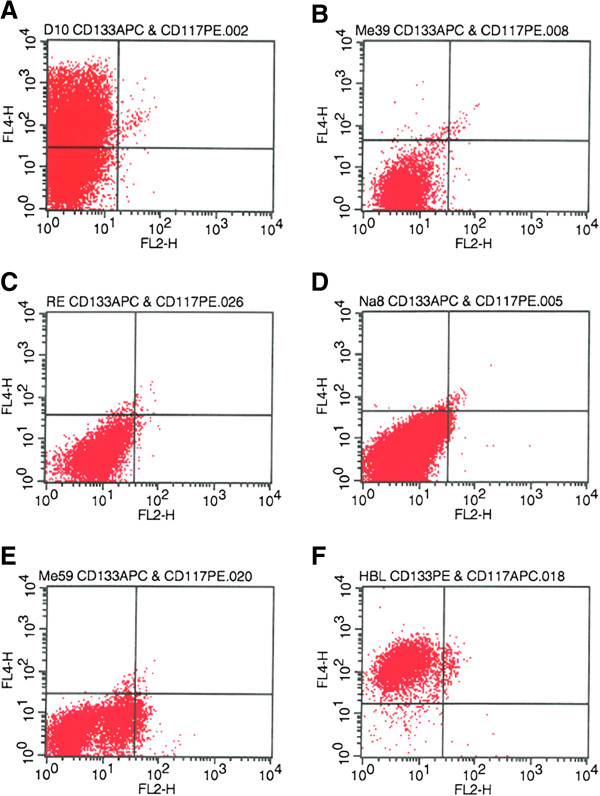
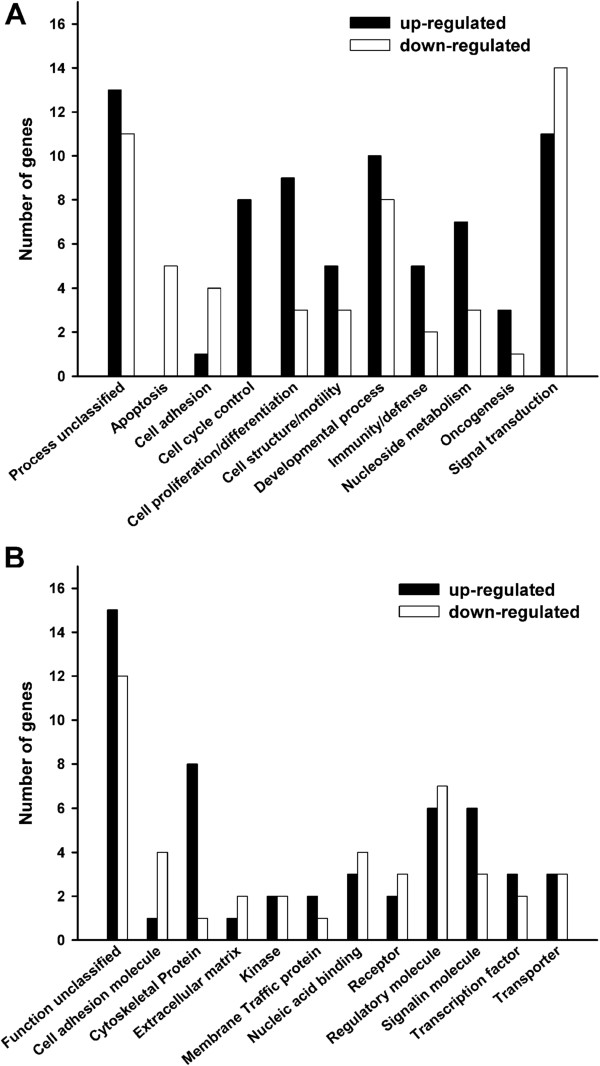
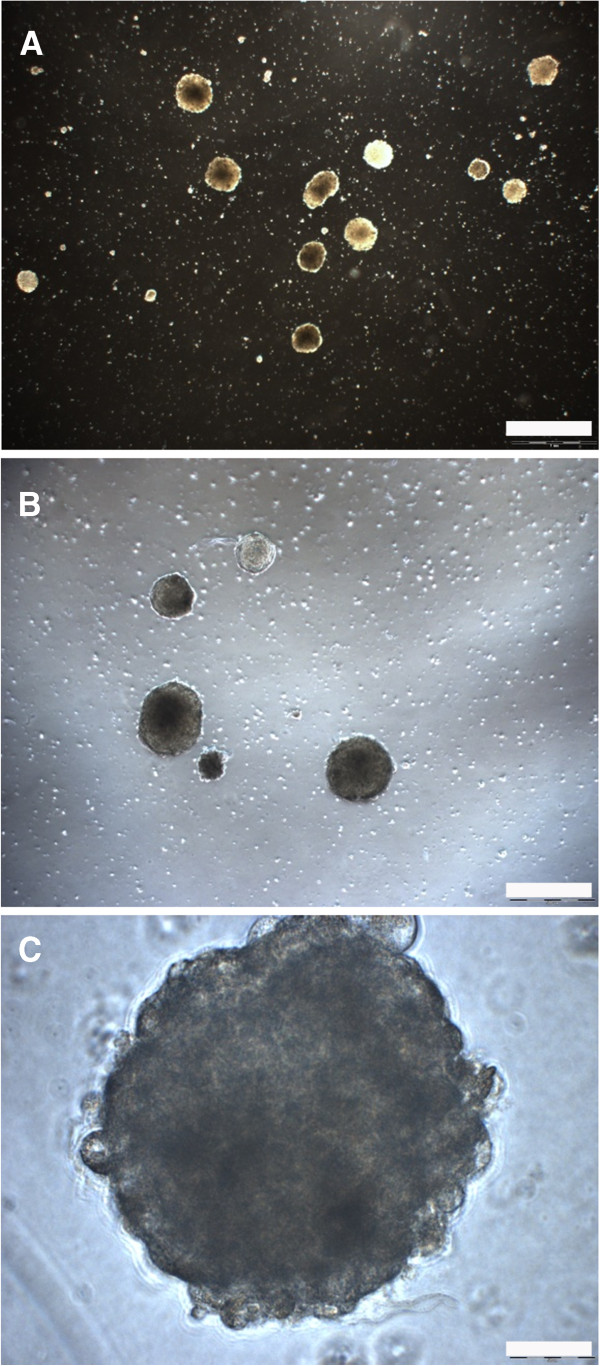
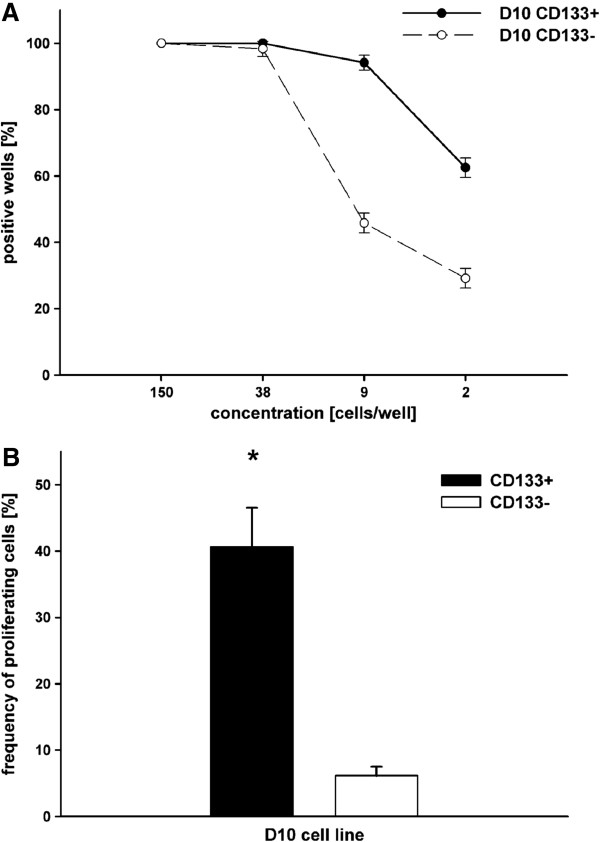
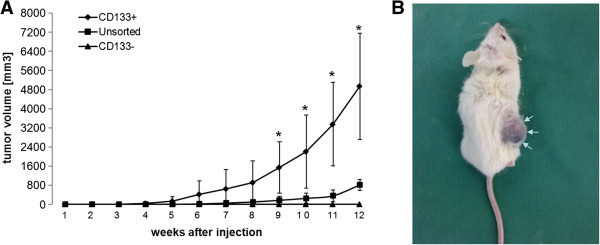
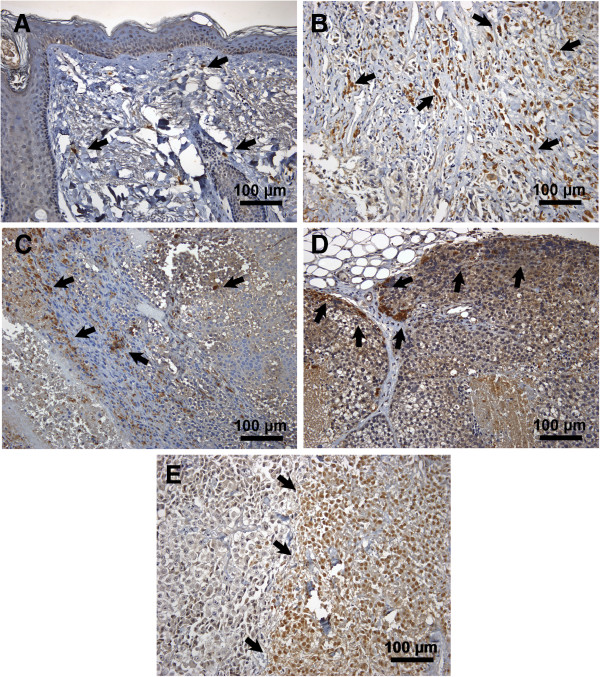
D10 cells expressed CD133 with a significantly higher clonogenic capacity as compared to CD133- cells. Na8, D10, and HBL cells formed spheroids on poly-HEMA-coated flasks. D10, Me39, RE, and WM115 cells expressed at least 2 of the 3 regulatory core transcription factors SOX2, NANOG, and OCT4 involved in the maintenance of stemness in mesenchymal stem cells. Gene expression profiling on CD133+ and CD133- D10 cells revealed 68 up- and 47 downregulated genes (+/-1.3 fold). Two genes, MGP and PROM1 (CD133), were outstandingly upregulated. CD133+ D10 cells formed tumors in NSG mice contrary to CD133- cells and CD133 expression was detected in xenografts and primary human melanoma sections using immunohistochemistry.
Established melanoma cell lines exhibit, to variable extents, the typical features of CSCs. The tumorigenic cell line D10, expressing CD133 and growing in spheroids and might qualify as a potential model of melanoma CSCs.
最近的证据表明,肿瘤中存在具有“干细胞样”特征的细胞亚群。这些细胞能够在免疫缺陷宿主中移植肿瘤。与非恶性干细胞不同,癌症干细胞(CSC)表现出低增殖率、高自我更新能力、向活跃增殖的肿瘤细胞分化的倾向以及对化疗或放疗的抗性。它们通常表现为干细胞表面标志物的上调,特别是 CD133,以及一组差异表达的干细胞相关基因。CSC 在临床标本中通常很少见,几乎无法进行功能研究和基因表达谱分析。在这项研究中,筛选了一组异质黑色素瘤细胞系,以寻找典型的 CSC 特征。
研究了包括 D10 和 WM115 在内的 9 种异质性转移性黑色素瘤细胞系。通过流式细胞术对细胞系进行表型分析,并通过磁分选细胞的有限稀释分析进行克隆形成分析。在预处理的培养瓶中研究了球体生长。通过实时 rt-PCR 和 DNA 微阵列评估基因表达谱。将磁分选的肿瘤细胞皮下注射到免疫缺陷小鼠的侧腹。对异种移植物和原发性人类黑色素瘤切片进行比较免疫组织化学分析。
与 CD133-细胞相比,D10 细胞表达 CD133,具有更高的集落形成能力。Na8、D10 和 HBL 细胞在聚-HEMA 涂层培养瓶中形成球体。D10、Me39、RE 和 WM115 细胞表达至少 3 种调节核心转录因子 SOX2、NANOG 和 OCT4 中的 2 种,这些转录因子参与维持间充质干细胞中的干性。在 CD133+和 CD133-D10 细胞上进行基因表达谱分析显示,有 68 个上调和 47 个下调基因(+/-1.3 倍)。两个基因,MGP 和 PROM1(CD133),表现出显著上调。CD133+D10 细胞在 NSG 小鼠中形成肿瘤,而 CD133-D10 细胞和 CD133 表达则没有,并且通过免疫组织化学在异种移植物和原发性人类黑色素瘤切片中检测到 CD133 表达。
已建立的黑色素瘤细胞系在不同程度上表现出 CSC 的典型特征。表达 CD133、在球体中生长并具有致瘤性的 D10 细胞系可能有资格成为黑色素瘤 CSC 的潜在模型。