Departamento de Farmacobiología, Cinvestav, IPN, Sede Sur, Calzada de los Tenorios 235, Col. Granjas Coapa, Tlalpan CP 14330, Mexico City, Mexico.
J Hematol Oncol. 2013 Aug 2;6:56. doi: 10.1186/1756-8722-6-56.
High concentrations of plasmatic IgE have been related to distinct systemic inflammatory conditions that frequently predispose individuals to hypersensitivity reactions. Although effects of IgE have been suggested to relay on the low-intensity activation of distinct effector elements of the immune system, such as mast cells (MC), experimental evidence on the role of IgE-induced production of inflammatory mediators on specific pathologies is scarce. MC are an important component in tumor microenvironment where they seem to secrete a number of immunomodulatory and angiogenic mediators, such as the Vascular Endothelial Growth Factor (VEGF) by not well-described mechanisms. In this work, we investigated the effect of monomeric IgE (in the absence of antigen) on the production of VEGF in MC, analyzed if monomeric IgE could exacerbate the pro-tumorigenic properties of that cell type and characterized some of the molecular mechanisms behind the effects of IgE on VEGF production and tumor growth.
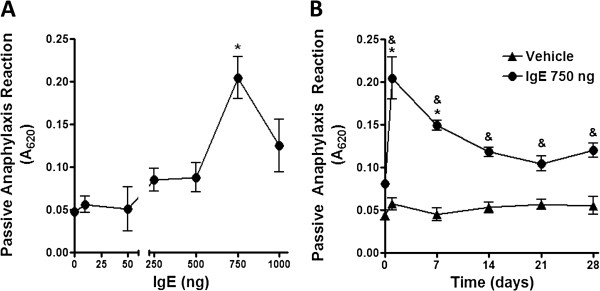
For in vitro studies, murine bone marrow-derived mast cells (BMMCs) were used. Pharmacological inhibitors and phosphorylation of key elements controlling VEGF secretion and protein translation were used to characterize the mechanism of VEGF production triggered by IgE.In vivo, the effect of a single i.v. administration of monomeric IgE on B16 melanoma tumor weight, intratumoral blood vessel formation and tumor-associated MC was assessed in four groups of mice: MC-proficient (WT), MC-deficient (Wsh), Wsh reconstituted with MC derived from WT mice (Wsh Rec WT) and Wsh reconstituted with MC derived from Fyn -/- mice (Wsh Rec Fyn -/-).
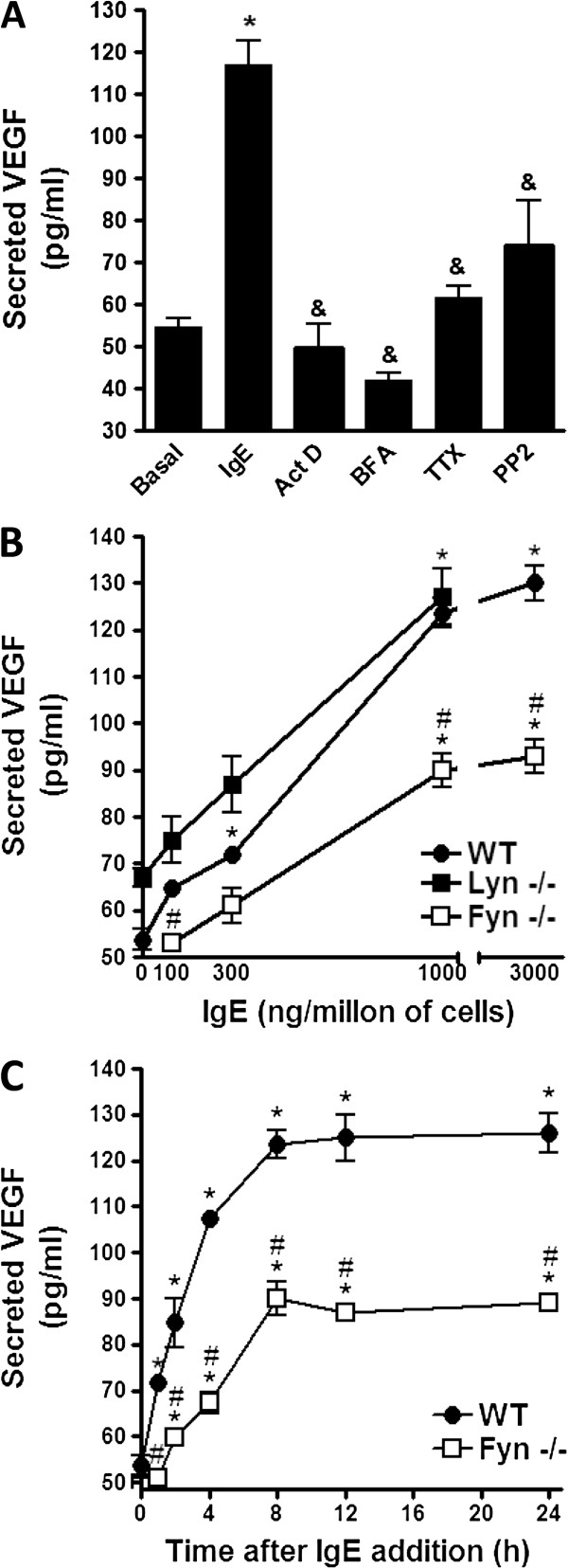
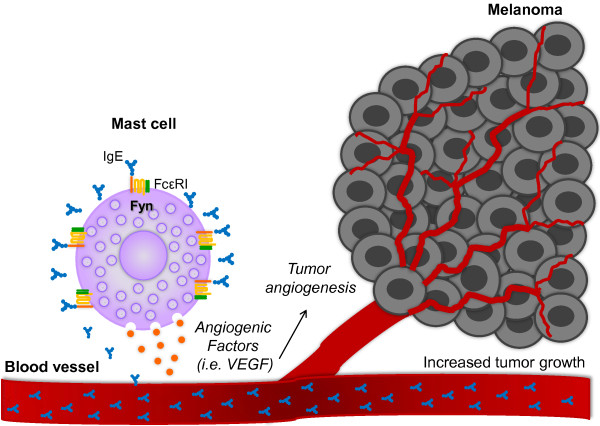
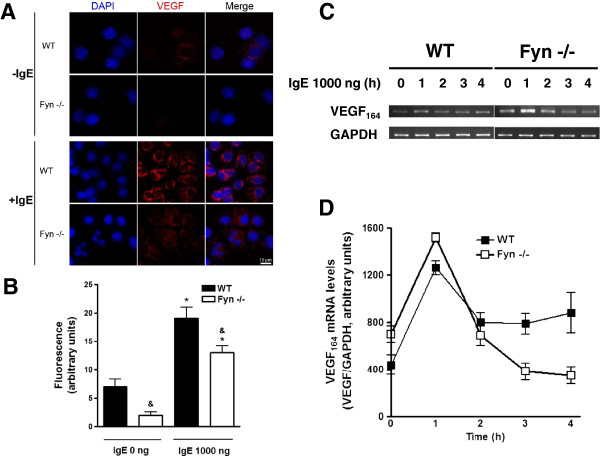
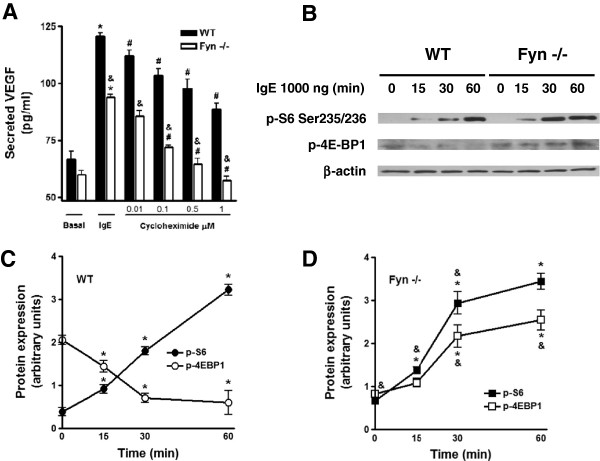
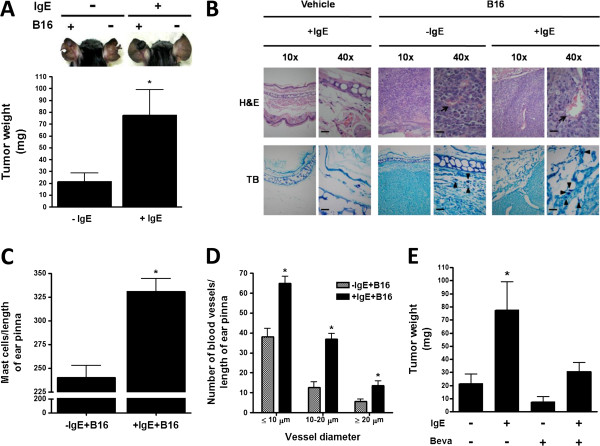
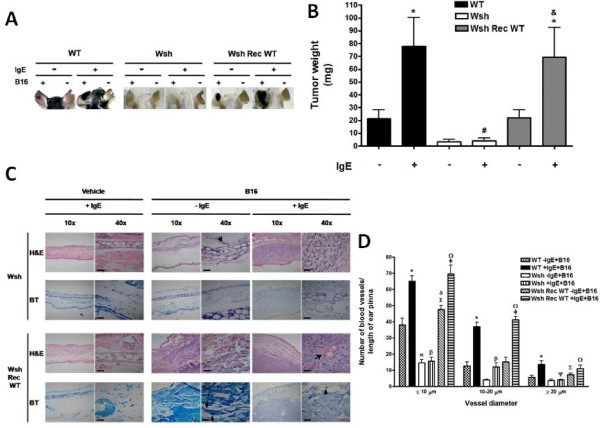
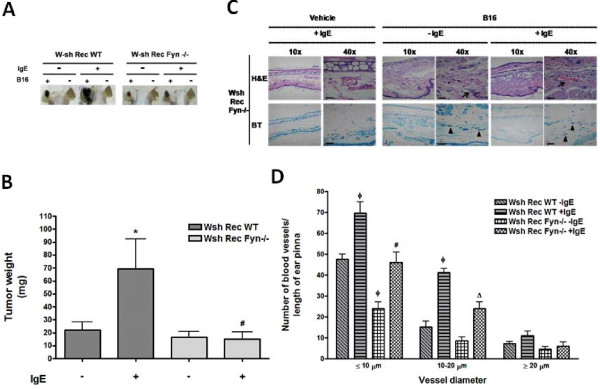
Monomeric IgE induced VEGF secretion through a Fyn kinase-dependent mechanism and modulated de novo protein synthesis modifying the activity of the translational regulator 4E-BP1 in BMMCs. In vivo, monomeric IgE increased melanoma tumor growth, peritumoral MC and blood vessel numbers in WT but not in Wsh mice. The positive effects of IgE on melanoma tumor growth were reproduced after reconstitution of Wsh mice with WT but not with Fyn -/- BMMCs.
Our data suggest that monomeric IgE, in the absence of antigen, induces VEGF production in MC and in vivo contributes to melanoma tumor growth through a Fyn kinase-dependent mechanism.
高浓度的血浆 IgE 与多种全身炎症性疾病有关,这些疾病常使个体易发生过敏反应。尽管 IgE 的作用被认为是通过免疫系统的特定效应因子的低强度激活来传递的,但 IgE 诱导的炎症介质在特定病理中的产生作用的实验证据却很少。肥大细胞(MC)是肿瘤微环境的重要组成部分,它们似乎通过尚未明确的机制分泌多种免疫调节和血管生成介质,如血管内皮生长因子(VEGF)。在这项工作中,我们研究了单体 IgE(无抗原)对 MC 中 VEGF 产生的影响,分析了单体 IgE 是否会加剧该细胞类型的促肿瘤特性,并对 IgE 对 VEGF 产生和肿瘤生长影响的一些分子机制进行了特征描述。
在体外研究中,使用了鼠骨髓来源的肥大细胞(BMMCs)。使用药理学抑制剂和控制 VEGF 分泌和蛋白质翻译的关键元素的磷酸化来研究 IgE 触发的 VEGF 产生的机制。在体内,通过静脉内单次给予单体 IgE 来评估其对 B16 黑色素瘤肿瘤重量、肿瘤内血管形成和肿瘤相关 MC 的影响,在以下四组小鼠中进行了评估:MC 功能正常(WT)、MC 缺陷(Wsh)、由 WT 小鼠来源的 MC 重建的 Wsh(Wsh Rec WT)和由 Fyn -/- 小鼠来源的 MC 重建的 Wsh(Wsh Rec Fyn -/-)。
单体 IgE 通过 Fyn 激酶依赖性机制诱导 VEGF 分泌,并通过改变翻译调节因子 4E-BP1 的活性来调节新的蛋白质合成。在体内,单体 IgE 增加了黑色素瘤肿瘤的生长、WT 但不是 Wsh 小鼠的肿瘤周围 MC 和血管数量。在 Wsh 小鼠中重建 WT 但不是 Fyn -/- BMMC 后,IgE 对黑色素瘤肿瘤生长的积极影响得到了重现。
我们的数据表明,单体 IgE 在没有抗原的情况下诱导 MC 中 VEGF 的产生,并通过 Fyn 激酶依赖性机制在体内促进黑色素瘤肿瘤的生长。