Department of Pathology, Dalhousie University, Halifax, NS B3H 4R2, Canada.
Department of Surgery, Dalhousie University, Halifax, NS B3H 2Y9, Canada.
Cells. 2021 Apr 23;10(5):986. doi: 10.3390/cells10050986.
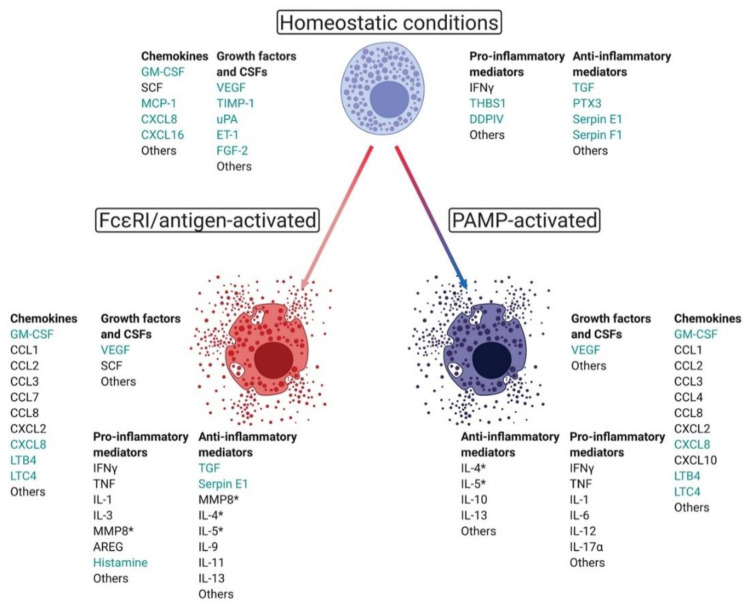
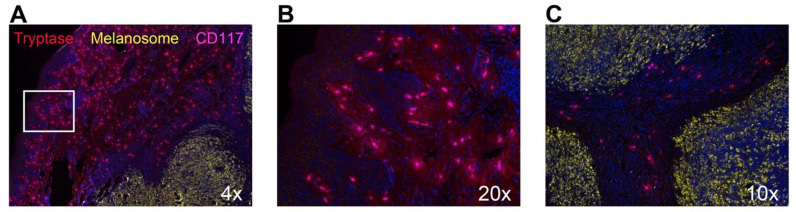
Mast cells are important sentinel cells in host defense against infection and major effector cells in allergic disease. The role of these cells in cancer settings has been widely debated. The diverse range of mast cell functions in both immunity and tissue remodeling events, such as angiogenesis, provides multiple opportunities for mast cells to modify the tumor microenvironment. In this review, we consider both skin and breast cancer settings to address the controversy surrounding the importance of mast cells in the host response to tumors. We specifically address the key mediators produced by mast cells which impact tumor development. The role of environmental challenges in modifying mast cell responses and opportunities to modify mast cell responses to enhance anti-tumor immunity are also considered. While the mast cell's role in many cancer contexts is complicated and poorly understood, the activities of these tissue resident and radioresistant cells can provide important opportunities to enhance anti-cancer responses and limit cancer development.
肥大细胞是宿主抗感染防御的重要哨兵细胞,也是过敏疾病的主要效应细胞。这些细胞在癌症环境中的作用一直存在广泛争议。肥大细胞在免疫和组织重塑事件(如血管生成)中具有多样化的功能,这为肥大细胞提供了多种机会来改变肿瘤微环境。在这篇综述中,我们考虑了皮肤和乳腺癌环境,以解决围绕肥大细胞在宿主对肿瘤反应中的重要性的争议。我们特别讨论了肥大细胞产生的影响肿瘤发展的关键介质。还考虑了环境挑战在改变肥大细胞反应以及改变肥大细胞反应以增强抗肿瘤免疫方面的作用。虽然肥大细胞在许多癌症环境中的作用很复杂且尚未被充分理解,但这些组织驻留和放射抗性细胞的活性可以为增强抗肿瘤反应和限制癌症发展提供重要机会。