Graduate School of Engineering, Nagoya University, Furo-cho, Chikusa-ku, Nagoya, Japan.
Sci Rep. 2013;3:2371. doi: 10.1038/srep02371.
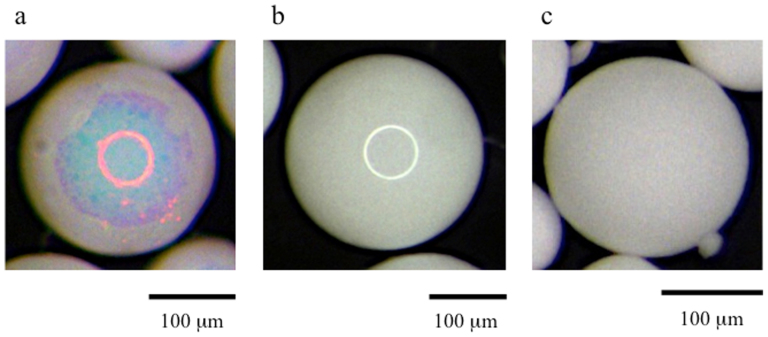
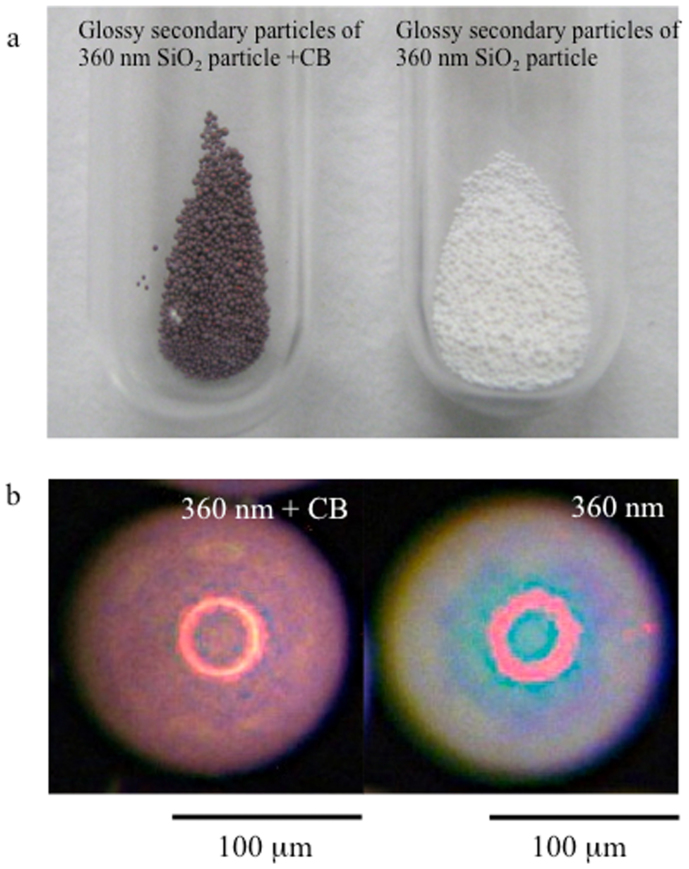
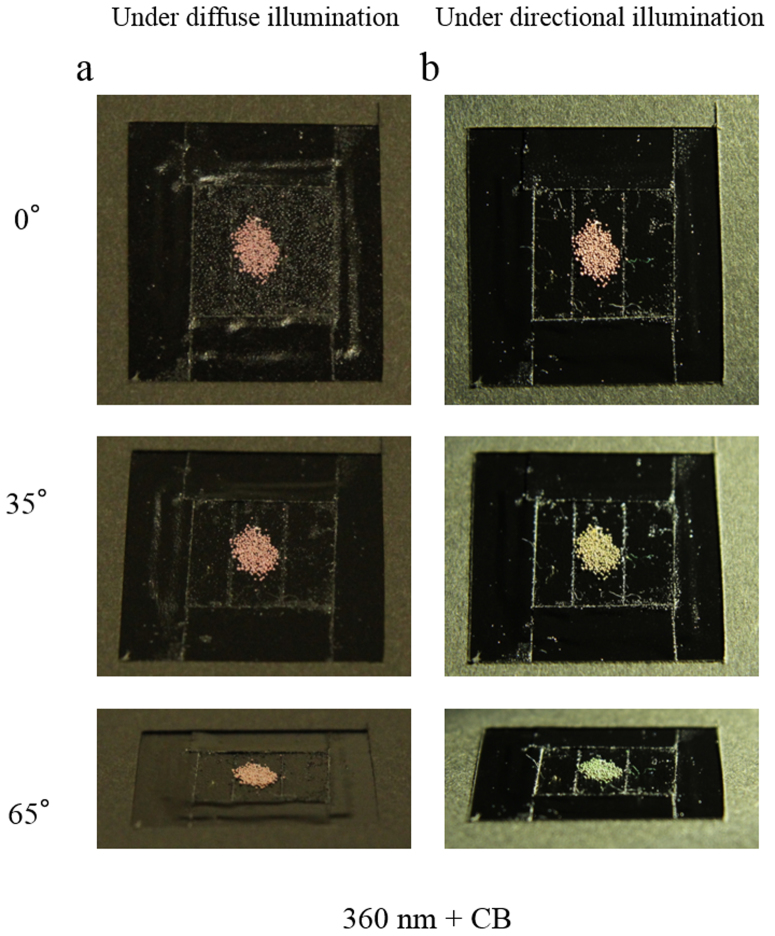
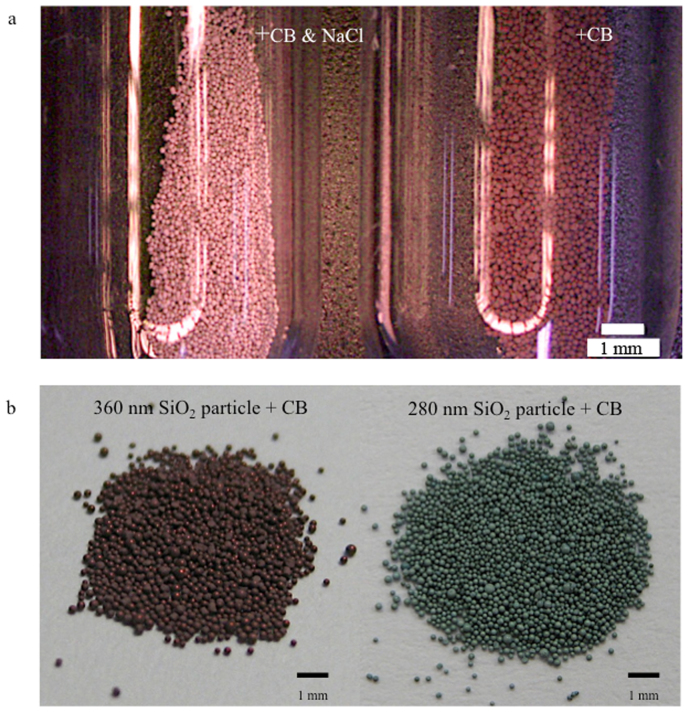
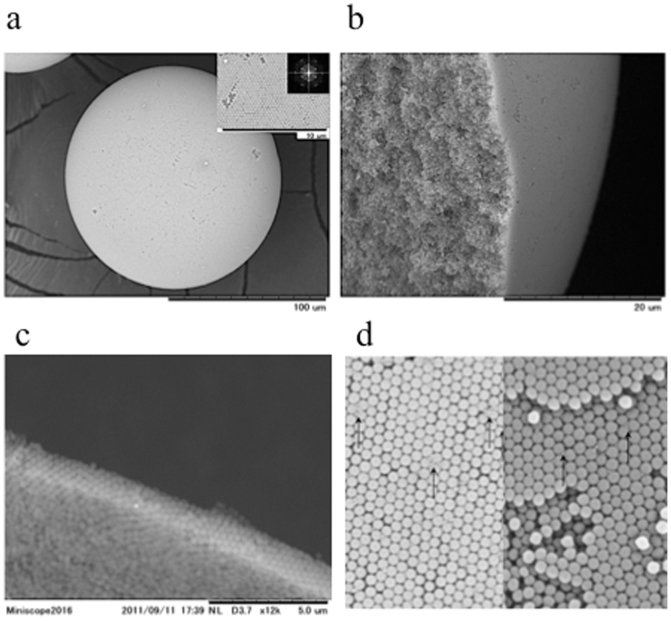
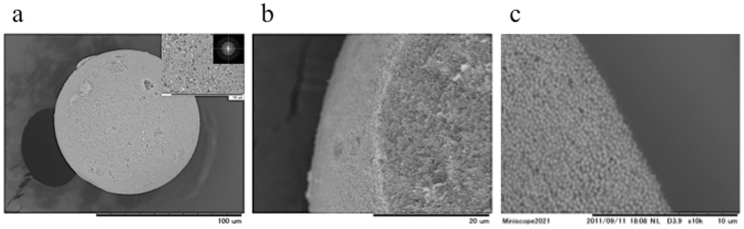
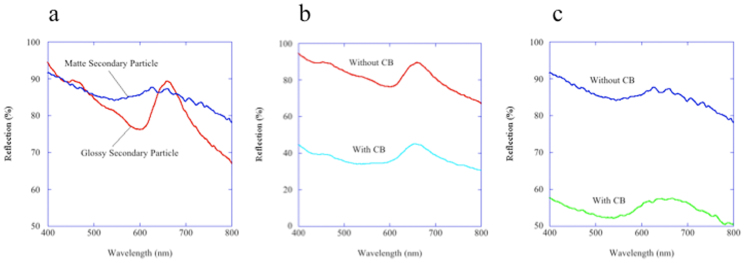
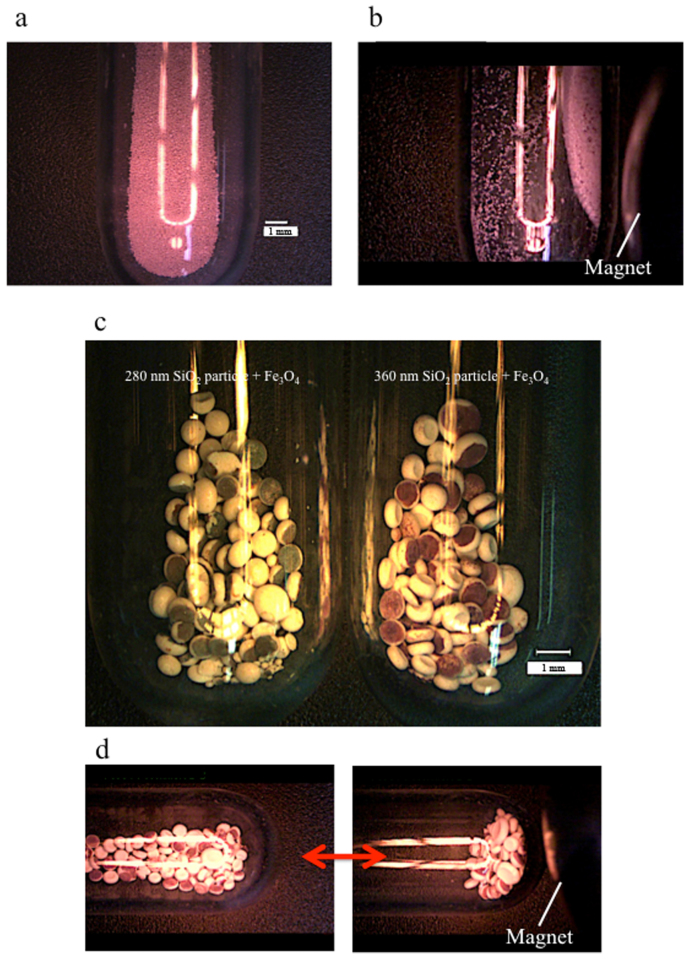
This study investigated the colourful secondary particles formed by controlling the aggregation states of colloidal silica particles and the enhancement of the structural colouration of the secondary particles caused by adding black particles. We obtained glossy, partially structurally coloured secondary particles in the absence of NaCl, but matte, whitish secondary particles were obtained in the presence of NaCl. When a small amount of carbon black was incorporated into both types of secondary particles, the incoherent multiple scattering of light from the amorphous region was considerably reduced. However, the peak intensities in the reflection spectra, caused by Bragg reflection and by coherent single wavelength scattering, were only slightly decreased. Consequently, a brighter structural colour of these secondary particles was observed with the naked eye. Furthermore, when magnetite was added as a black particle, the coloured secondary particles could be moved and collected by applying an external magnetic field.
本研究通过控制胶体二氧化硅颗粒的聚集状态以及添加黑色颗粒来增强次级粒子的结构色,从而得到了丰富多彩的次级粒子。在没有 NaCl 的情况下,我们得到了有光泽的、部分结构着色的次级粒子,但在有 NaCl 的情况下,得到的是无光泽的、灰白色的次级粒子。当少量的炭黑被加入到这两种次级粒子中时,来自非晶区的非相干多次散射光会显著减少。然而,由布拉格反射和相干单波长散射引起的反射光谱中的峰值强度仅略有降低。因此,这些次级粒子的结构色肉眼看起来更亮了。此外,当添加磁铁矿作为黑色颗粒时,可以通过施加外部磁场来移动和收集有色次级粒子。