Pain Management & Neuromodulation Centre, Guy's & St Thomas NHS Trust, London, UK.
J Headache Pain. 2013 Aug 6;14(1):67. doi: 10.1186/1129-2377-14-67.
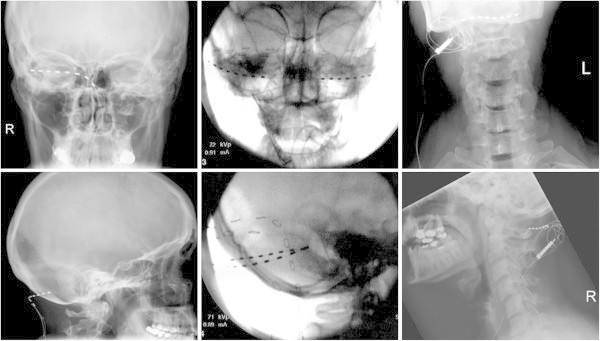
A retrospective review of patients treated with Occipital Nerve Stimulation (ONS) at two large tertiary referral centres has been audited in order to optimise future treatment pathways.
Patient's medical records were retrospectively reviewed, and each patient was contacted by a trained headache expert to confirm clinical diagnosis and system efficacy. Results were compared to reported outcomes in current literature on ONS for primary headaches.
Twenty-five patients underwent a trial of ONS between January 2007 and December 2012, and 23 patients went on to have permanent implantation of ONS. All 23 patients reached one-year follow/up, and 14 of them (61%) exceeded two years of follow-up. Seventeen of the 23 had refractory chronic migraine (rCM), and 3 refractory occipital neuralgia (ON). 11 of the 19 rCM patients had been referred with an incorrect headache diagnosis. Nine of the rCM patients (53%) reported 50% or more reduction in headache pain intensity and or frequency at long term follow-up (11-77 months). All 3 ON patients reported more than 50% reduction in pain intensity and/or frequency at 28-31 months. Ten (43%) subjects underwent surgical revision after an average of 11 ± 7 months from permanent implantation - in 90% of cases due to lead problems. Seven patients attended a specifically designed, multi-disciplinary, two-week pre-implant programme and showed improved scores across all measured psychological and functional parameters independent of response to subsequent ONS.
Our retrospective review: 1) confirms the long-term ONS success rate in refractory chronic headaches, consistent with previously published studies; 2) suggests that some headaches types may respond better to ONS than others (ON vs CM); 3) calls into question the role of trial stimulation in ONS; 4) confirms the high rate of complications related to the equipment not originally designed for ONS; 5) emphasises the need for specialist multidisciplinary care in these patients.
为了优化未来的治疗途径,对在两家大型三级转诊中心接受枕神经刺激 (ONS) 治疗的患者进行了回顾性审查。
回顾性审查患者的病历,并由经过培训的头痛专家联系每位患者,以确认临床诊断和系统疗效。结果与当前关于原发性头痛的 ONS 报告结果进行了比较。
2007 年 1 月至 2012 年 12 月期间,25 名患者接受了 ONS 试验,其中 23 名患者接受了 ONS 的永久性植入。所有 23 名患者均达到了一年的随访,其中 14 名(61%)超过了两年的随访。23 名患者中,17 名为难治性慢性偏头痛 (rCM),3 名为难治性枕神经痛 (ON)。19 名 rCM 患者中有 11 名被转诊时伴有错误的头痛诊断。9 名 rCM 患者(53%)报告在长期随访中(11-77 个月)头痛疼痛强度和/或频率降低 50%或更多。所有 3 名 ON 患者在 28-31 个月时报告疼痛强度和/或频率降低 50%以上。永久性植入后平均 11 ± 7 个月,10 名患者(43%)接受了手术修订 - 在 90%的情况下是由于导联问题。7 名患者参加了专门设计的、多学科的为期两周的植入前计划,在所有测量的心理和功能参数方面的得分均有所提高,与随后的 ONS 反应无关。
我们的回顾性研究:1)证实了难治性慢性头痛中 ONS 的长期成功率,与之前发表的研究一致;2)表明某些头痛类型可能比其他类型(ON 与 CM)对 ONS 的反应更好;3)对试验刺激在 ONS 中的作用提出质疑;4)证实了与最初不是为 ONS 设计的设备相关的并发症发生率很高;5)强调了这些患者需要专业的多学科护理。