Department of Antisense Drug Discovery, Isis Pharmaceuticals Inc., Carlsbad, California, USA.
PLoS One. 2013 Jul 29;8(7):e66923. doi: 10.1371/journal.pone.0066923. Print 2013.
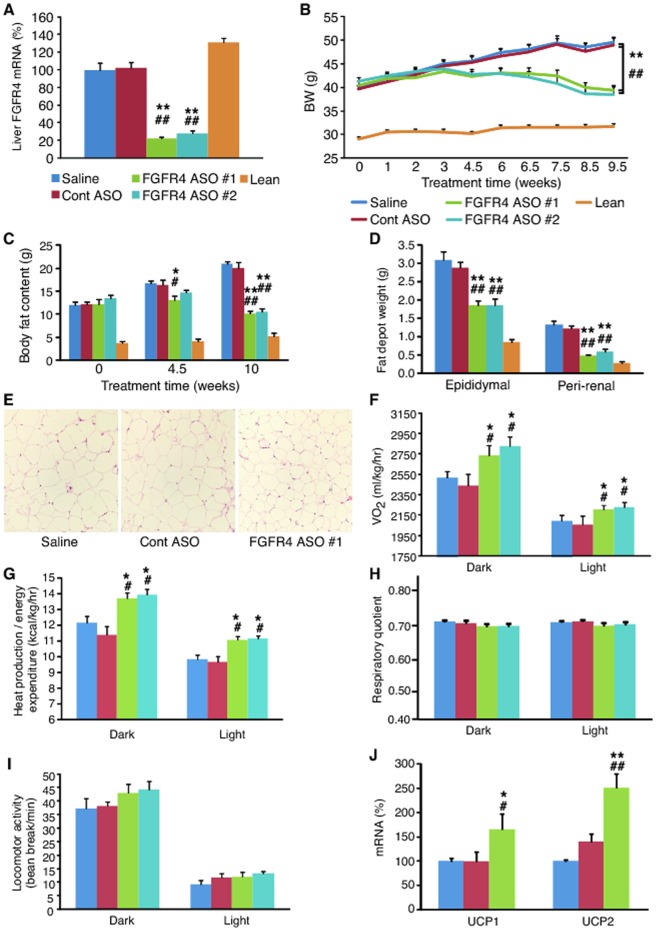
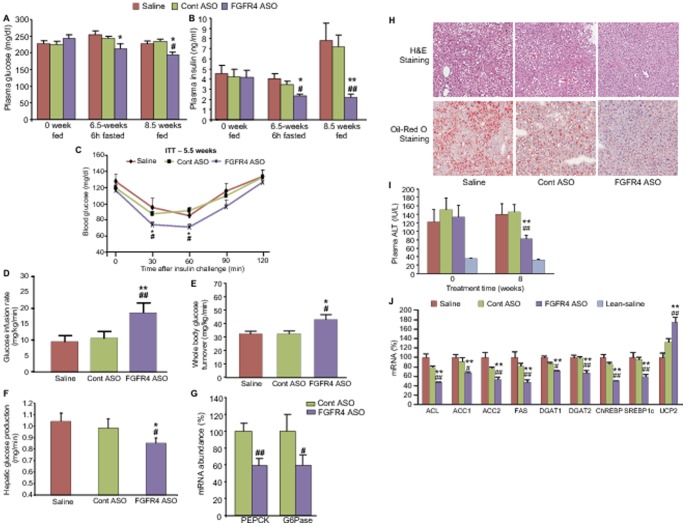
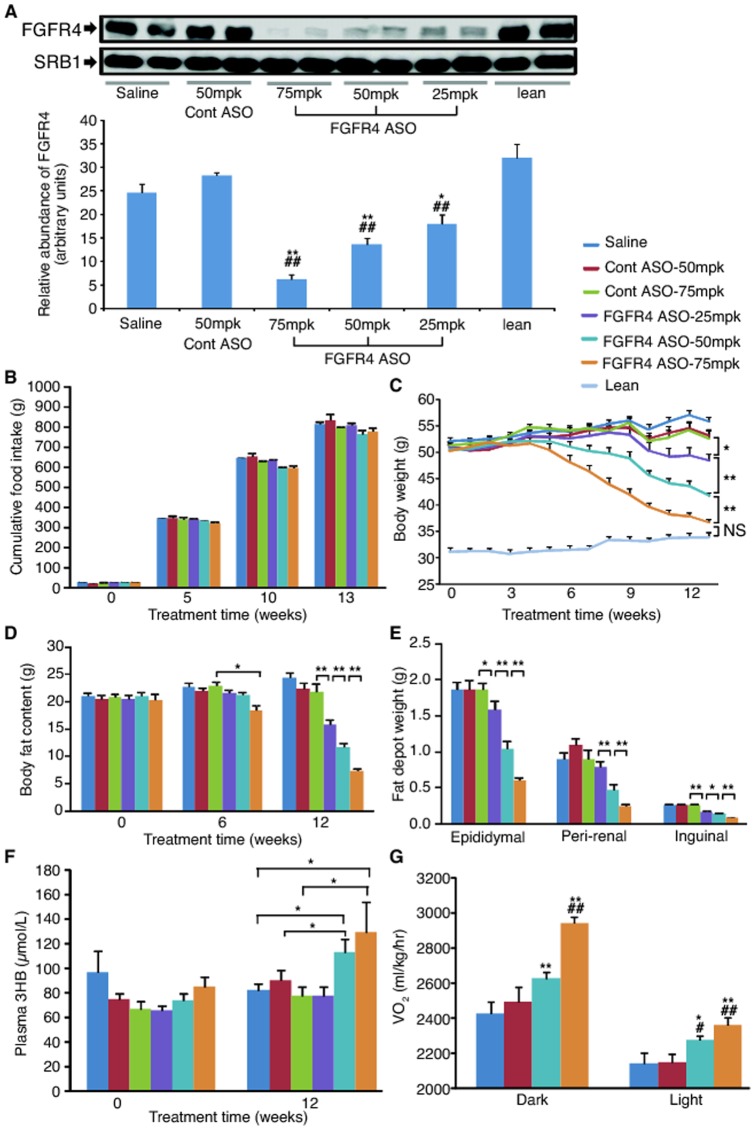
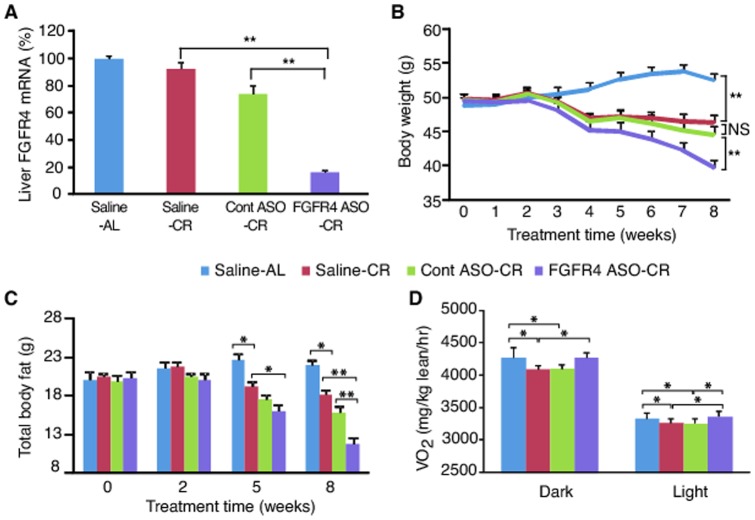
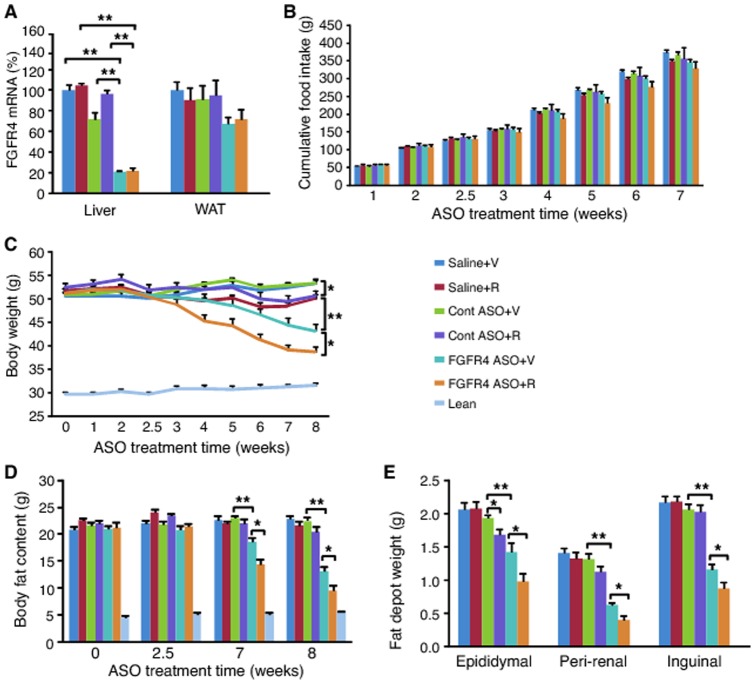
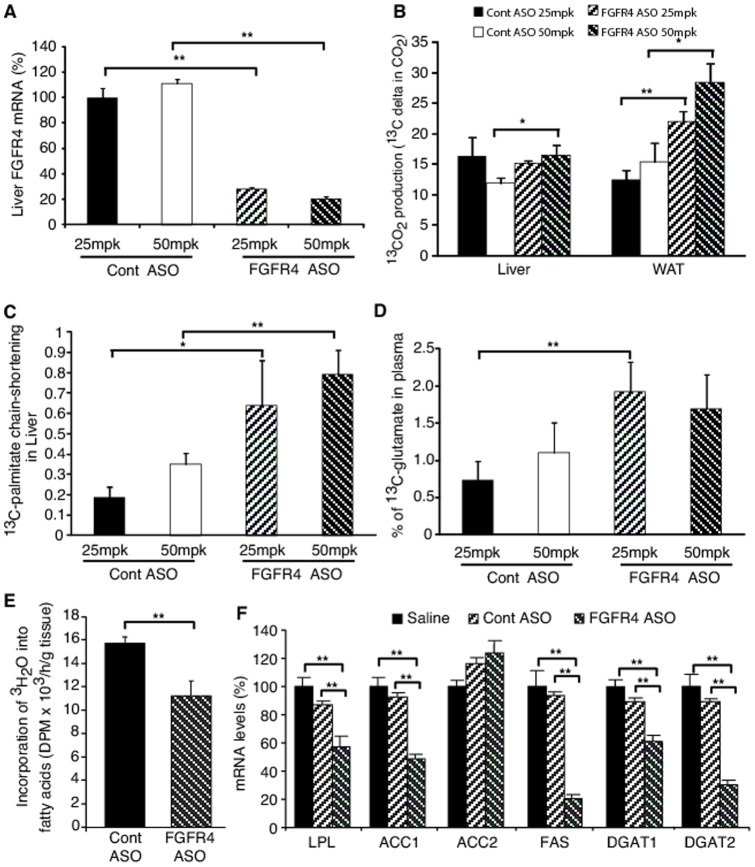
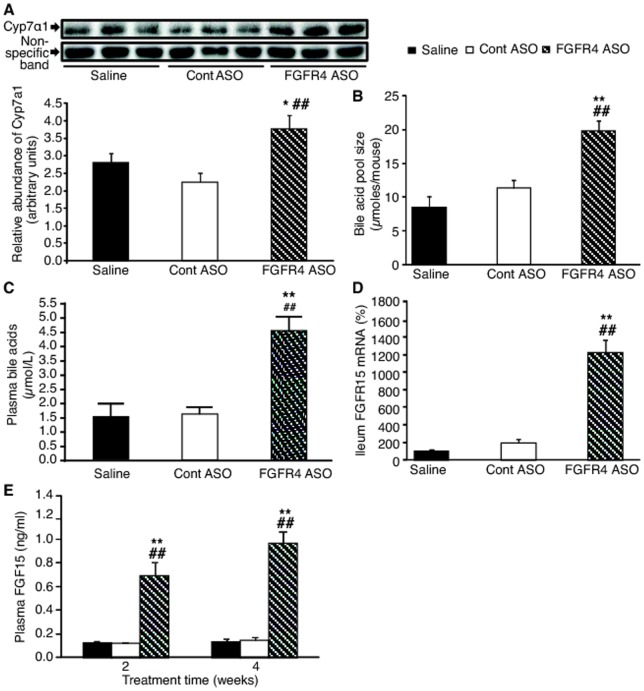
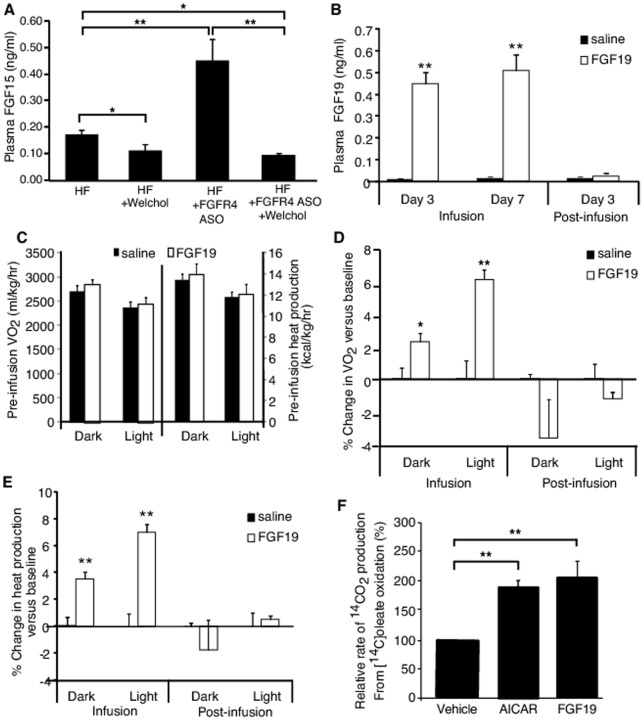
Obesity is a primary risk factor for multiple metabolic disorders. Many drugs for the treatment of obesity, which mainly act through CNS as appetite suppressants, have failed during development or been removed from the market due to unacceptable adverse effects. Thus, there are very few efficacious drugs available and remains a great unmet medical need for anti-obesity drugs that increase energy expenditure by acting on peripheral tissues without severe side effects. Here, we report a novel approach involving antisense inhibition of fibroblast growth factor receptor 4 (FGFR4) in peripheral tissues. Treatment of diet-induce obese (DIO) mice with FGFR4 antisense oligonucleotides (ASO) specifically reduced liver FGFR4 expression that not only resulted in decrease in body weight (BW) and adiposity in free-feeding conditions, but also lowered BW and adiposity under caloric restriction. In addition, combination treatment with FGFR4 ASO and rimonabant showed additive reduction in BW and adiposity. FGFR4 ASO treatment increased basal metabolic rate during free-feeding conditions and, more importantly, prevented adaptive decreases of metabolic rate induced by caloric restriction. The treatment increased fatty acid oxidation while decreased lipogenesis in both liver and fat. Mechanistic studies indicated that anti-obesity effect of FGFR4 ASO was mediated at least in part through an induction of plasma FGF15 level resulted from reduction of hepatic FGFR4 expression. The anti-obesity effect was accompanied by improvement in plasma glycemia, whole body insulin sensitivity, plasma lipid levels and liver steatosis. Therefore, FGFR4 could be a potential novel target and antisense reduction of hepatic FGFR4 expression could be an efficacious therapy as an adjunct to diet restriction or to an appetite suppressant for the treatment of obesity and related metabolic disorders.
肥胖是多种代谢紊乱的主要危险因素。许多用于治疗肥胖的药物主要通过中枢神经系统作为食欲抑制剂,但由于不可接受的不良反应,在开发过程中失败或从市场上撤出。因此,有效的药物非常少,对于通过作用于外周组织而不产生严重副作用来增加能量消耗的抗肥胖药物,仍然存在着巨大的未满足的医疗需求。在这里,我们报告了一种涉及外周组织中成纤维细胞生长因子受体 4(FGFR4)反义抑制的新方法。用 FGFR4 反义寡核苷酸(ASO)治疗饮食诱导肥胖(DIO)小鼠,可特异性降低肝脏 FGFR4 表达,不仅导致自由喂养条件下体重(BW)和肥胖减少,而且在热量限制下 BW 和肥胖减少。此外,FGFR4 ASO 与利莫那班联合治疗可使 BW 和肥胖进一步减少。FGFR4 ASO 治疗可增加自由喂养条件下的基础代谢率,更重要的是,可防止热量限制引起的代谢率适应性降低。治疗可增加脂肪酸氧化,同时减少肝脏和脂肪中的脂肪生成。机制研究表明,FGFR4 ASO 的抗肥胖作用至少部分是通过降低肝脏 FGFR4 表达导致血浆 FGF15 水平升高介导的。抗肥胖作用伴随着血浆血糖、全身胰岛素敏感性、血浆脂质水平和肝脂肪变性的改善。因此,FGFR4 可能是一个潜在的新靶点,反义降低肝脏 FGFR4 表达可能是一种有效的治疗方法,可作为饮食限制的辅助手段,或作为食欲抑制剂治疗肥胖和相关代谢紊乱。