Department of Epidemiology and Biostatistics, School of Public Health, Fudan University, Shanghai, People's Republic of China.
PLoS One. 2013 Jul 29;8(7):e69447. doi: 10.1371/journal.pone.0069447. Print 2013.
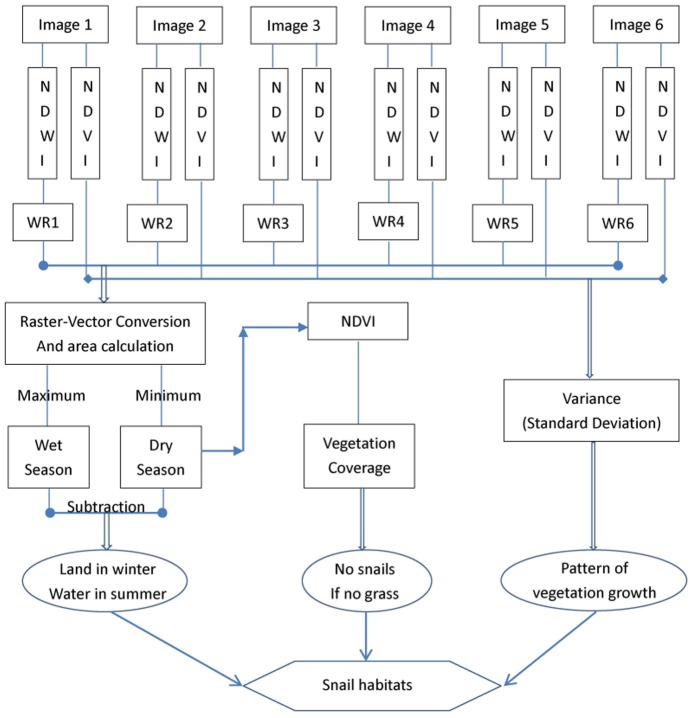
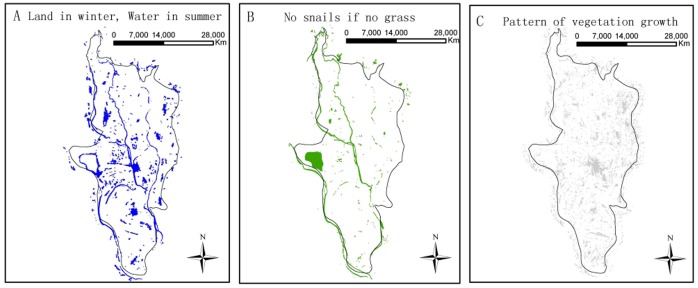
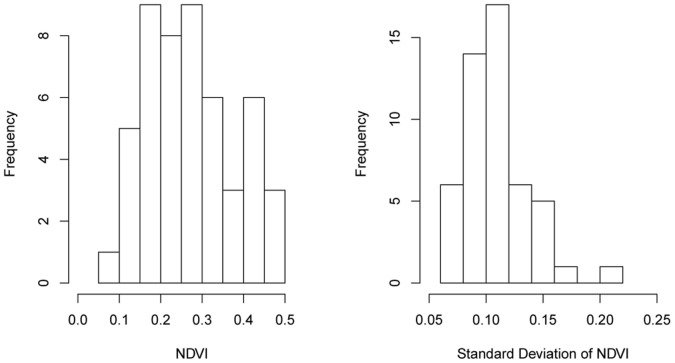
Remote sensing is a promising technique for monitoring the distribution and dynamics of various vector-borne diseases. In this study, we used the multi-temporal CBERS images, obtained free of charge, to predict the habitats of the snail Oncomelania hupensis, the sole intermediate host of schistosomiasis japonica, a snail-borne parasitic disease of considerable public health in China. Areas of suitable snail habitats were identified based on the normalized difference vegetation index (NDVI) and the normalized difference water index (NDWI), and the predictive model was tested against sites (snails present or absent) that were surveyed directly for O. hupensis. The model performed well (sensitivity and specificity were 63.64% and 78.09%, respectively), and with further development, we may provide an accurate, inexpensive tool for the broad-scale monitoring and control of schistosomiasis, and other similar vector-borne diseases.
遥感是监测各种虫媒病分布和动态的一种很有前途的技术。在这项研究中,我们免费使用多时相 CBERS 图像来预测日本血吸虫病的唯一中间宿主钉螺的栖息地,日本血吸虫病是中国一种具有相当公共卫生意义的螺源性寄生虫病。根据归一化差异植被指数 (NDVI) 和归一化差异水指数 (NDWI) 确定适合钉螺栖息地的区域,并针对直接调查钉螺的地点(有或没有钉螺)对预测模型进行测试。该模型表现良好(敏感性和特异性分别为 63.64%和 78.09%),并且进一步开发后,我们可能会为大规模监测和控制血吸虫病及其他类似的虫媒病提供一种准确、廉价的工具。