Department of Agronomy, Agricultural University of Hebei/Hebei Sub-center of Chinese National Maize Improvement Center, Baoding 071001, China.
BMC Plant Biol. 2013 Aug 8;13:114. doi: 10.1186/1471-2229-13-114.
Zinc (Zn) and iron (Fe) are essential micronutrients for plant growth and development, their deficiency or excess severely impaired physiological and biochemical reactions of plants. Therefore, a tightly controlled zinc and iron uptake and homeostasis network has been evolved in plants. The Zinc-regulated transporters, Iron-regulated transporter-like Proteins (ZIP) are capable of uptaking and transporting divalent metal ion and are suggested to play critical roles in balancing metal uptake and homeostasis, though a detailed analysis of ZIP gene family in maize is still lacking.
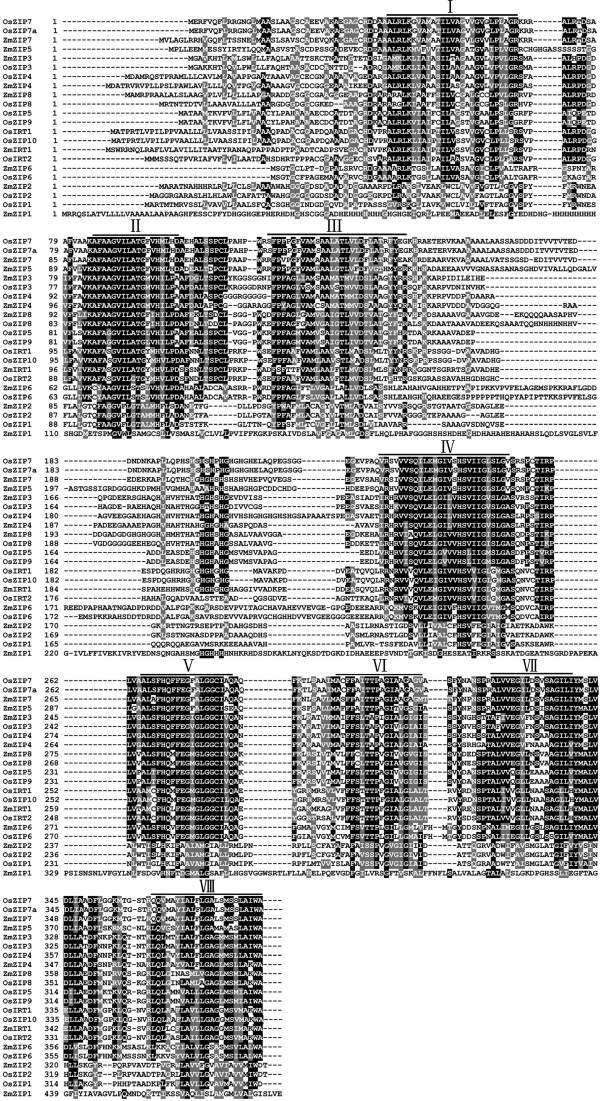
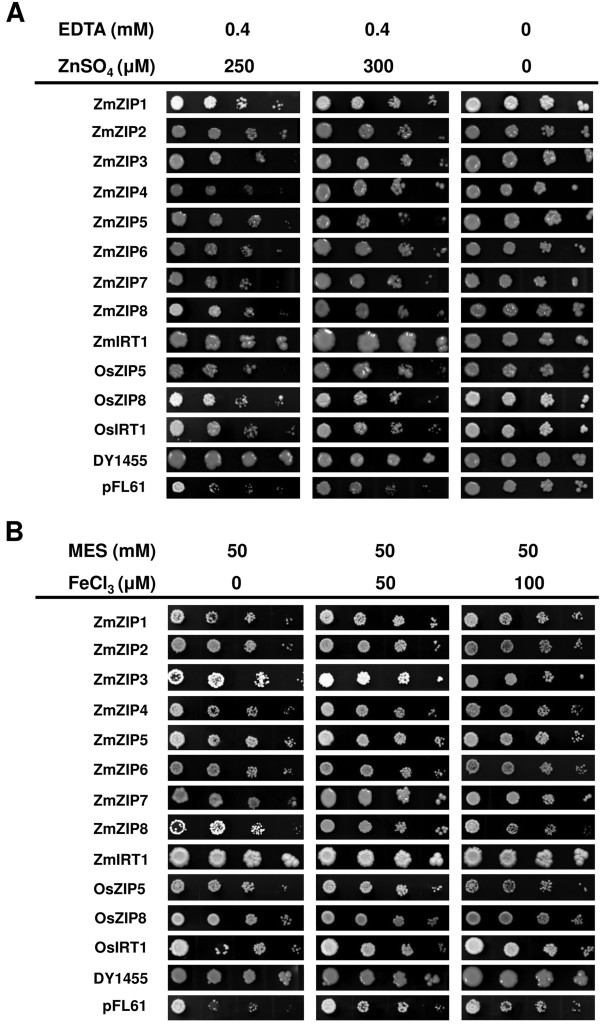
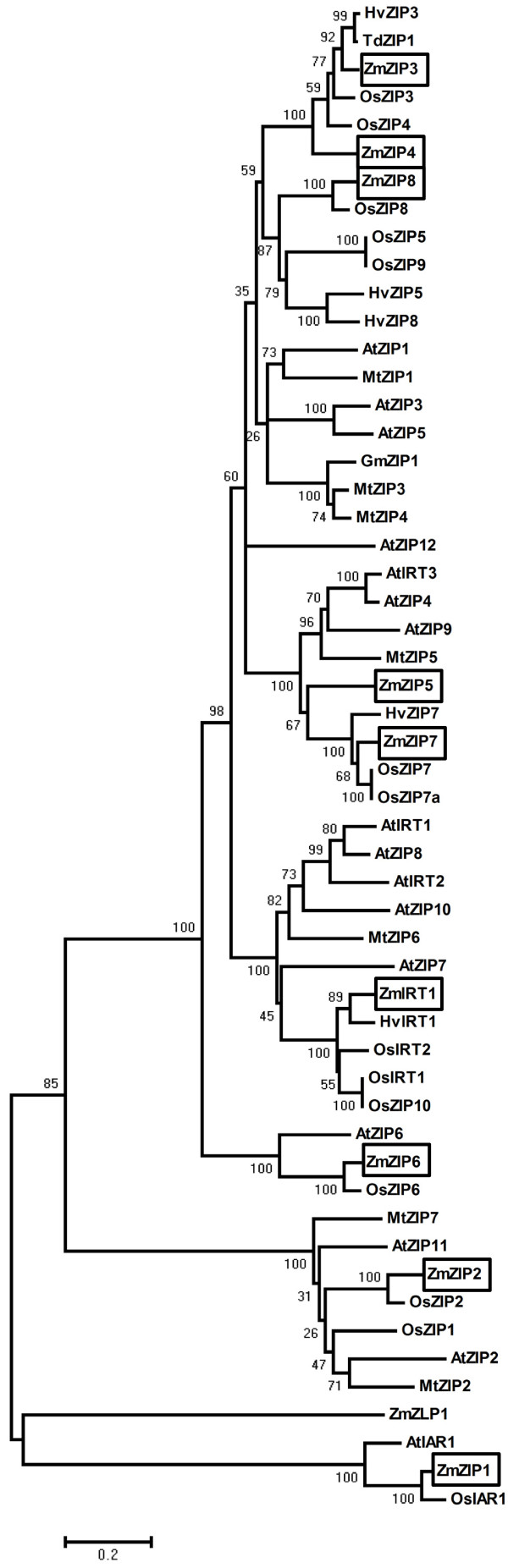
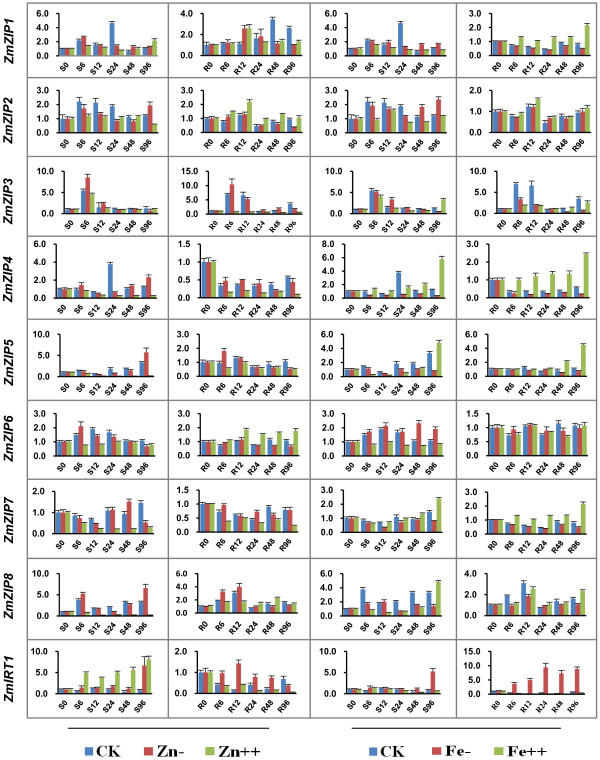
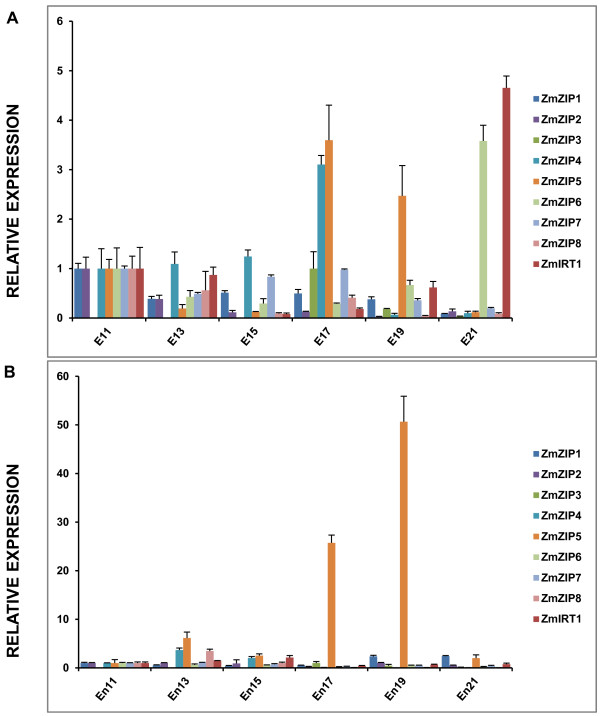
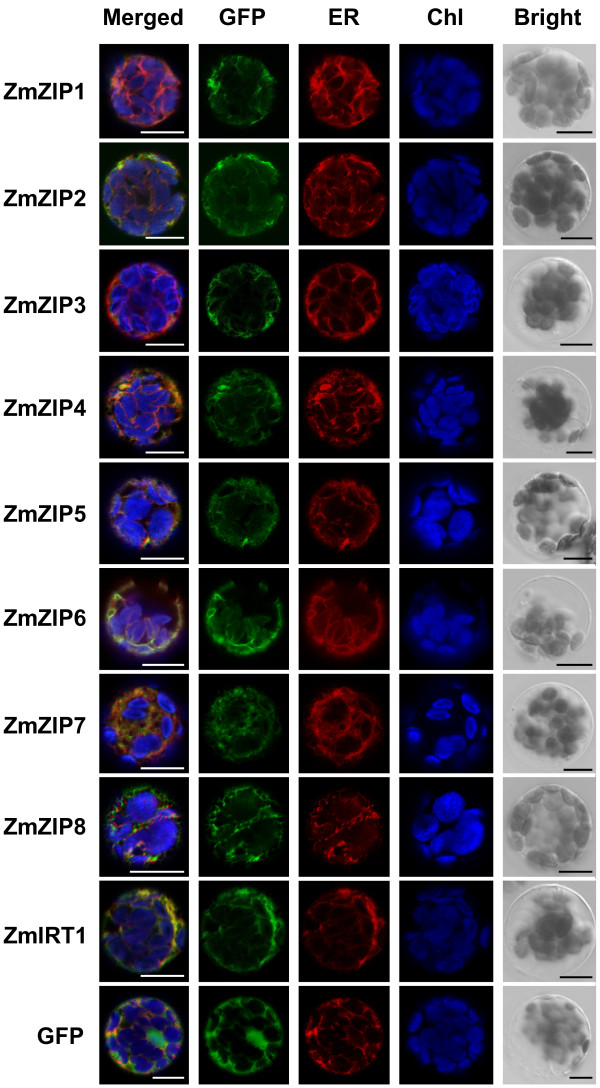
Nine ZIP-coding genes were identified in maize genome. It was revealed that the ZmZIP proteins share a conserved transmembrane domain and a variable region between TM-3 and TM-4. Transiently expression in onion epidermal cells revealed that all ZmZIP proteins were localized to the endoplasmic reticulum and plasma membrane. The yeast complementation analysis was performed to test the Zn or Fe transporter activity of ZmZIP proteins. Expression analysis showed that the ZmIRT1 transcripts were dramatically induced in response to Zn- and Fe-deficiency, though the expression profiles of other ZmZIP changed variously. The expression patterns of ZmZIP genes were observed in different stages of embryo and endosperm development. The accumulations of ZmIRT1 and ZmZIP6 were increased in the late developmental stages of embryo, while ZmZIP4 was up-regulated during the early development of embryo. In addition, the expression of ZmZIP5 was dramatically induced associated with middle stage development of embryo and endosperm.
These results suggest that ZmZIP genes encode functional Zn or Fe transporters that may be responsible for the uptake, translocation, detoxification and storage of divalent metal ion in plant cells. The various expression patterns of ZmZIP genes in embryo and endosperm indicates that they may be essential for ion translocation and storage during differential stages of embryo and endosperm development. The present study provides new insights into the evolutionary relationship and putative functional divergence of the ZmZIP gene family during the growth and development of maize.
锌(Zn)和铁(Fe)是植物生长和发育所必需的微量元素,其缺乏或过量会严重损害植物的生理和生化反应。因此,植物进化出了一种严格控制锌和铁吸收和体内平衡的网络。锌调节转运蛋白、铁调节转运蛋白样蛋白(ZIP)能够摄取和转运二价金属离子,并被认为在平衡金属吸收和体内平衡方面发挥着关键作用,尽管对玉米中 ZIP 基因家族的详细分析仍然缺乏。
在玉米基因组中鉴定出 9 个 ZIP 编码基因。结果表明,ZmZIP 蛋白共享一个保守的跨膜结构域和 TM-3 和 TM-4 之间的可变区。洋葱表皮细胞的瞬时表达表明,所有 ZmZIP 蛋白都定位于内质网和质膜。进行酵母互补分析以测试 ZmZIP 蛋白的 Zn 或 Fe 转运活性。表达分析表明,ZmIRT1 转录物在 Zn 和 Fe 缺乏时显著诱导,但其他 ZmZIP 的表达谱则各不相同。ZmZIP 基因的表达模式在胚胎和胚乳发育的不同阶段观察到。ZmIRT1 和 ZmZIP6 的积累在胚胎发育的后期阶段增加,而 ZmZIP4 在胚胎发育的早期阶段上调。此外,ZmZIP5 的表达与胚胎和胚乳发育的中期阶段显著诱导相关。
这些结果表明,ZmZIP 基因编码功能性 Zn 或 Fe 转运蛋白,可能负责植物细胞中二价金属离子的摄取、转运、解毒和储存。ZmZIP 基因在胚胎和胚乳中的各种表达模式表明,它们可能在胚胎和胚乳发育的不同阶段对离子转运和储存至关重要。本研究为玉米生长发育过程中 ZmZIP 基因家族的进化关系和假定功能分化提供了新的见解。