Wang G-J, Tomasi D, Volkow N D, Wang R, Telang F, Caparelli E C, Dunayevich E
1] Department of Bioscience, Brookhaven National Laboratory, Upton, NY, USA [2] Department of Radiology, Stony Brook University, Stony Brook, NY, USA.
Neuroimaging Laboratory, National Institute on Alcoholism and Alcohol Abuse Intramural Program, Upton, NY, USA.
Int J Obes (Lond). 2014 May;38(5):682-8. doi: 10.1038/ijo.2013.145. Epub 2013 Aug 8.
The significant weight loss observed with combination naltrexone-sustained release (SR) 32 mg and bupropion SR 360 mg (NB32) therapy is thought to be due, in part, to bupropion stimulation of hypothalamic pro-opiomelanocortin (POMC) neurons, and naltrexone blockade of opioid receptor-mediated POMC autoinhibition, but the neurobiological mechanisms are not fully understood. We assessed changes in brain reactivity to food cues before and after NB32 treatment.
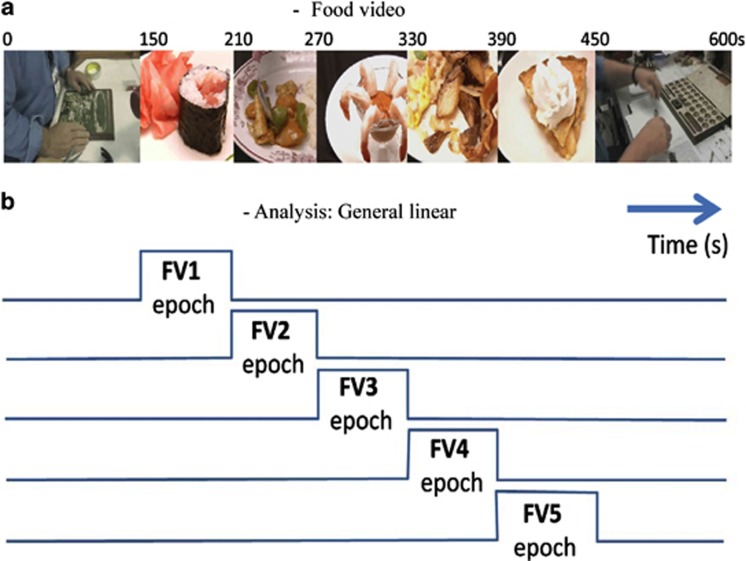
Forty women (31.1±8.1 years; body mass index: 32.5±3.9) received 4 weeks of NB32 or placebo, and were instructed to maintain their dietary and exercise habits. Functional magnetic resonance imaging responses (analyzed using SPM2 and clusters (>100 pixels)) to a 5-min food video (preparation of the subject's favorite food) and a 5-min neutral video (manipulation of neutral objects) under conditions of mild food deprivation (∼14 h) were assessed before and after treatment.
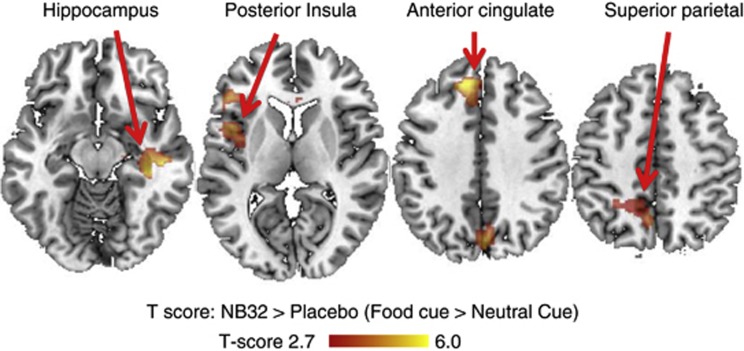
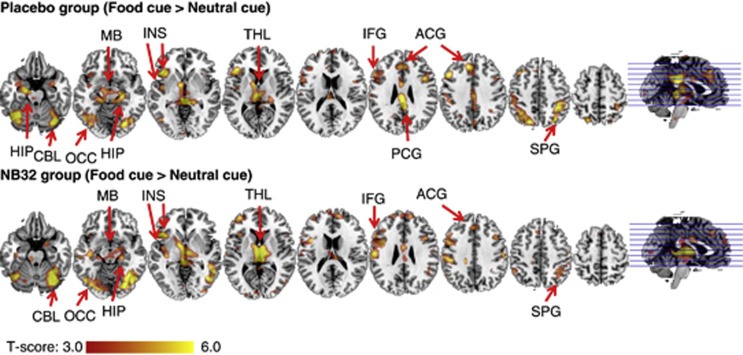
The food cues video induced positive brain activation in visual and prefrontal cortices, insula and subcortical brain regions. The group-by-treatment interaction on regional brain activation was significant and showed that whereas NB32 attenuated the activation in the hypothalamus in response to food cues (P<0.01), it enhanced activation in regions involved in inhibitory control (anterior cingulate), internal awareness (superior frontal, insula, superior parietal) and memory (hippocampal) regions (whole-brain analysis; P<0.05).
Blunting the hypothalamic reactivity to food cues while enhancing the activation of regions involved with self-control and internal awareness by NB32 might underlie its therapeutic benefits in obesity.
纳曲酮缓释片32毫克与安非他酮缓释片360毫克联合用药(NB32)治疗时出现的显著体重减轻,部分原因被认为是安非他酮刺激下丘脑阿片促黑皮质素原(POMC)神经元,以及纳曲酮阻断阿片受体介导的POMC自身抑制,但神经生物学机制尚未完全明确。我们评估了NB32治疗前后大脑对食物线索反应性的变化。
40名女性(年龄31.1±8.1岁;体重指数:32.5±3.9)接受了4周的NB32或安慰剂治疗,并被要求保持其饮食和运动习惯。在轻度食物剥夺(约14小时)条件下,评估治疗前后对5分钟食物视频(准备受试者最喜欢的食物)和5分钟中性视频(操作中性物体)的功能磁共振成像反应(使用SPM2和大于100像素的簇进行分析)。
食物线索视频在视觉和前额叶皮质、脑岛及皮质下脑区诱导出大脑的积极激活。区域大脑激活的组间治疗交互作用显著,表明NB32可减弱下丘脑对食物线索的激活反应(P<0.01),但增强了涉及抑制控制(前扣带回)、内部意识(额上回、脑岛、顶上回)和记忆(海马体)区域的激活(全脑分析;P<0.05)。
NB32减弱下丘脑对食物线索的反应性,同时增强与自我控制和内部意识相关区域的激活,这可能是其对肥胖具有治疗益处的基础。